
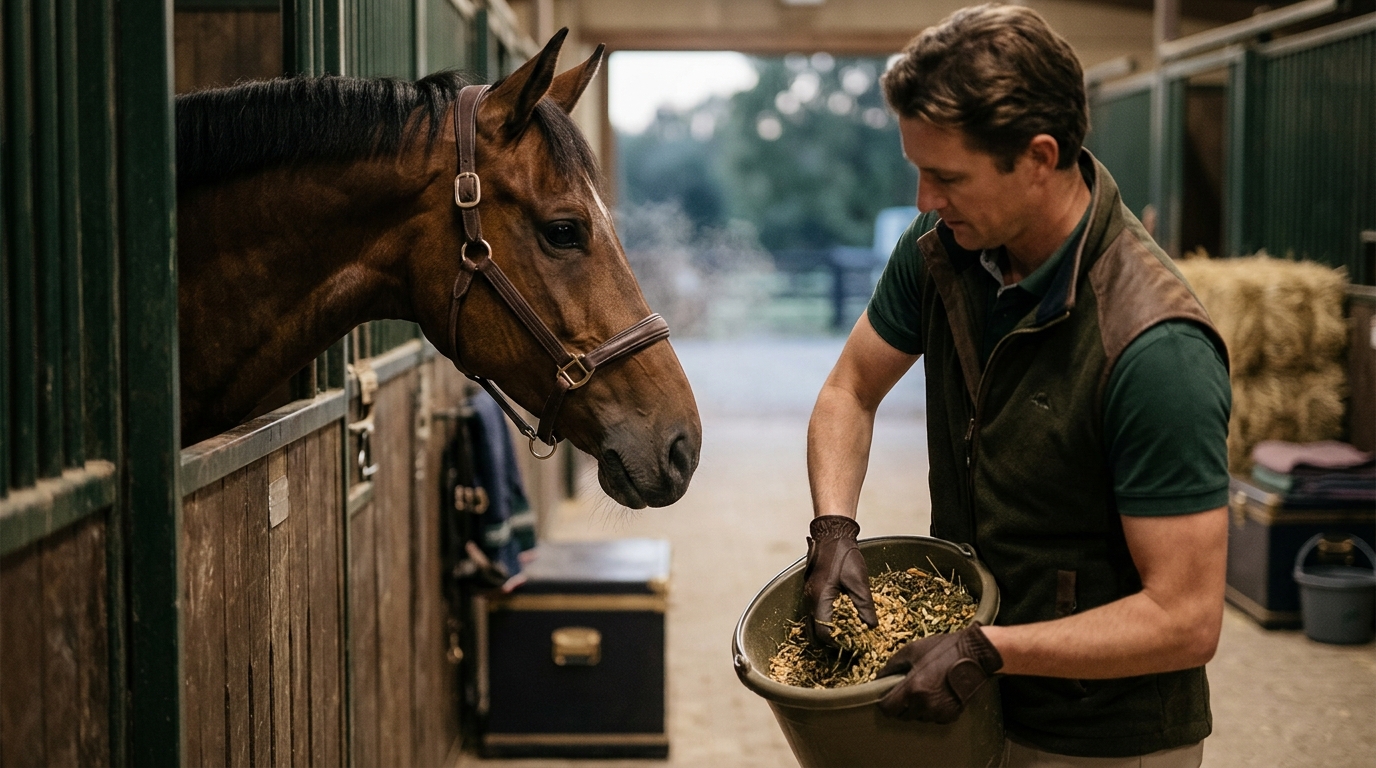
High-performance horses require precise nutritional strategies to sustain peak athletic output. According to the FEI guidelines, elite competitors expend up to 4,500 kilocalories daily during intense training blocks. This massive energy demand dictates a carefully balanced diet that prioritizes digestive health while maximizing muscle recovery. Owners must align feeding schedules with competition calendars to prevent metabolic strain. The following framework outlines evidence-based protocols for sustaining athletic excellence.
Forage Foundation and Digestive Health
Forage-based feeding is a dietary protocol prioritizing roughage over concentrated grains. This approach mimics natural grazing patterns and maintains consistent hindgut fermentation. High-performance horses require a minimum of 1.5 percent of their body weight in quality hay daily. Insufficient roughage directly increases the risk of gastric ulcers and colic. Owners should source locally harvested grass or alfalfa blends to support consistent fiber intake. You can explore regional stable resources through the Canadian Stable Directory to locate premium forage suppliers.
Quality Assessment Metrics
Visual inspection alone cannot guarantee nutritional value. Laboratory analysis reveals crude protein percentages and acid detergent fiber levels. These metrics directly influence muscle development and gut motility. Consistent testing ensures your feeding program meets athletic demands without triggering digestive distress.
Energy Management and Caloric Density
Metabolic efficiency is the ratio of caloric expenditure to athletic output. High-performance horses burn significant glycogen stores during jumping, dressage, or endurance events. Feeding programs must replace these stores without causing insulin spikes. Fat-soluble energy sources provide sustained fuel without excessive starch loading. Oils and concentrated feeds deliver dense calories while maintaining a low glycemic index. You can review specialized equipment and tack resources at EquiTermz to optimize feeding logistics.
Carbohydrate vs. Fat Utilization
Starch-heavy diets trigger rapid blood sugar fluctuations. Fat metabolism supports prolonged aerobic activity and reduces lactic acid buildup. Transitioning to higher fat ratios requires a gradual four-week adaptation period. Sudden changes disrupt microbial populations and compromise nutrient absorption.
Hydration Protocols and Electrolyte Balance
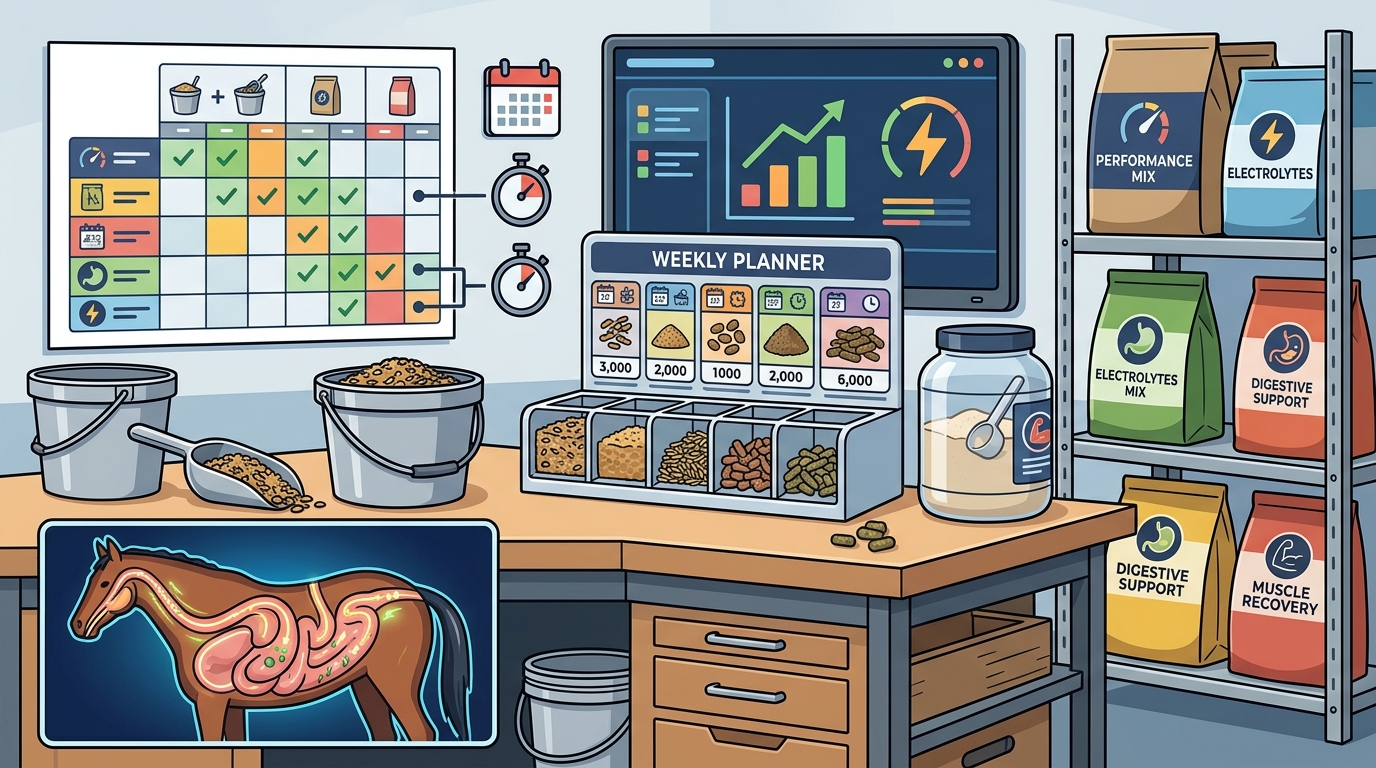
Glycogen replenishment is the biochemical process of restoring muscle energy stores after intense exertion. This process demands substantial water intake to transport nutrients across cell membranes. Dehydration directly impairs thermoregulation and increases injury risk. Competitive horses lose up to 15 liters of sweat during summer events. Electrolyte replacements must match sodium, potassium, and magnesium losses. The National Institutes of Health confirms that balanced electrolyte formulas prevent muscle cramping and cardiac stress.
Administration Strategies
Manual drenching ensures precise dosage during travel or competition. Automatic water trough additives maintain baseline hydration during daily training. Monitoring urine color and skin tent tests provides immediate feedback on fluid status. Adjusting salt blocks encourages consistent drinking behavior across all herd members.
Supplementation and Micronutrient Gaps
Modern forage often lacks trace minerals due to soil depletion and seasonal harvesting cycles. Copper, zinc, and selenium support connective tissue integrity and immune function. High-performance horses require targeted supplements to bridge these nutritional gaps. Over-supplementation creates toxicity risks and disrupts mineral absorption ratios. Professional veterinary guidance ensures precise dosing aligned with competition schedules. You can connect with editorial experts via the Contact Us portal for personalized feeding consultations.
Joint and Hoof Support
Glucosamine and hyaluronic acid formulas protect cartilage during high-impact training. Biotin and zinc promote horn growth and hoof wall density. Consistent daily administration yields visible improvements within ninety days. Quality control standards vary widely across manufacturers. Third-party testing guarantees label accuracy and contaminant-free formulations.
Feeding Schedules and Rhythm Optimization
Feeding behaviour and overnight rhythms in horses dictate optimal meal timing. Stalled horses require multiple small meals to replicate continuous grazing. Large single feedings increase gastric acid production and ulcer risk. Splitting daily rations into three or four portions maintains stable blood glucose. Competition days demand adjusted timing to prevent digestive discomfort during exertion. The Horse Sport platform offers detailed training and nutrition articles to refine daily routines.
Travel and Competition Adjustments
Transport stress suppresses appetite and alters gut motility. Offering soaked beet pulp or complete feeds maintains energy intake during transit. Post-competition recovery meals should prioritize fast-absorbing carbohydrates and protein. Rehydration protocols must begin immediately upon arrival at the venue. Consistent scheduling reduces anxiety and supports rapid physical recovery.
Dietary Comparison Matrix
| Dietary Component | Primary Benefit | Recommended Daily Intake | Best Use Case |
|---|---|---|---|
| Quality Grass Hay | Stable hindgut fermentation | 1.5% body weight | Daily maintenance and recovery |
| Alfalfa Pellets | High protein and calcium | 0.5 to 1.0% body weight | Heavy work and breeding |
| Vegetable Oil | Dense caloric delivery | 1 to 2 cups | Weight maintenance and stamina |
| Electrolyte Powder | Sweat replacement | Per competition guidelines | Summer events and travel |
| Joint Support Formula | Cartilage preservation | Per label dosage | High-impact disciplines |
Key Takeaways
- High-performance horses expend up to 4,500 kilocalories daily during intense training blocks.
- Forage must comprise 1.5 percent of total body weight to sustain hindgut health.
- Fat-soluble energy sources prevent insulin spikes while supporting prolonged aerobic activity.
- Dehydration directly impairs thermoregulation and increases injury risk during summer events.
- Splitting daily rations into three or four portions maintains stable blood glucose levels.
- Third-party tested supplements guarantee label accuracy and contaminant-free formulations.
- Post-competition recovery meals should prioritize fast-absorbing carbohydrates and protein.
Frequently Asked Questions
How much hay should a high-performance horse consume daily?
Quality grass or alfalfa hay should comprise 1.5 percent of the horse total body weight. This baseline ensures consistent hindgut fermentation and prevents gastric ulcers.
When is the optimal time to administer electrolyte supplements?
Electrolyte formulas should be administered daily during training blocks and increased during competition weeks. Post-event dosing restores sodium and potassium losses within four hours.
Can high-fat diets replace grain-based energy sources?
Yes, concentrated vegetable oils deliver dense calories without triggering insulin spikes. Transitioning requires a gradual four-week adaptation period to protect microbial populations.
What laboratory tests verify forage nutritional value?
Crude protein percentages and acid detergent fiber levels reveal actual nutritional content. Annual testing ensures feeding programs meet athletic demands without digestive distress.
How do you manage feeding schedules during travel?
Offering soaked complete feeds maintains energy intake during transit. Post-competition recovery meals should prioritize fast-absorbing carbohydrates and protein for rapid muscle repair.
Are joint supplements necessary for all athletic disciplines?
Glucosamine and hyaluronic acid formulas protect cartilage during high-impact training. Consistent daily administration yields visible improvements within ninety days.
What indicators signal dehydration in competitive horses?
Dark urine color and delayed skin tent tests provide immediate feedback on fluid status. Adjusting salt blocks encourages consistent drinking behavior across all herd members.
Next Steps
Implementing precise nutritional protocols transforms athletic potential into consistent competition results. Review the Contests page for upcoming training seminars and feeding workshops. Contact the editorial team through the Contact Us portal to schedule a personalized feeding consultation. Support independent equestrian journalism by visiting the Donate page to sustain expert research. Begin optimizing your high-performance horse diet today and track measurable improvements within thirty days.