
High-performance equine athletes require precise nutritional strategies to maintain peak physical condition and competitive longevity. Recent industry data shows that over 60% of performance horses suffer from suboptimal digestive health due to improper forage-to-concentrate ratios. This guide explores the critical components of equine nutrition, from respiratory support during heavy work to the science of pasture management. We will examine how targeted feeding behaviors and overnight rhythms influence recovery, ensuring your horse remains ready for the demands of the show ring or training facility. (Donate 8211 Horse Sport)
Understanding Nutritional Needs
Equine nutrition is the systematic study of how horses process nutrients to support energy, muscle repair, and immune function. For high-performance horses, the margin for error is slim. A diet that fails to meet caloric demands can lead to weight loss, while excessive caloric intake often results in behavioral issues and metabolic stress. The foundation of any elite feeding program is a thorough understanding of the individual horse's workload, body condition, and metabolic rate. (Contests 8211 Horse Sport)
Protein requirements increase significantly during periods of intense training. Amino acids like lysine and methionine are critical for muscle synthesis. However, protein alone does not drive performance. The balance between non-structural carbohydrates (NSC) and fiber determines how energy is released into the bloodstream. Sudden spikes in blood sugar can cause lethargy followed by hyperactivity, a dangerous combination for a horse under saddle. Therefore, the goal is steady, sustained energy release rather than rapid fuel injection.
Hydration is equally vital. Dehydration reduces blood volume, impairing the horse's ability to dissipate heat. During heavy work, horses can lose significant electrolytes through sweat. Replacing these electrolytes is not optional; it is a physiological necessity. Without proper electrolyte balance, muscle cramping and cardiac strain become immediate risks. Always provide fresh, clean water and consider adding electrolyte supplements to the feed bucket during competition seasons.
Forage and Pasture Management
The science of pasture management involves carefully managing soil health and plant composition to ensure consistent nutritional value. Forage should constitute at least 50% of the daily diet for any horse. This fiber source supports hindgut fermentation, which is the primary engine for energy production in equines. When pastures are neglected, the nutritional density drops, forcing the horse to consume more volume to meet its caloric needs.
Soil testing is a proactive step often overlooked by owners. Nutrient-deficient soil produces nutrient-deficient grass. By addressing soil pH and mineral content, you directly influence the quality of the forage your horse consumes. This ground-up approach ensures that the grass is not just green, but nutritionally complete. It also reduces the risk of toxic plant growth, which can occur when desirable grasses are outcompeted by weeds due to poor soil health.
For horses that require strict calorie control, managing pasture access is critical. Strip grazing or using a grazing muzzle can limit intake while allowing the horse to engage in natural grazing behaviors. This method prevents obesity and laminitis, two common conditions in performance horses that may not burn enough calories to offset high-sugar grass intake. Regular monitoring of body condition scores (BCS) helps adjust these management strategies dynamically.
Respiratory Support and Dust
Respiratory support is a critical component of equine health, particularly for horses facing dust, pollen, travel, and heavy work. Dust from hay and bedding can irritate the airways, leading to inflammatory conditions that reduce oxygen uptake. Reduced oxygen uptake directly impacts performance, as the muscles cannot receive the fuel they need to sustain effort. Therefore, managing the environment is as important as managing the diet.
Soaking hay or using haylage can significantly reduce dust levels. These methods also increase water intake, which is beneficial for hydration. However, soaking must be done correctly to avoid leaching essential nutrients. A brief soak of 30 to 60 seconds is often sufficient to remove surface dust without compromising the nutritional value. Alternatively, feeding low-dust hay cubes or pellets can provide a clean energy source without the respiratory risks associated with traditional hay bales.
Pollen and environmental allergens also play a role in respiratory health. During high-pollen seasons, keeping horses indoors during peak hours can reduce exposure. Supplementing with antioxidants like Vitamin E and C can help mitigate oxidative stress caused by inflammation. This support system helps maintain lung capacity, ensuring the horse can perform at its peak without respiratory compromise.
Feeding Behavior and Rhythms
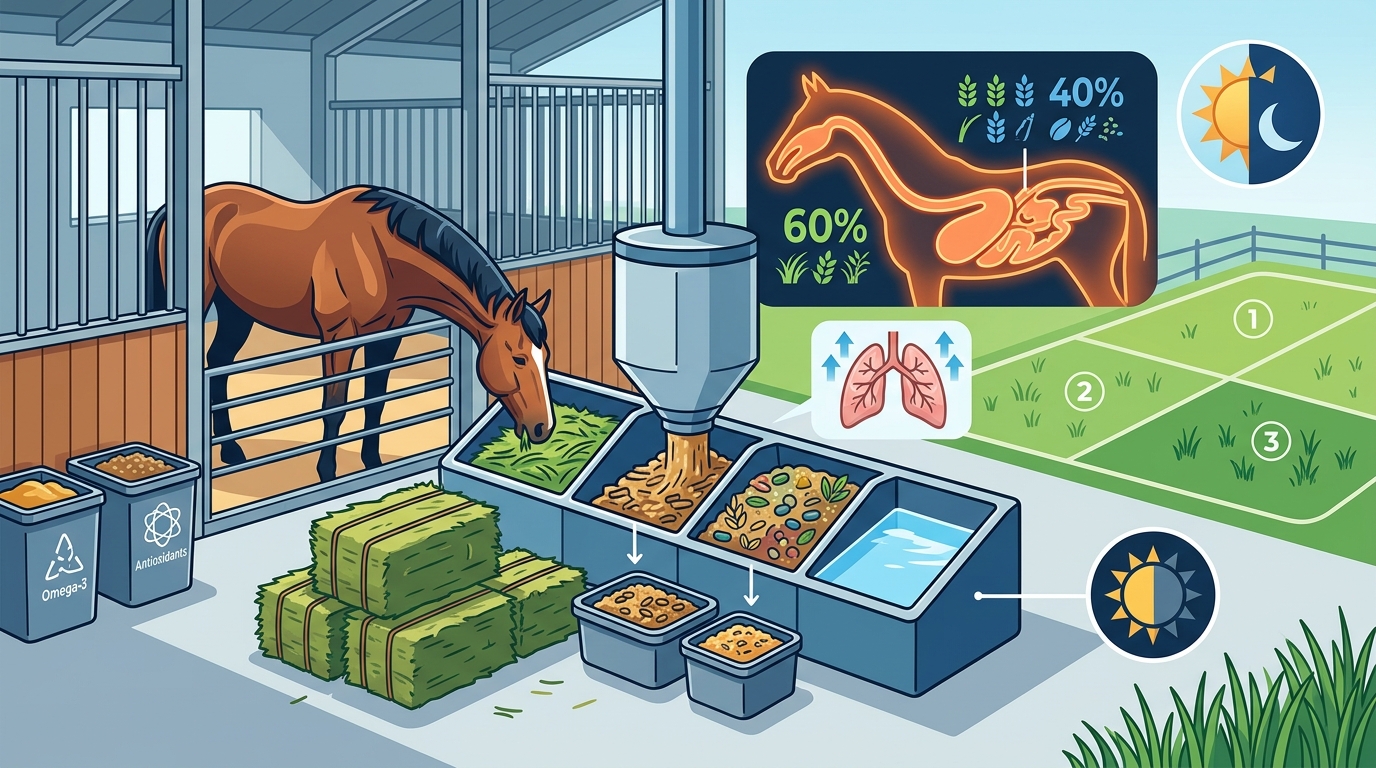
Feeding behavior and overnight rhythms are key factors in digestive health. Horses are designed to graze continuously, but modern management often requires long periods without food. This gap in intake can lead to gastric ulcers, a condition affecting up to 90% of performance horses. The stomach produces acid constantly, and without forage to buffer it, the acid erodes the stomach lining.
Integrating ways to encourage natural grazing situations in stalled horses is essential for improving digestive health. This can be achieved through slow-feed hay nets, which extend the time it takes for the horse to consume its daily forage allowance. By mimicking the slow, continuous intake of grazing, you reduce the time the stomach is empty and acidic. This approach not only protects the gut but also reduces boredom and stable vices.
Overnight rhythms are particularly important. A small meal of forage before bed ensures that the horse has food in its stomach during the long night. This prevents the development of ulcers and supports steady blood sugar levels. Consistent feeding times also help regulate the horse's circadian rhythm, promoting better sleep and recovery. Recovery is where the performance gains are made, and nutrition plays a pivotal role in this process.
Comparing Nutritional Strategies
Selecting the right nutritional strategy depends on the specific demands of the sport and the individual horse. Below is a comparison of common feeding approaches for high-performance equines.
| Strategy | Primary Benefit | Best For | Considerations |
|---|---|---|---|
| High-Fiber, Low-NSC | Steady energy release | Endurance and Eventing | Requires careful forage selection |
| Frequent Small Meals | Ulcer prevention | All Performance Horses | Requires automated feeders or multiple feedings |
| Dust-Free Feeding | Respiratory health | Horses with RAO | May reduce palatability for some horses |
| Pasture Management | Natural grazing | Off-season maintenance | Weather dependent |
Key Takeaways
- Forage must comprise at least 50% of the diet to support hindgut health and prevent ulcers.
- Respiratory support is critical for performance, as dust and pollen can impair oxygen uptake.
- Feeding behavior and overnight rhythms directly impact digestive health and recovery quality.
- Pasture management involves soil testing and plant composition analysis to ensure nutritional density.
- Electrolyte replacement is non-negotiable during heavy work to prevent cramping and cardiac strain.
- Slow-feed hay nets can mimic natural grazing and reduce gastric acid exposure.
- Antioxidants like Vitamin E help mitigate oxidative stress from inflammation and allergens.
Frequently Asked Questions
How much forage should a high-performance horse eat?
A high-performance horse should consume at least 1.5% to 2% of its body weight in forage daily. This amount ensures adequate fiber for hindgut fermentation and helps buffer stomach acid, reducing the risk of ulcers.
What is the best way to reduce dust in hay?
Soaking hay for 30 to 60 seconds before feeding is an effective way to reduce dust. Alternatively, using haylage or low-dust hay cubes can eliminate dust entirely while providing necessary nutrients.
How does pasture management affect horse health?
Proper pasture management ensures that the grass is nutritionally dense and free from toxic plants. It also helps control calorie intake, preventing obesity and laminitis in horses that are not in heavy work.
Why are overnight feeding rhythms important?
Overnight feeding rhythms prevent the stomach from being empty for extended periods, which reduces the risk of gastric ulcers. A small forage meal before bed supports steady blood sugar levels and better recovery.
What role do electrolytes play in performance?
Electrolytes are lost through sweat during heavy work. Replacing them is essential for maintaining muscle function and preventing cramping. They also help regulate fluid balance and nerve transmission.
How can I improve my horse's respiratory health?
Improving respiratory health involves reducing exposure to dust and allergens. This can be achieved through proper ventilation, soaking hay, and using antioxidant supplements to support lung tissue.
What are the signs of suboptimal digestive health?
Signs include weight loss, poor coat condition, colic, and behavioral changes. Regular monitoring of body condition and fecal output can help detect issues early.
Contact Horse Sport
For more insights on equine health, training, and management, visit Horse Sport. Our team of experts provides comprehensive coverage of the equestrian world, from farm management to rider psychology. Connect with us via our contact page for inquiries or to explore our Canadian Stable Directory for professional resources.