
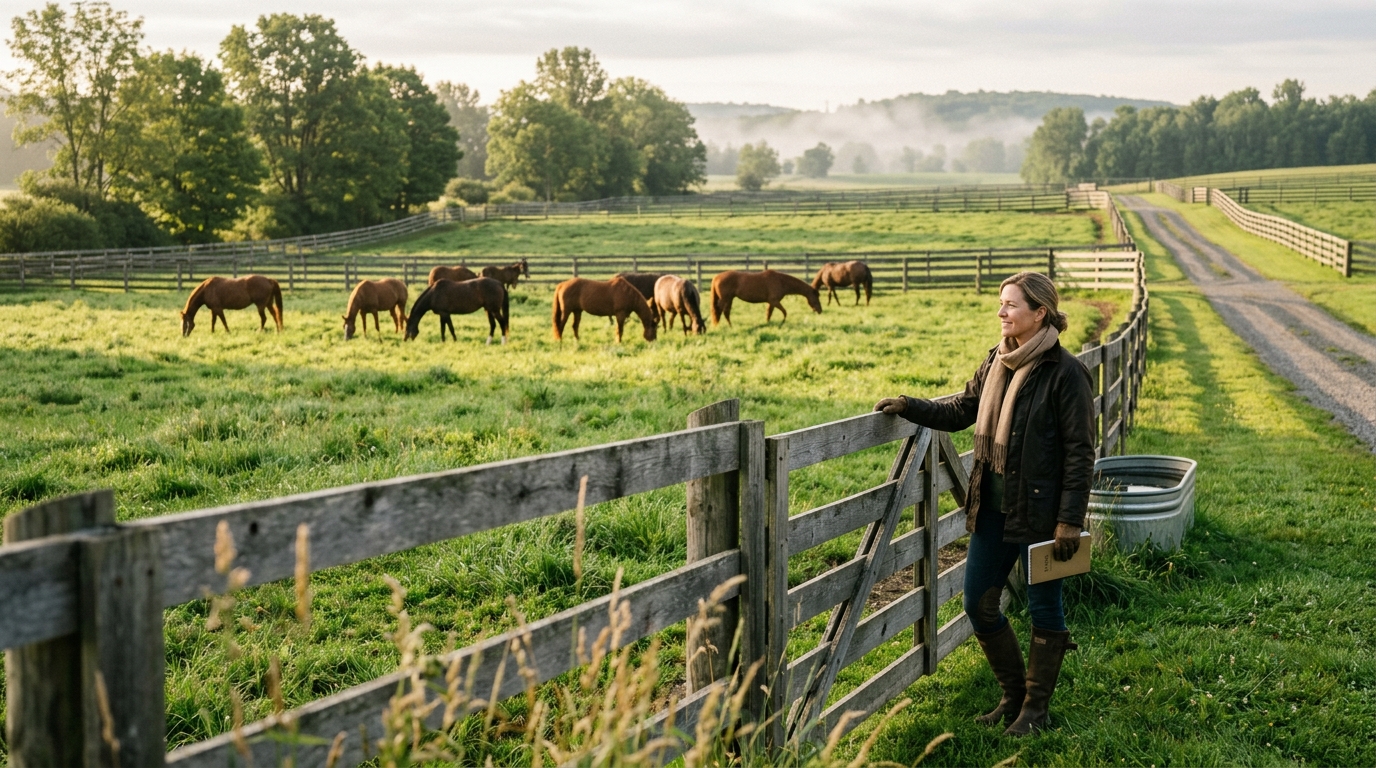
Maintaining a thriving equine grazing environment requires precise attention to soil composition, plant diversity, and rotational scheduling. According to recent agricultural data, properly managed pastures can reduce supplemental feed costs by nearly thirty percent while significantly improving overall herd health. Horse owners who prioritize systematic land stewardship consistently report stronger hoof quality, better weight distribution, and fewer digestive complications. This guide outlines the essential protocols for establishing sustainable grazing cycles, optimizing forage density, and implementing protective fencing strategies. You will learn how to balance ecological preservation with consistent nutritional delivery across all seasonal transitions.
Establishing Soil Foundation
Soil health is the foundational metric that dictates long-term pasture viability and nutritional output. Regular soil testing reveals critical nutrient deficiencies, pH imbalances, and organic matter depletion before visible plant stress occurs. You must interpret laboratory results to apply precise lime applications and targeted fertilizer blends. Proper nutrient cycling directly correlates with increased drought resistance and deeper root development. Consistent soil monitoring prevents costly emergency interventions and establishes a predictable baseline for annual land investments. You can locate specialized agricultural consultants through our Canadian Stable Directory to execute comprehensive land assessments.
Implementing Rotational Systems
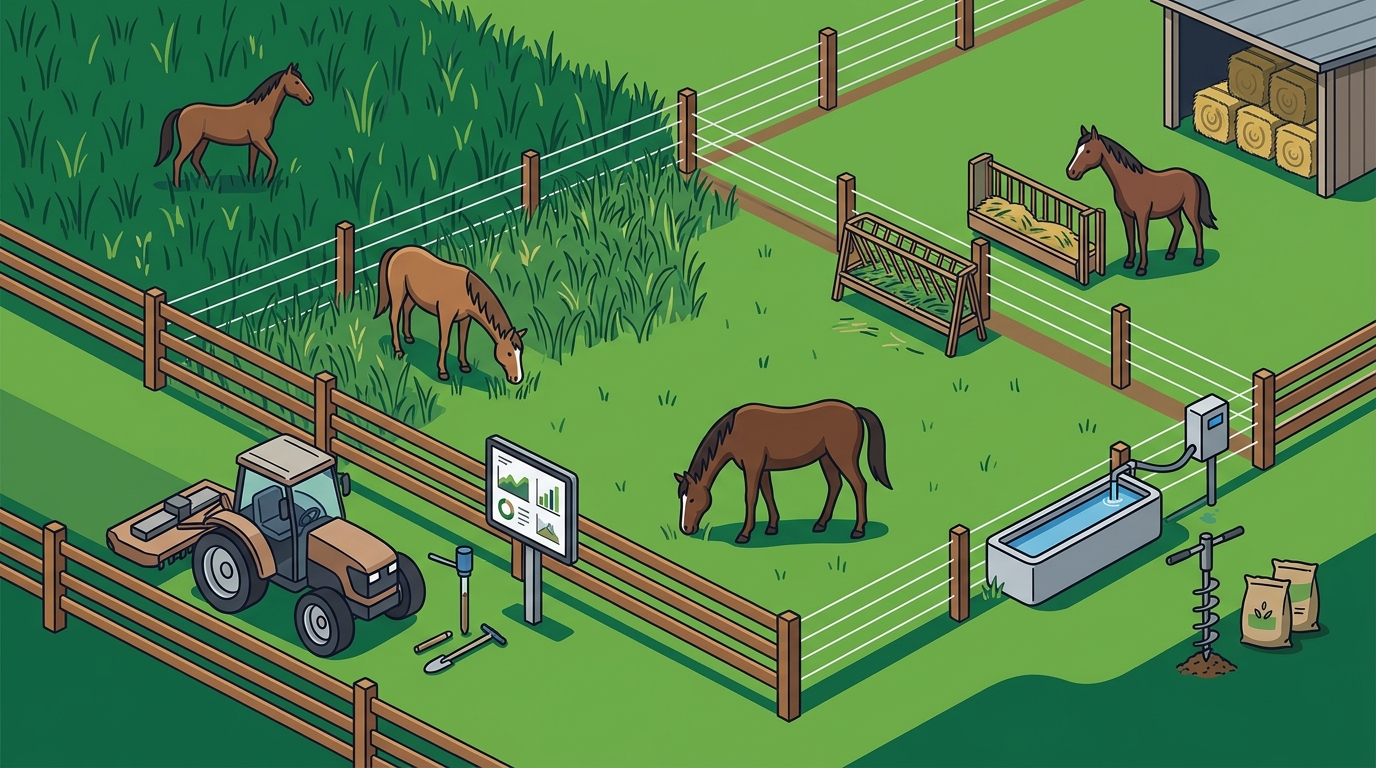
Rotational grazing is a structured management technique that divides large pastures into smaller, sequentially utilized paddocks. This method forces horses to graze uniformly while granting dormant zones adequate recovery time. Most agricultural extensions recommend allowing grass blades to recover to four inches before reintroducing livestock. Rest periods typically range from twenty-one to thirty-five days depending on regional rainfall patterns. Strategic paddock division minimizes parasite load and drastically reduces the need for chemical deworming protocols. You can explore specialized boarding and training facilities that utilize these exact systems via our Canadian Stable Directory.
Selecting Optimal Forage
Forage density refers to the concentrated nutritional value and caloric output of specific grass and legume combinations. You must prioritize cool-season varieties like timothy, orchard grass, and smooth brome for consistent energy delivery. Warm-season options such as bermudagrass and fescue provide superior summer resilience in hotter climates. Legume integration, particularly clover and alfalfa, naturally fixes atmospheric nitrogen into the root zone. Diverse plant mixtures prevent nutritional gaps and support robust immune function across all age groups. You can review detailed equipment and training resources through our EquiTermz database.
Applying Fencing Protocols
Safety fencing is the physical boundary system that enforces rotational schedules and protects vulnerable plant regrowth. Modern equestrian standards strongly favor smooth electric tape, polymer mesh, and high-tensile wire over traditional wooden rails. These materials reduce injury risks while providing clear visual barriers that discourage testing behavior. You must install ground clearance at six inches to prevent horses from crawling underneath or stepping over the barrier. Proper tension maintenance prevents sagging and extends the operational lifespan of your boundary infrastructure. You can connect with regional fencing contractors and equipment suppliers through our Contact Us portal.
Managing Seasonal Adjustments
Seasonal grazing involves dynamically altering pasture access windows to align with fluctuating sugar concentrations and growth rates. Spring growth typically triggers dangerous fructan spikes that predispose susceptible horses to laminitis. You must restrict turnout during early morning hours when carbohydrate levels peak and allow grazing during afternoon sunlight when sugars convert to structural carbohydrates. Fall transitions require careful monitoring of frost events, which temporarily halt sugar metabolism and increase toxicity risks. Adaptive turnout scheduling prevents metabolic emergencies and maintains consistent body condition scores year-round. You can discover featured regional properties and operational benchmarks through our Farm Of The Week series.
Controlling Invasive Species
Invasive species are non-native plant organisms that aggressively outcompete valuable forage, reduce nutritional value, and introduce toxic compounds. Common threats include thistle, ragweed, and poison hemlock, which thrive in overgrazed or disturbed soil zones. Mechanical removal through targeted mowing before seed production remains the most environmentally sustainable control method. You must apply selective herbicides only when plant identification is confirmed and weather conditions prevent drift. Proactive weed suppression preserves grazing capacity and protects livestock from accidental poisoning events. You can support independent equestrian journalism and land management research by visiting our main homepage.
Key Takeaways
- Properly managed pastures reduce supplemental feed costs by nearly thirty percent while improving herd health.
- Soil testing should occur annually to track pH levels, organic matter, and nutrient depletion.
- Rotational paddocks require twenty-one to thirty-five day rest periods for optimal grass recovery.
- Smooth electric tape and polymer mesh are the current industry standards for injury prevention.
- Spring fructan spikes demand restricted morning turnout to prevent metabolic complications.
- Diverse forage mixtures naturally fix nitrogen and support robust immune function across all age groups.
- Targeted mechanical mowing remains the most sustainable method for invasive species suppression.
Frequently Asked Questions
How often should I test my pasture soil?
You should conduct comprehensive soil tests every twelve to eighteen months to track nutrient shifts, pH fluctuations, and organic matter depletion. Annual testing aligns with standard agricultural cycles and ensures precise fertilizer applications.
What is the ideal grass height for introducing horses to a new paddock?
Grass blades should consistently reach four inches before reintroducing livestock to prevent root damage and allow adequate carbohydrate storage. Maintaining this height ensures robust regrowth and minimizes soil erosion.
How do I safely manage spring pasture risks?
You must restrict morning turnout when fructan concentrations peak and allow grazing during afternoon sunlight when sugars convert to structural carbohydrates. This adaptive scheduling prevents metabolic emergencies and maintains consistent body condition scores.
Which fencing materials offer the highest safety rating?
Smooth electric tape, polymer mesh, and high-tensile wire currently provide the highest safety ratings by reducing injury risks while maintaining clear visual barriers. These materials also extend operational lifespan and simplify routine maintenance.
Can legumes replace commercial supplements entirely?
Legume integration like clover and alfalfa naturally fixes atmospheric nitrogen and provides concentrated protein, but they rarely replace all commercial supplements without veterinary guidance. Balanced ration formulation remains essential for performance and breeding stock.
What is the most effective method for removing thistle?
Targeted mechanical mowing before seed production remains the most environmentally sustainable control method for thistle suppression. You must follow up with selective herbicides only when plant identification is confirmed and weather conditions prevent drift.
How does rotational grazing impact parasite loads?
Structured paddock division forces horses to graze uniformly while granting dormant zones adequate recovery time, which drastically reduces the need for chemical deworming protocols. Rest periods interrupt parasite life cycles and protect vulnerable herd members.
Next Steps for Your Property
Implementing these pasture management protocols requires precise planning, consistent monitoring, and reliable equipment. You can schedule a comprehensive property assessment or explore specialized boarding and training options by visiting our primary portal at https://horsesport.com/. Our editorial team and regional partners stand ready to support your land stewardship goals.