
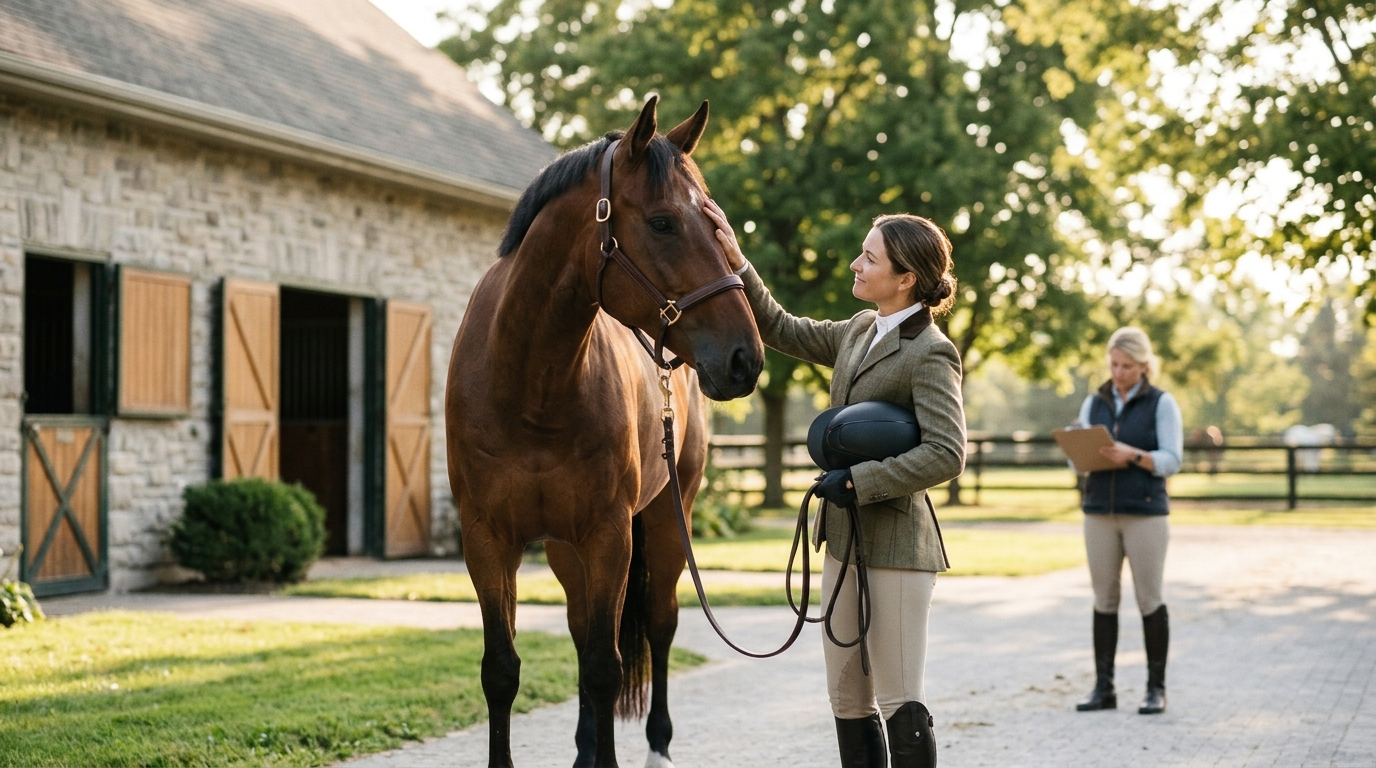
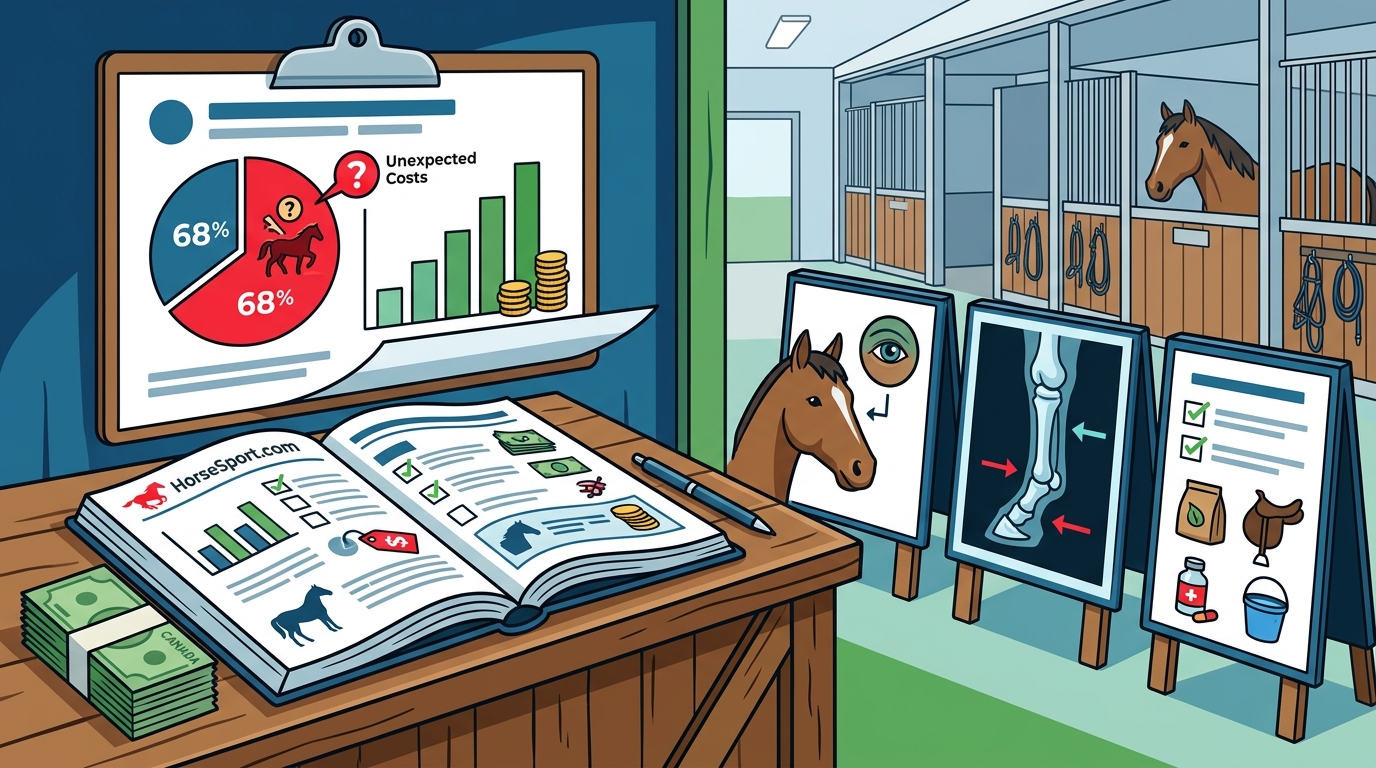
Purchasing a new equine partner requires careful financial planning and thorough evaluation. According to industry data, approximately 68 percent of first-time buyers experience unexpected maintenance costs within the first twelve months. This financial reality underscores why a structured approach matters for every new owner. You must evaluate temperament, physical soundness, and long-term care requirements before signing any paperwork. The Canadian equestrian community consistently emphasizes that thorough preparation prevents costly mistakes. Understanding these core variables will protect your investment and ensure a successful match. (ARMS Farm Financial) (Contact Us 8211 Horse)
Conduct a Comprehensive Physical Evaluation
Inspect Conformation and Movement
Conformation is the physical structure and proportional alignment of skeletal and muscular systems. A proper conformation check reveals how weight distributes across joints. You should observe the animal walking on hard surfaces to detect subtle lameness. The veterinarian will also assess tooth wear to confirm age and nutritional intake. Proper hoof balance directly impacts long-term soundness. You can find detailed guidance on farm management practices by visiting our farm management resources. (Donate 8211 Horse Sport)
Evaluate Dental and Hoof Health
Dental wear patterns indicate nutritional efficiency and age accuracy. You must inspect the mouth for sharp enamel points that cause feeding difficulties. Hoof balance directly impacts long-term structural soundness. Regular farrier visits maintain proper weight distribution. You should request recent hoof balance reports from the current caretaker. (Contests 8211 Horse Sport)
Assess Temperament and Training History
Review Behavioral Documentation
Temperament determines daily usability and safety. A calm disposition reduces handling stress during routine care. You must verify that the animal responds consistently to basic cues. The training history reveals how much groundwork is required. You can explore our training articles to understand standard progression benchmarks. Behavioral consistency directly correlates with successful long-term ownership. (EquiTermz 8211 Horse Sport)
Observe Ground Handling Skills
Ground handling skills dictate daily safety protocols. You should watch how the animal reacts to unfamiliar environments. Stress triggers often appear during feeding or grooming routines. You must document any reactive behaviors before finalizing the transaction. Consistent ground manners reduce long-term management risks.
Schedule a Pre-Purchase Veterinary Exam
Request Radiographic Imaging
A formal pre-purchase examination remains the industry standard for risk mitigation. This process involves thorough bloodwork to screen for underlying conditions. Radiographic imaging identifies silent joint degeneration or past fractures. The veterinarian will also verify current vaccination protocols. You should consult our health section for detailed care protocols. This step protects buyers from hidden medical liabilities.
Analyze Bloodwork and Vaccination Status
Bloodwork reveals metabolic health and organ function. You must review complete vaccination logs to confirm current protection levels. Pre-purchase examination is a comprehensive medical evaluation conducted before ownership transfer. You should request complete lab results before signing any agreements. Transparent medical records prevent future ownership disputes.
Calculate Long-Term Financial Commitments
Estimate Annual Feed and Bedding Costs
Ongoing expenses quickly exceed initial purchase prices. Annual feed costs vary significantly by region and forage availability. According to USDA agricultural reports, average annual forage expenses exceed 1,200 dollars per head. You must account for regular farrier visits to maintain structural integrity. Emergency medical funds should cover at least three months of standard care. Our Canadian Stable Directory helps owners locate reliable service providers. Financial transparency prevents ownership burnout.
Budget for Routine Farrier Visits
Farrier visits require consistent scheduling and specialized pricing. You should verify current regional pricing before finalizing your budget. Routine trimming prevents structural degradation over time. You must factor in seasonal adjustments for different hoof growth rates. Transparent financial planning ensures sustainable ownership.
Verify Facility and Pasture Management
Inspect Fencing and Shelter Infrastructure
Safe infrastructure prevents accidental injuries and escape attempts. You should inspect fencing for sharp edges or structural weakness. Proper pasture rotation maintains soil health and reduces parasite loads. Clean water sources and adequate shelter are non-negotiable requirements. You can browse our featured farm profiles to see industry benchmarks. Facility standards directly impact animal welfare and longevity.
Evaluate Pasture Quality and Rotation
Pasture management is the systematic rotation and soil maintenance of grazing land. You should request recent soil test results and review current grazing rotation schedules. Clean water sources prevent dehydration and disease transmission. You must verify that shelter meets regional weather requirements. Facility inspections protect your long-term investment.
Review Breeding and Health Records
Verify Pedigree and Genetic Testing
Accurate documentation ensures genetic transparency and health compliance. Pedigree verification confirms lineage and potential performance traits. Modern breeding programs require specific genetic testing to prevent hereditary disorders. You must review deworming schedules to assess parasite resistance management. Our breeding resources provide comprehensive industry standards. Complete records protect buyers from undisclosed health liabilities.
Confirm Deworming and Parasite Control
Parasite control requires precise scheduling and targeted treatments. You should review current fecal egg count results from the previous quarter. Modern deworming protocols prevent resistance development over time. You must verify that all medications were administered by a licensed professional. Transparent health records ensure sustainable ownership.
| Evaluation Category | Key Inspection Points | Recommended Resource |
|---|---|---|
| Physical Conformation | Joint alignment, gait symmetry, dental wear | Farm Management Guide |
| Behavioral Assessment | Ground handling, cue response, stress triggers | Training Protocols |
| Medical Screening | Radiographs, bloodwork, vaccination logs | Health Care Standards |
| Financial Planning | Feed allocation, farrier schedules, emergency reserves | Stable Directory |
| Facility Inspection | Fencing integrity, pasture rotation, shelter access | Featured Farm Profiles |
Key Takeaways
- Approximately 68 percent of first-time buyers face unexpected maintenance costs within the first year.
- A formal pre-purchase examination remains the industry standard for risk mitigation.
- Annual feed costs vary significantly by region and current forage availability.
- Proper hoof balance directly impacts long-term structural soundness.
- Complete breeding documentation ensures genetic transparency and health compliance.
- Emergency medical funds should cover at least three months of standard care.
Frequently Asked Questions
How much does a pre-purchase veterinary exam cost?
A standard examination typically ranges between 400 and 800 Canadian dollars depending on regional pricing and required imaging.
What documents should I request before finalizing a purchase?
You should request complete veterinary records, breeding documentation, and current vaccination logs.
How long should I observe a horse before buying?
Industry experts recommend a minimum observation period of fourteen days to assess daily behavior and feeding habits.
Can I return a horse after the initial purchase?
Return policies vary by seller, but most private transactions remain final unless a pre-purchase agreement specifies otherwise.
What is the average lifespan of a well-cared domestic equine?
Proper nutrition and routine veterinary care typically support a lifespan ranging from twenty-five to thirty years. According to FEI longevity studies, consistent management practices extend active performance windows significantly.
How do I verify pasture quality before visiting?
You should request recent soil test results and review current grazing rotation schedules from the current operator.
Next Steps for Your Equine Purchase
Securing the right animal requires careful planning and professional guidance. You can access our complete directory of verified service providers by visiting our Canadian Stable Directory. Our team also offers direct editorial support for complex ownership inquiries. Visit our contact page to schedule a consultation. Start your ownership journey with confidence today.