
Buying a horse is one of the most exciting decisions an equestrian can make, but it is also one of the most consequential. From matching the right breed to your riding discipline, to budgeting for ongoing costs that can reach $8,600 to $26,000 per year, getting the decision right requires careful research and honest self-assessment. Whether you are a first-time buyer or a seasoned competitor, this guide walks you through every critical factor so you can find the right partner and avoid costly mistakes. Read on for expert-backed advice from trainers, veterinarians, and equine legal professionals.
Match the Horse to Your Discipline
A pre-purchase exam is not the first step in buying a horse. The first step is understanding what you plan to do with the animal. As multi-discipline coach and judge Lindsay Grice explains, buying the wrong horse is like trying to fit a square peg into a round hole.
Breed suitability is a discipline-specific consideration. A heavy Warmblood or draft cross suits dressage but would be a poor choice for barrel racing. Conversely, an off-the-track Thoroughbred may be perfect for eventing but could overwhelm a casual trail rider. Easy-going breeds like Quarter Horses, Appaloosas, or Canadians tend to shine on relaxed trail rides.
Gender Considerations
Gender is a factor that matters less than most buyers assume. Mares and geldings are appropriate for virtually all amateur pursuits. Stallions, however, can be strong-willed and are inadmissible for junior competitors in many federations, so they are best left to breeders and advanced professionals.
Assess Your Riding Experience Honestly
A rider-horse mismatch is one of the leading causes of frustration, injury, and early resale. The old adage holds true: a green horse and a green rider make a poor combination. Novice riders should seek a mature horse with solid training, a kind temperament, smooth gaits, correct leads, and reliable brakes.
If you are buying for a child, choose a horse that is suitable right now. A horse that is too big, too strong, or too fast can be discouraging and even dangerous for a young rider. Hunter/jumper specialist Beth Underhill and coach Lindsay Grice both stress the importance of selecting a horse that is conventional for the discipline so that a student can learn on it.
Get an Objective Assessment
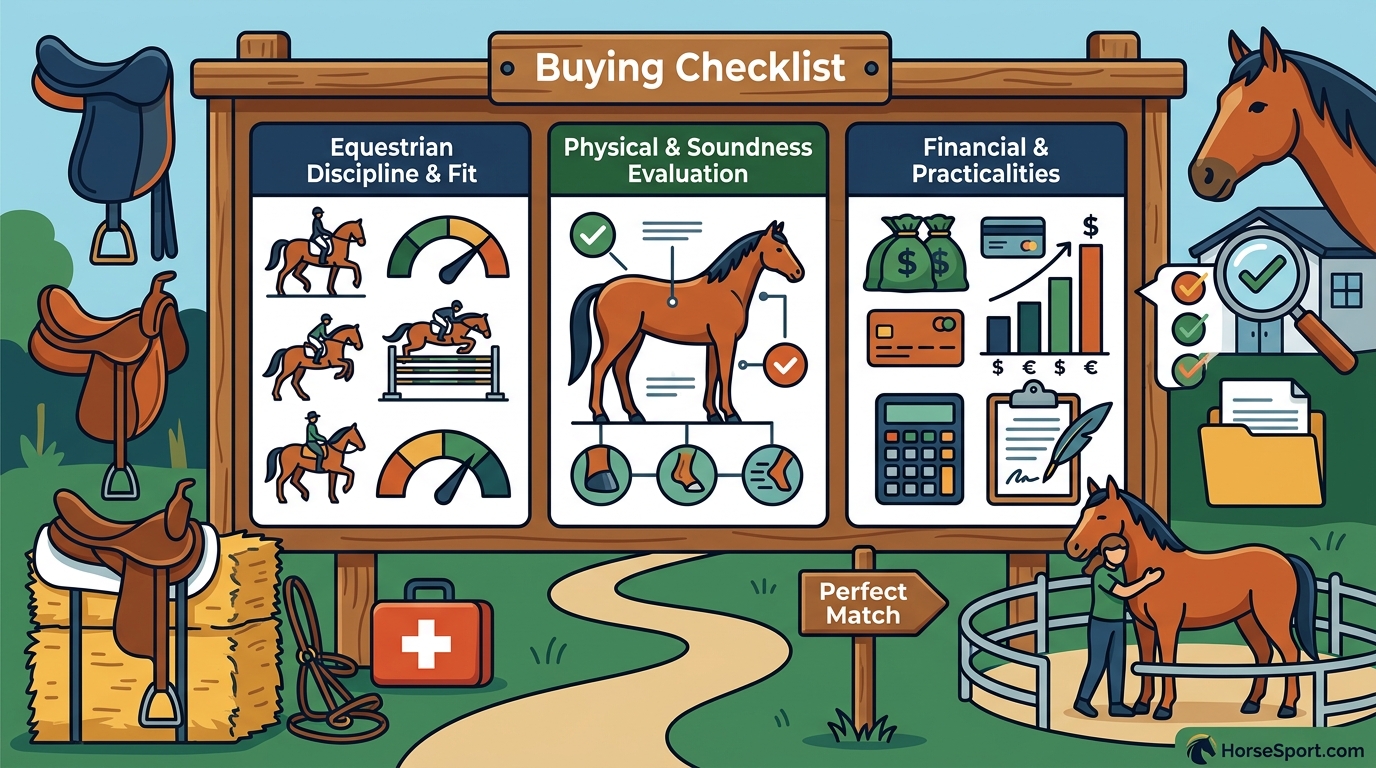
Be honest about your abilities and ask your coach or a knowledgeable friend to evaluate your riding level. Visit the horse more than once, and try riding it at a secondary location or even at a competition if you plan to show.
The Pre-Purchase Veterinary Exam
A pre-purchase exam (PPE) is a veterinary evaluation designed to detect any current or potential health problems that could prevent the horse from performing the activities you intend. It typically includes flexion tests, x-rays, blood work, and a final veterinary opinion.
Always request a written report of the findings before you finalize the purchase. As equine lawyer Catherine Willson notes in Horse Sport's legal guide, a written report protects you legally and shows the veterinarian is serious about the job. Without documentation, proving facts in court becomes far more difficult.
Avoid Conflicts of Interest
Use an independent veterinarian rather than the seller's vet. While a vet who already knows the horse may seem convenient, the potential for conflicts of interest is significant. Make it clear to your vet what discipline and performance level you are buying for, as this dictates the scope of testing required. A competitive show horse, for example, may need additional ultrasounds and x-rays beyond the standard physical exam.
Budgeting Beyond the Purchase Price
The purchase price is only the beginning. According to Synchrony's Equine Lifetime of Care study, the all-in annual costs for owning a horse range from approximately $8,600 to $26,000 per year, depending on whether the horse is kept at pasture, used recreationally, or competed. Over a 25-year lifespan, total ownership costs can reach $300,000 to $924,000.
| Expense Category | Estimated Monthly Cost | Estimated Annual Cost |
|---|---|---|
| Full-care boarding | $600 - $2,500 | $7,200 - $30,000 |
| Feed and supplements | $100 - $400 | $1,200 - $4,800 |
| Farrier (every 6-8 weeks) | $40 - $125 | $480 - $1,500 |
| Routine veterinary care | $25 - $60 | $300 - $700 |
| Training and lessons | $240 - $500 | $2,880 - $6,000 |
| Insurance (mortality + medical) | $12 - $50 | $150 - $600 |
Always set aside an emergency fund of at least $1,000 to $5,000. Colic surgery alone can cost several thousand dollars, and after-hours emergency calls routinely run into the hundreds.
Working with Agents and Contracts
An agent is someone employed by a person to negotiate a deal with a third party. Many buyers rely on a trusted trainer or horse professional to locate and evaluate prospects. However, as Catherine Willson explains in her article on using an agent when buying or selling a horse, you must always understand whose interests the agent represents.
If you have not hired the agent yourself, they may be working for the seller. To protect yourself, put the terms of your agreement in writing, including commission structure, scope of authority, and any limitations on the deal. Use a written Agreement of Purchase and Sale that lists all representations the seller confirms as true.
Buying from Europe
If you are shopping internationally, agents who spend time watching horses at competitions can be more reliable than dealing barns that offer many horses but limited specificity. As Horse Sport's guide to buying in Europe notes, importing mares and stallions is more complicated and expensive, with costs reaching approximately $15,000+ CAD, plus quarantine requirements and border taxes.
Equine Insurance Essentials
Equine insurance is a specialized form of coverage designed to protect horse owners from financial losses due to health issues, accidents, theft, or liability claims. Most equine insurance premiums range from 3 to 4% of the horse's insured value. For example, insuring a horse valued at $5,000 would cost roughly $150 to $200 per year.
Two primary types exist: Named Perils mortality, which covers specific causes of death like fire, lightning, theft, and transport; and Full Mortality insurance, which extends to accidents and sickness. Horses over 16 years old are typically eligible only for Named Perils coverage. Medical and surgical coverage can be added to offset unexpected veterinary bills. Learn more in Horse Sport's detailed guide to everything you need to know about horse insurance.
Key Takeaways
- Always match the horse's breed, temperament, and training to your specific riding discipline and goals.
- Be honest about your experience level. Novice riders need well-trained, mature horses with forgiving temperaments.
- Schedule an independent pre-purchase veterinary exam and obtain a written report before finalizing any sale.
- Budget for annual ownership costs of $8,600 to $26,000 or more, well beyond the initial purchase price.
- Work with agents carefully: understand whose interests they represent and put all agreements in writing.
- Invest in equine insurance, especially Full Mortality and medical/surgical coverage, to protect against catastrophic expenses.
- Never rush the process. Visit the horse multiple times, ride at different locations, and accept that no horse is perfect on every criterion.
Frequently Asked Questions
What is the most important factor when buying a horse?
Matching the horse to your riding discipline, experience level, and long-term goals is the single most important factor. A mismatch leads to frustration, safety risks, and potential resale at a loss.
How much does it cost to own a horse per year?
Annual costs range from approximately $8,600 for a backyard horse to $26,000 or more for a competition horse, according to the Synchrony Equine Lifetime of Care report. Lifetime costs over 25 years can reach $300,000 to $924,000.
What is a pre-purchase exam?
A pre-purchase exam is a veterinary evaluation that assesses a horse's health, soundness, and suitability for its intended use. It typically includes flexion tests, x-rays, blood work, and a detailed physical examination.
Should I use the seller's veterinarian for a pre-purchase exam?
No. Using an independent veterinarian avoids potential conflicts of interest. An independent vet is more likely to conduct a thorough, unbiased assessment and recommend additional tests if warranted.
Do I need horse insurance?
Insurance is strongly recommended. Full Mortality premiums typically run 3 to 4% of the horse's insured value, and medical/surgical coverage helps offset emergency veterinary bills that can reach thousands of dollars.
Is it better to buy through an agent or directly from a seller?
An experienced agent can locate quality horses and evaluate suitability, but always clarify who the agent represents. If you did not hire the agent, they may be working in the seller's interest. Written agreements protect both parties.
What breeds are best for beginner riders?
Quarter Horses, Appaloosas, and Canadians are popular choices for beginners due to their calm temperaments and versatility. Breed alone does not guarantee suitability; individual temperament, training, and age matter just as much.
Should I consider a trial period before buying?
Trial periods of two weeks to a month can help you evaluate the horse in your own environment. However, they carry risks for both buyer and seller. If you pursue a trial, write a detailed contract and take out a full mortality insurance policy with the owner named as beneficiary.
Start Your Search the Right Way
Explore more expert advice on horse shopping, ownership costs, and equine care at HorseSport.com, Canada's equestrian authority with over 50 years of trusted coverage. Browse our horse shopping tips to begin your buying journey with confidence.