
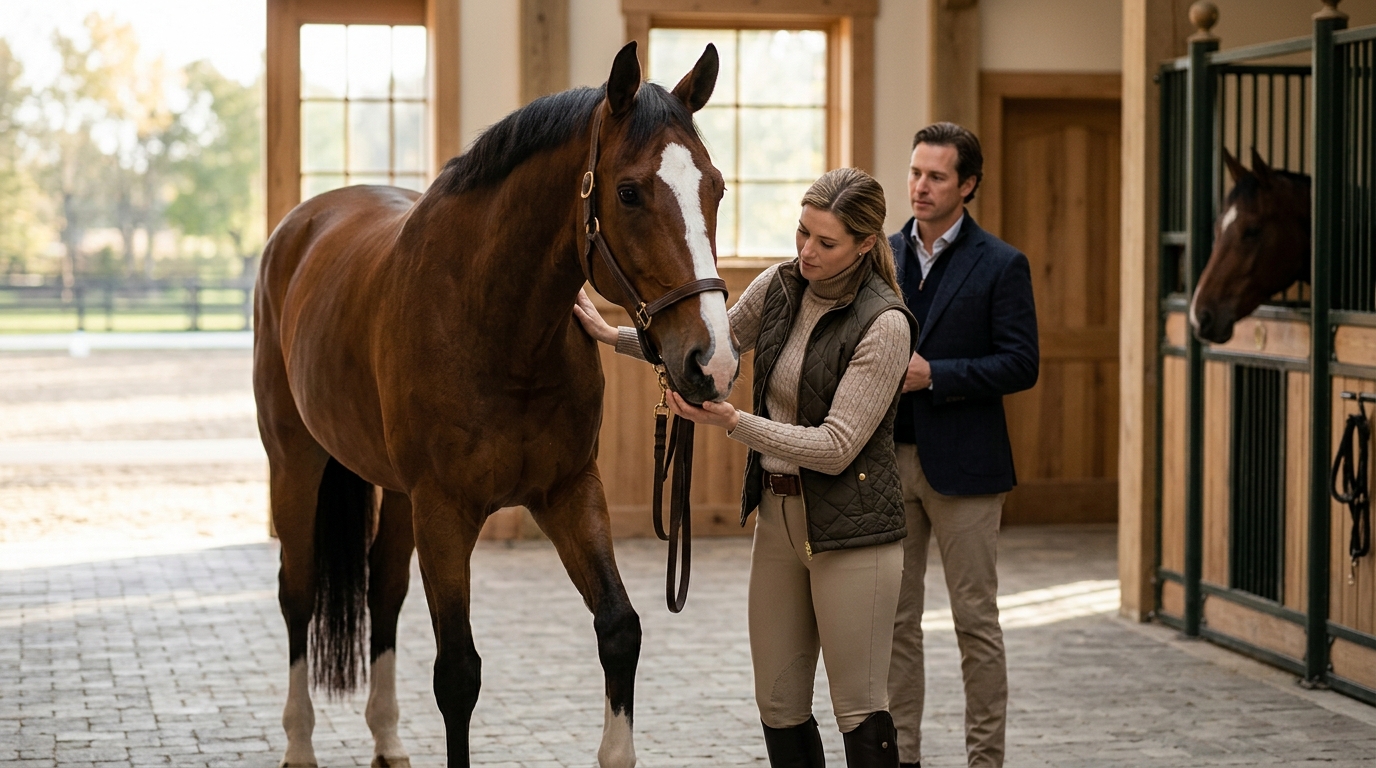
Buying a horse is one of the most exciting decisions an equestrian can make, but it is also one of the most complex. From matching the right breed to your discipline, to budgeting for ongoing care that can exceed $26,000 per year, the process demands careful research and honest self-assessment. Whether you are a first-time buyer or a seasoned competitor shopping for your next partner, understanding the key factors before you sign a bill of sale can save you thousands of dollars and years of frustration. This guide covers the essential considerations every prospective horse owner should evaluate before making that life-changing purchase.
Match the Horse to Your Discipline and Goals
A discipline match is the alignment between a horse's breed, build, and training and the specific equestrian activity you intend to pursue. Not every horse is suitable for every activity, and choosing the wrong type can feel like fitting a square peg into a round hole, as multi-discipline coach Lindsay Grice explains on Horse Sport.
For example, a heavy Warmblood or draft cross may excel at dressage but would be a poor pick for barrel racing. Conversely, a Thoroughbred fresh off the track might frustrate a casual trail rider but could be ideal for an aspiring eventer. Breeds like Quarter Horses, Appaloosas, and Canadians often suit relaxed trail riding, while Warmbloods dominate in jumping and dressage arenas.
Before you start shopping, write down your riding goals, your preferred disciplines, and whether you need a horse ready to compete now or one you can develop over time.
Honestly Assess Your Riding Experience
Rider-horse compatibility is the degree to which your current skill level matches the training and temperament of the horse you are considering. The old adage holds true: a green horse and a green rider make a poor combination.
Novice Riders
If you are a beginner, look for a mature horse with solid training, a kind nature, smooth gaits, and reliable brakes. Be honest about your abilities and get advice from your coach or a knowledgeable friend who can objectively assess your level.
Buying for a Child
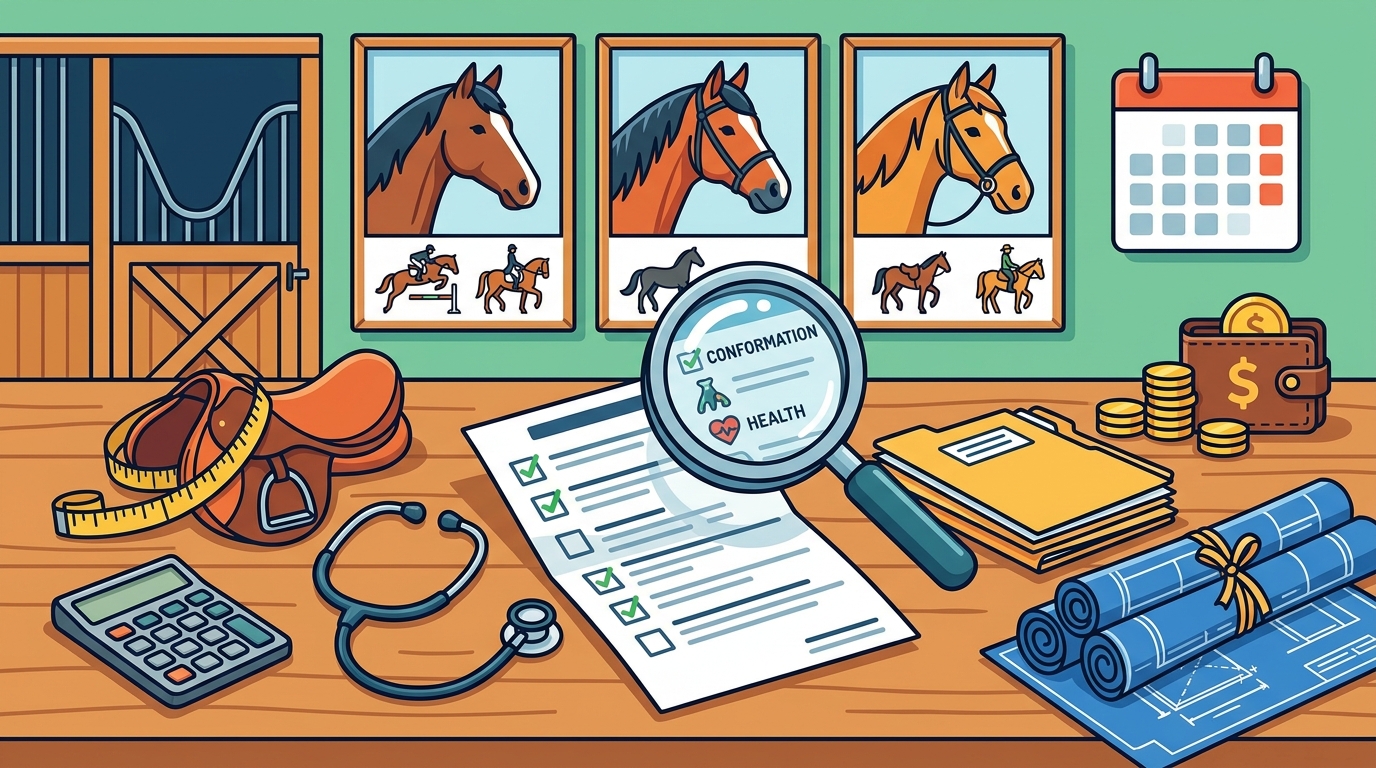
When purchasing for a young rider, choose a horse that is suitable immediately rather than one the child will "grow into" in two years. A horse that is too big, too strong, or too fast can be discouraging or even dangerous for a junior rider.
Experienced Riders
Advanced riders may consider younger prospects with less mileage. Keep in mind that the true value of a young horse reflects years of breeding, board, and professional training costs that can reach $15,000 to $20,000 before a buyer ever sees the animal.
Evaluate Conformation and Soundness
Conformation is the physical structure and proportional correctness of a horse's body, and it directly influences soundness and athletic ability. While even world-class horses may not have perfect legs, understanding basic conformation helps you spot potential problems early.
According to farrier Ross Smith, who has over 40 years of experience, prospective buyers often overlook the very foundation of the horse: the feet. Excessive or uneven hoof wear, mismatched foot sizes, or an upright foot paired with a lower-angled one can all indicate underlying issues.
Have both your veterinarian and your farrier inspect the horse. As conformation expert Linda Allen notes on Horse Sport, correct leg and foot conformation most often results in fewer soundness issues over the years.
Invest in a Pre-Purchase Veterinary Exam
A pre-purchase exam (PPE) is a veterinary evaluation designed to detect current or potential health problems before you commit to buying. It is not a pass-or-fail test but rather a risk assessment that gives you the information needed to make an educated decision.
A basic PPE typically includes a review of medical history, vital signs before and after exercise, and evaluation of the respiratory system, eyes, mouth, legs, back, joints, and hooves. For performance horses, your vet may also recommend blood work, X-rays, or an endoscopy. Always request a current Coggins test to screen for Equine Infectious Anemia.
Use an independent veterinarian rather than the seller's regular vet. As equine lawyer Catherine Willson explains in her guide to pre-purchase exams on Horse Sport, courts have indicated that a proper PPE must take into account the buyer's intended purpose for the horse.
| Component | Basic PPE | Advanced PPE (Performance Horse) |
|---|---|---|
| Physical exam and vital signs | Yes | Yes |
| Lameness evaluation at walk/trot | Yes | Yes |
| Flexion tests | Sometimes | Yes |
| Eye, mouth, and hoof inspection | Yes | Yes |
| Blood work (CBC, chemistry) | Optional | Recommended |
| Radiographs (X-rays) | Optional | Recommended |
| Upper airway endoscopy | No | Optional |
| Coggins test (EIA) | Yes | Yes |
Prioritize Temperament and Personality
Across large-scale surveys of riding instructors, recreational riders, and professional competitors, personality is consistently rated as the most important criterion when selecting a horse, ranking above conformation, price, gaits, or jumping ability.
Spend meaningful time with any horse you are considering. Observe how it reacts to handling, grooming, hoof picking, and new stimuli. A horse with a calm, agreeable temperament makes for a safer partnership, while a reactive or anxious horse may require a more experienced hand.
Ask the seller about vices or behavioral quirks such as cribbing, weaving, or difficulty loading. These habits may be manageable but should factor into your decision and potentially the price.
Budget Beyond the Purchase Price
The purchase price is often the least expensive part of horse ownership. According to the Synchrony Equine Lifetime of Care study, all-in annual costs range from roughly $8,600 for a backyard horse to $26,000 or more for a competition horse. Over a 25-year lifespan, total ownership costs can reach $300,000 to $924,000.
Ongoing Expense Categories
- Board: $250 to $2,500+ per month depending on facility and services
- Feed and forage: A 1,000-pound horse needs 20 to 25 pounds of hay daily
- Farrier: Trimming or shoeing every 6 to 8 weeks, $150 to $1,200 annually
- Routine vet care: Vaccinations, dental floats, and deworming, $300 to $700 per year
- Insurance and emergency fund: Set aside $2,000 to $5,000 annually for the unexpected
Build a realistic monthly budget before you begin shopping. If the numbers feel tight, consider buying quality used tack and exploring half-lease arrangements to share costs.
Understand Legal and Contractual Protections
The legal principle of caveat emptor, or "let the buyer beware," applies to most horse transactions. It is up to you, the buyer, to investigate and become informed about the horse you wish to purchase. Liability shifts to the seller only if false representations are made.
Working with an Agent
Many buyers hire a trainer or horse professional to help locate and evaluate prospects. As Catherine Willson outlines in her article on using agents, an agent is someone employed to negotiate a deal on your behalf. Always clarify commission arrangements (the standard is 10 to 15 percent) and ensure the purchase agreement is signed directly between you and the seller.
Written Contracts
Always request a written bill of sale that discloses the legal owner, buyer, medical conditions, and any defects or surgeries. Several U.S. states, including Florida and California, have statutes requiring specific disclosures in equine sales.
Trial Periods
A trial period can range from two weeks to a full lease-to-buy arrangement. If you opt for a trial, draft a detailed contract covering liability, insurance, and veterinary expenses during the trial window.
Key Takeaways
- Choose a breed and type that aligns with your specific discipline and riding goals.
- Be honest about your riding level; novice riders need experienced, well-trained horses.
- Always commission an independent pre-purchase veterinary exam before buying.
- Evaluate conformation and hoof health with the help of both a vet and a farrier.
- Prioritize temperament over flashy movement or pedigree, especially for amateur riders.
- Budget for $8,600 to $26,000+ in annual ownership costs beyond the purchase price.
- Protect yourself legally with written contracts, proper disclosure, and clear agent agreements.
Frequently Asked Questions
What is the most important factor when buying a horse?
Temperament and suitability for your riding level are widely considered the most important factors. Research shows that personality consistently ranks above conformation, price, and athletic ability in buyer priorities.
How much does a pre-purchase exam cost?
A basic PPE typically costs $250 to $500. Adding radiographs, blood work, or endoscopy for a performance horse can bring the total to $1,000 to $2,500 or more, but this investment can save you from far greater expenses down the road.
Should a beginner buy a young or older horse?
Beginners are better served by a mature horse (typically 8 to 15 years old) with solid training and a calm disposition. Young, green horses require experienced handling and can be unsafe for novice riders.
How much does it cost to own a horse per year?
Annual costs range from roughly $8,600 for a backyard horse to over $26,000 for a competition horse, according to the Synchrony Equine Lifetime of Care report. These figures do not include show entry fees or travel.
Do I need a written contract when buying a horse?
Yes. A written bill of sale protects both buyer and seller by documenting the price, ownership, medical history, and any representations about the horse. Several U.S. states legally require written disclosure in equine transactions.
What should I look for in a horse's hooves?
Check for balanced, even wear, symmetrical foot size, healthy frog and sole, and the absence of cracks or rings. Enlisting your farrier during the evaluation is just as important as having a vet present.
Is it worth using an agent or trainer to help buy a horse?
A trusted agent can locate suitable prospects, assess fit, and negotiate on your behalf. Just be sure to clarify their commission, confirm who they represent, and sign the purchase agreement directly with the seller to ensure transparency.
Can I take a horse on trial before buying?
Many sellers offer trial periods of two weeks to one month, or a lease-to-buy option. Always draft a written contract covering liability, insurance, and veterinary responsibility during the trial.
Ready to Start Your Horse Search?
Finding the right horse takes patience, preparation, and the right team of professionals. Assemble your support network of coach, veterinarian, and farrier before you begin shopping. For more expert advice on horse buying, ownership, and equestrian sport, explore the latest articles at Horse Sport, your equestrian authority for over 50 years.