

Understanding why horses act the way they do is one of the most important skills a new equestrian can develop. Horse behavior is the study of how horses communicate, react to their environment, and interact with humans and other animals. Whether you are a first-time horse owner, a new riding student, or simply horse-curious, knowing where to find reliable, science-backed articles on equine behavior will fast-track your learning and keep your horse safer and happier. This guide walks you through exactly where to look, what topics to explore first, and how to evaluate the quality of the information you find.
Why Understanding Horse Behavior Matters for Beginners
Horses are prey animals with a deeply ingrained fight-or-flight response. Their first reaction to a perceived threat is almost always to flee, and this instinct persists in every domesticated horse today. Misreading that instinct is one of the most common reasons new handlers get hurt or frustrated.
Research consistently shows that even experienced riders struggle to recognize pain-related behaviors in horses. As equine veterinarian Sue Dyson has noted, the normalization of abnormal behaviors leads owners to blame a horse's personality rather than investigate discomfort. For beginners, building behavioral literacy from day one prevents these costly misunderstandings.
Where to Find Trustworthy Horse Behavior Articles
Dedicated Equestrian Publications
The most reliable beginner-friendly articles come from established equestrian publications that employ veterinary reviewers and credentialed writers. HorseSport.com maintains a dedicated Behaviour section within its magazine archive, featuring research-backed pieces on topics ranging from isolation stress to pain recognition. As Canada's equestrian authority with over 50 years of publishing history, it is an ideal starting point.
University and Veterinary Resources
Academic institutions like the University of Guelph and organizations such as the International Society for Equitation Science (ISES) publish peer-reviewed findings that filter into accessible magazine articles. ISES conferences have produced landmark presentations on topics like mounting block avoidance behavior and equine welfare assessment.
Curated Online Libraries
The HorseSport.com Magazine Articles Archive lets you filter by category, including Behaviour, Training, Health, and Equine Welfare. This makes it easy to build a structured reading list without wading through unverified blog posts.
Essential Behavior Topics Every Beginner Should Read
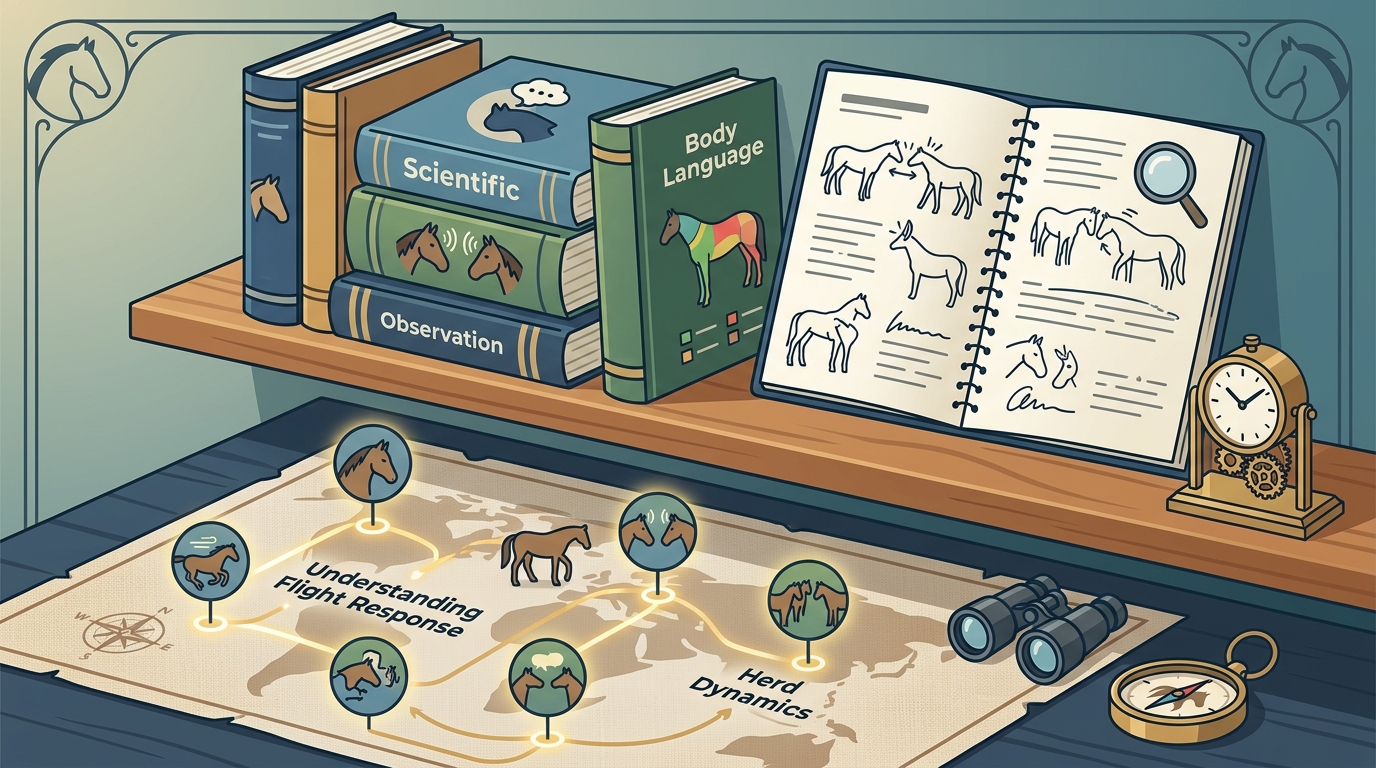
Equine body language is the visible set of signals, including ear position, tail movement, breathing rate, and eye blinking, that horses use to communicate their emotional state. Start with articles that teach you to read these cues objectively. A great example is Anne Kruger-Degener's piece on objective observation in horse training, which explains that reading a horse means observing with all your senses and being open to the animal's answers without judgment.
From there, explore these beginner-priority topics:
- Stress and boredom signs - Learn how confinement and lack of natural behavior can harm your horse physically and mentally through articles like Is My Horse Bored?
- Pain-related behavior - Understand that biting, kicking, and bucking may indicate pain rather than bad attitude, as outlined in Pain and Behaviour Problems in Horses
- Social bonds and grief - Horses are highly social animals who form strong bonds and may exhibit behavioral changes after losing a companion, a topic covered in Do Horses Grieve the Loss of a Friend?
- Herd dynamics - Discover how horses resolve conflict through herd dynamics and group turnout research
- Human-horse bonding - Learn how sensitive grooming and positive handling create lasting trust through building a better bond with your horse
How to Evaluate the Quality of Equine Behavior Content
Not all horse behavior articles are created equal. Source credibility is the degree to which an information provider can be trusted based on expertise, evidence, and editorial standards. Here is a quick checklist for beginners:
- Author credentials: Look for writers with veterinary, ethology, or equitation science backgrounds.
- Citations: Quality articles reference specific studies, researchers, or institutions by name.
- Recency: Equine behavior science evolves. Prefer articles published or updated within the last five years.
- Editorial oversight: Established publications like HorseSport.com employ editorial review processes that individual blogs lack.
Be cautious of content that anthropomorphizes horses excessively or attributes complex human emotions without scientific support.
Building a Beginner Reading Plan
Rather than reading randomly, structure your learning in phases. Spend two to three weeks on each phase before moving to the next:
- Phase 1 - Observation basics: Learn to read body language and recognize relaxation versus tension.
- Phase 2 - Pain and stress: Study how discomfort manifests behaviorally and when to call a vet.
- Phase 3 - Social behavior: Explore herd dynamics, bonding, and isolation stress.
- Phase 4 - Applied behavior: Read about groundwork, confidence-building exercises, and training methods rooted in behavioral science.
Comparing Popular Horse Behavior Resource Types
| Resource Type | Best For | Evidence Quality | Cost | Beginner Friendly |
|---|---|---|---|---|
| Equestrian magazine archives (e.g., HorseSport.com) | Curated, expert-written articles | High (editorially reviewed) | Free or low-cost membership | Yes |
| University extension sites | Research summaries and fact sheets | Very high (peer-reviewed) | Free | Moderate |
| Social media and forums | Community tips and anecdotes | Variable (unverified) | Free | Yes, but risky |
| Textbooks (e.g., Equine Behavior by Paul McGreevy) | Deep academic understanding | Very high | $50-$100+ | No (advanced) |
| Online courses (e.g., ISES modules) | Structured learning with assessments | High | $30-$300 | Yes |
Key Takeaways
- Start your horse behavior education with a trusted, editorially reviewed source like the HorseSport.com Behaviour archive.
- Horses are prey animals driven by flight instinct; understanding this is the foundation of all behavioral knowledge.
- Pain is one of the most under-recognized causes of so-called "bad" behavior in horses.
- Learning to read equine body language objectively should be your first priority as a beginner.
- Always check author credentials, study citations, and publication date when evaluating articles.
- Structure your reading into phases: observation, pain and stress, social behavior, then applied training.
- Supplement magazine articles with university resources and equitation science courses for deeper learning.
Frequently Asked Questions
What is the best website for beginner horse behavior articles?
HorseSport.com offers a dedicated Behaviour category with dozens of expert-written, research-referenced articles covering topics from body language to herd dynamics. Its 50-plus-year publishing legacy and editorial standards make it one of the most trustworthy sources available online.
How do I know if a horse behavior article is scientifically accurate?
Look for named researchers, specific study references, and connections to recognized institutions like ISES or universities. Avoid articles that make broad claims without any evidence or that rely solely on personal anecdotes.
What horse behavior topics should I learn first?
Begin with equine body language and stress signals, then move to pain-related behaviors. These two areas will improve your safety around horses and help you respond appropriately to common situations.
Can I learn horse behavior entirely from articles?
Articles build excellent theoretical knowledge, but hands-on experience with a qualified instructor is essential. Use reading to prepare for and reinforce what you learn in the barn.
Are free horse behavior articles as good as paid resources?
Many free articles from reputable equestrian publications are written by the same experts who author textbooks and academic papers. The key is source quality, not price.
How often is new horse behavior research published?
Equine behavior science is a growing field. Major conferences like the annual ISES meeting produce new findings each year, and publications like HorseSport.com regularly translate that research into accessible articles.
What is equitation science?
Equitation science is the study of horse-human interactions using objective, evidence-based methods drawn from learning theory, biomechanics, and ethology. It provides the scientific backbone for modern horse training and welfare practices.
Start Learning Today
Ready to build your horse behavior knowledge? Browse the HorseSport.com Behaviour article collection and bookmark your first five reads. Start with observation basics, then work through pain, social behavior, and groundwork topics at your own pace. Your horse will thank you for it.