
Common Pasture Management Mistakes Horse Owners Make and How to Correct Them
Pasture management is the foundation of equine health, yet it is frequently overlooked until a crisis occurs. According to recent agricultural data, improper grazing practices are a leading cause of preventable laminitis and colic in domestic horses. When owners neglect the soil beneath their horses' hooves, they compromise the entire ecosystem. This guide outlines the most frequent errors and provides the corrective actions needed to restore balance. (Donate 8211 Horse Sport)
Mistake 1: Allowing Overgrazing
Overgrazing is the single most destructive habit in horse ownership. It occurs when horses are allowed to eat grass shorter than three inches. Overgrazing is the practice of allowing livestock to consume vegetation faster than it can regenerate. When grass is stripped to the dirt, the root systems weaken and die. This leads to bare patches that invite invasive weeds and cause severe soil erosion.
Many owners believe that a lush green lawn is a sign of success. In reality, a perfectly manicured pasture often indicates that the grass is being starved. Horses are natural grazers who prefer to eat small amounts of high-quality forage throughout the day. When the grass is too short, they cannot find it, leading to boredom and stable vices like cribbing or weaving.
To correct this, you must implement a rotational grazing system. Divide your land into smaller paddocks. Allow horses to graze one section until the grass reaches about four inches, then move them to the next. This gives the rested pasture time to recover its root mass. You can find more detailed strategies on farm management best practices to help you plan your rotation schedule effectively.
Mistake 2: Ignoring Manure Management
Manure is not just waste; it is a vector for parasites and a nutrient hazard. Many owners leave piles of manure in the pastures for weeks or months. This neglect allows strongyle larvae to mature and infect the grass. When horses graze on these contaminated patches, they ingest the parasites, leading to weight loss and colic.
Manure management is the systematic removal and disposal of animal waste to prevent disease and maintain hygiene. Beyond health risks, large piles of manure create "manure patches" where grass cannot grow due to excessive nitrogen concentration. These dead spots are eyesores that reduce the usable acreage of your property.
The solution is regular harrowing or dragging. Use a chain harrow to break up manure piles and spread the nutrients evenly across the pasture. This accelerates decomposition and exposes parasite larvae to sunlight and air, which kills them. For a comprehensive list of facilities and services, you can consult the Canadian Stable Directory to find local resources or equipment suppliers.
Mistake 3: Failing to Control Toxic Weeds
Weeds are not merely aesthetic issues; they are potential killers. Pastures often harbor toxic plants such as ragwort, foxglove, and nightshade. Horses are generally careful eaters, but they will consume toxic weeds when grass is scarce or when they are bored. A single mouthful of certain plants can cause fatal liver failure or neurological damage.
Toxic weed control is the targeted removal of poisonous plant species from grazing lands to ensure equine safety. Early detection is critical. You must walk your pastures weekly during the growing season. Identify weeds before they go to seed. Manual removal is the safest method for small infestations. For larger areas, consult a professional agronomist for safe herbicide application.
Understanding the specific flora in your region is vital. A recent study on equine behavior and health highlights how subtle changes in a horse's demeanor can signal early signs of toxicity or discomfort. By staying vigilant, you protect your animals from silent threats.
Mistake 4: Neglecting Water Quality
Water is more critical than grass. A horse can survive weeks without food but only days without water. Many owners focus on the greenery and forget to check the troughs. Stagnant water breeds bacteria, algae, and mosquitoes. Mosquitoes are vectors for Eastern Equine Encephalitis and West Nile Virus, both of which are deadly.
Water quality management is the continuous monitoring and maintenance of hydration sources to prevent bacterial and parasitic contamination. Clean your troughs at least once a week. Scrub away the slime layer that forms on the bottom and sides. Ensure that the water source is not contaminated by runoff from manure piles or chemical treatments.
During winter, heated troughs are essential to prevent dehydration. Cold water discourages drinking, which can lead to impaction colic. If you are unsure about the infrastructure requirements for your region, you can reach out to the publisher team for guidance on regional compliance and best practices.
Mistake 5: Skipping Pasture Rotation
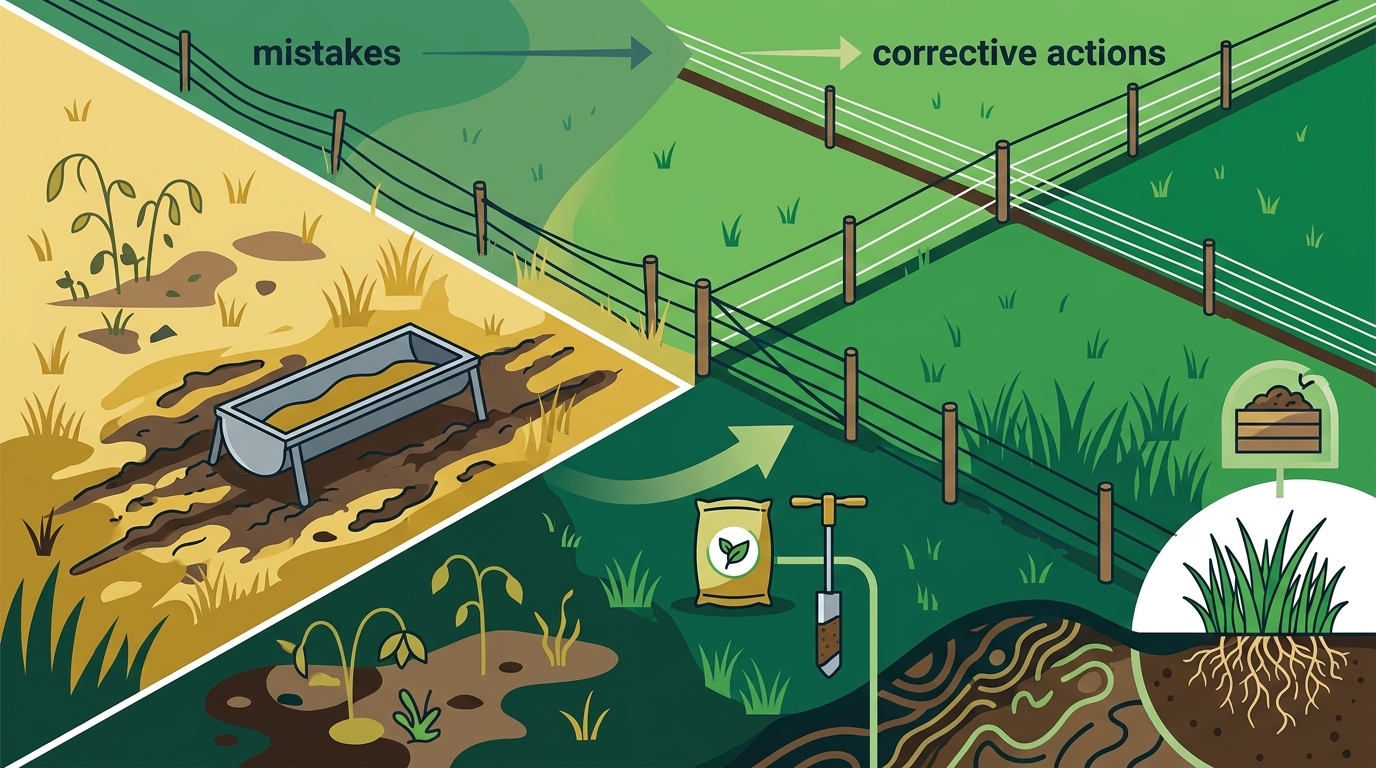
Continuous grazing on the same land leads to soil compaction and nutrient depletion. Horses trample the soil, reducing its ability to absorb rainwater. This results in muddy, churned-up areas that are difficult for horses to walk on and prone to injury. Compacted soil also prevents grass roots from penetrating deep, making them vulnerable to drought.
Rotation is the antidote to compaction. By moving horses between paddocks, you allow the soil to rest and recover. This practice also breaks the life cycle of internal parasites. Parasite larvae require a host to complete their life cycle. When you remove the host, the larvae die off before they can infect the next group of horses.
For more insights on maintaining a healthy environment, explore our science of pasture management article. It details the biological processes that occur during rest periods and how to maximize forage yield.
Mistake 6: Forgetting Soil Testing
Many owners guess at their fertilizer needs. This is a costly mistake. Without a soil test, you do not know the pH level or the nutrient balance of your land. Grass that is too acidic will not absorb nutrients efficiently, leading to poor growth and weak roots. Over-fertilizing can leach into groundwater, causing environmental harm.
Soil testing is the analytical process of measuring soil pH and nutrient levels to guide precise fertilization strategies. Test your soil every two to three years. The results will tell you exactly how much lime or fertilizer to apply. This precision saves money and promotes healthier grass. Healthy grass is more nutritious and more resistant to pests.
For those looking to expand their knowledge or connect with industry experts, Horse Sport offers a wealth of resources. You can browse our articles section for more expert advice on equine care.
Comparison of Pasture Management Strategies
| Strategy | Frequency | Primary Benefit | Cost Level |
|---|---|---|---|
| Rotational Grazing | Every 2-4 weeks | Prevents overgrazing and parasite buildup | Low |
| Manure Harrowing | Every 2-4 weeks | Reduces parasite larvae and spreads nutrients | Low |
| Soil Testing | Every 2-3 years | Optimizes fertilizer use and grass health | Medium |
| Weed Control | Weekly inspection | Prevents toxic ingestion and land degradation | Medium |
Key Takeaways
- Overgrazing damages root systems and invites weeds; always maintain grass height above three inches.
- Manure piles harbor parasites; drag pastures regularly to break the life cycle.
- Toxic weeds like ragwort are lethal; identify and remove them before they seed.
- Water quality is as important as forage; clean troughs weekly to prevent disease.
- Soil testing prevents guesswork; test every few years to ensure proper nutrient balance.
- Rotation protects soil structure; give pastures time to recover from trampling.
- Healthy pastures reduce veterinary bills; prevention is cheaper than cure.
Frequently Asked Questions
How often should I rotate my horses?
Rotation frequency depends on weather and grass growth. In spring, grass grows fast, so you may need to move horses every week. In summer drought, you may need to rotate more frequently to prevent overgrazing. The goal is to let grass recover to four inches before grazing again.
What is the best way to remove manure?
For small pastures, manual removal is effective. For larger areas, use a chain harrow or drag. This breaks up piles and spreads nutrients. It also exposes parasite larvae to sunlight, which kills them. Avoid dragging during wet conditions to prevent soil compaction.
How can I identify toxic weeds in my pasture?
Learn to recognize common toxic plants in your region. Ragwort has yellow flowers and a distinct smell. Foxglove has tall spikes of purple flowers. Nightshade has small white flowers and green berries. Consult local agricultural extension offices for identification guides.
Why is soil testing important for horse pastures?
Soil testing tells you the pH and nutrient levels. Grass grows best in slightly acidic soil. If the soil is too acidic, lime is needed. If nutrients are low, fertilizer is required. Testing prevents over-fertilization and saves money.
Can I use herbicides on my pasture?
Yes, but you must be careful. Use herbicides labeled as safe for equine pastures. Apply them when the wind is calm to prevent drift. Avoid spraying near water sources. Always follow the manufacturer's instructions to protect your horses and the environment.
How does overgrazing lead to laminitis?
Overgrazed grass is high in sugars and starches. When horses eat this grass, their blood sugar spikes. This can trigger laminitis, a painful and potentially fatal inflammation of the hoof. Rotational grazing ensures horses eat a balanced diet.
What should I do if I find a dead horse in my pasture?
Remove the carcass immediately to prevent disease spread. Contact a veterinarian or local animal control for proper disposal. Do not leave it in the pasture. This is a critical biosecurity measure.
Start Your Pasture Transformation Today
Correcting these common mistakes requires effort, but the reward is a healthy, vibrant environment for your horses. A well-managed pasture reduces veterinary costs and improves the quality of life for your animals. Take the first step by scheduling a soil test or planning your rotation schedule. For more expert advice and community support, visit Horse Sport and explore our resources. You can also contact us with your specific questions.