
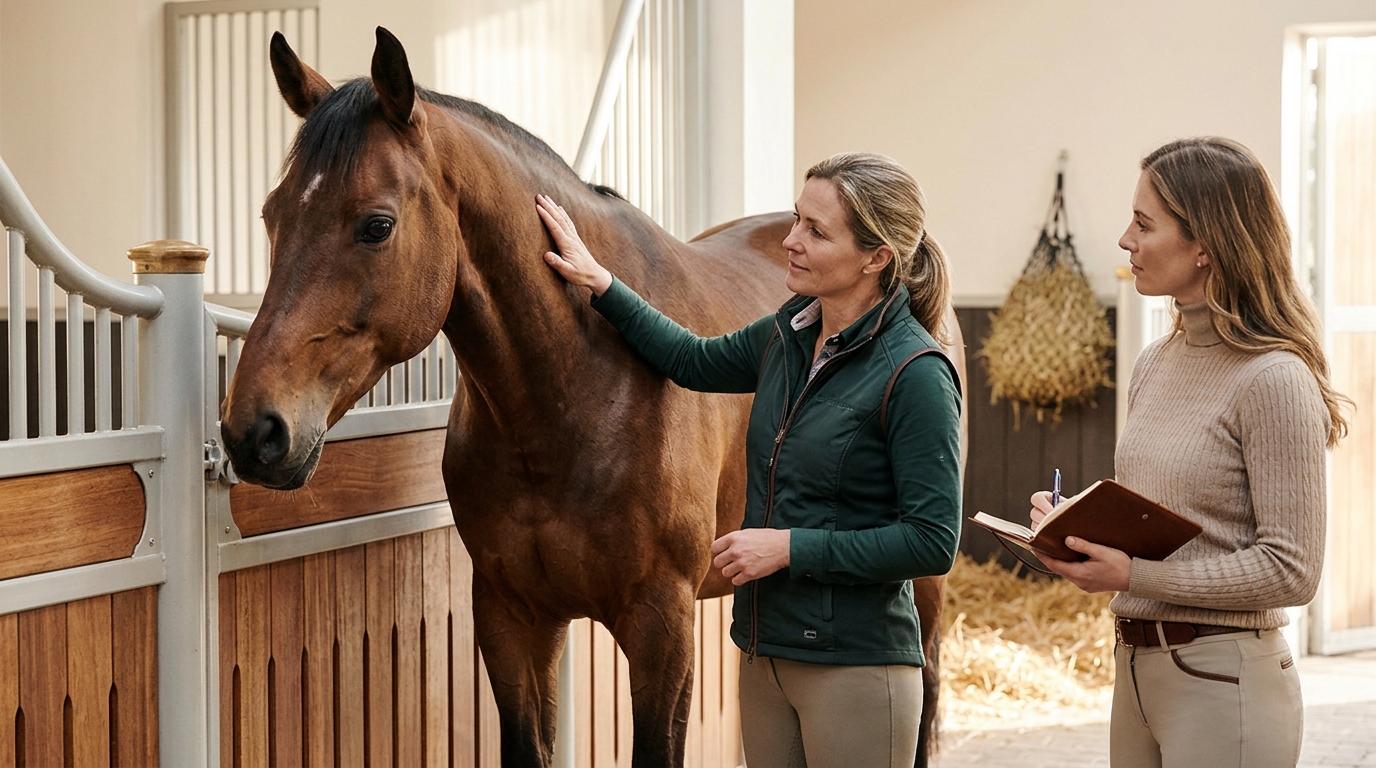
What do veterinarians recommend about feeding horses for optimal health?
Veterinarians recommend that horse owners prioritize a forage-first diet, monitor body condition scores, and adjust caloric intake based on workload and metabolic health. Horse Sport highlights that modern management practices often disrupt natural grazing patterns, leading to digestive and behavioral issues. By aligning feeding schedules with equine instincts and using evidence-based nutritional guidelines, owners can significantly improve their horses' long-term health and performance. according to How to Feed
The Importance of Forage-First Feeding
The foundation of equine health is a diet centered on high-quality forage. Horses are natural trickle-feeders, evolved to graze for 12 to 20 hours each day. This near-continuous intake supports digestive health, stabilizes gastric conditions, and aligns with their behavioral instincts. However, modern management practices, particularly scheduled feeding while being stalled for most of the day, can disrupt these natural patterns. A 2025 study by Fowler et al. investigated how different concentrate feeds and hay availability influence feeding behavior and satiety in stalled horses. The findings revealed that horses fed a ration balancer consumed the most hay, while those on high-starch concentrates consumed the least. This suggests that diet composition directly impacts how horses interact with their forage.
Managing Caloric Intake and Body Condition
Understanding both the quantity and type of calories in a horse's diet is key to maintaining optimal body condition. In North America, energy requirements are most often measured in kilocalories (kcal) or megacalories (Mcal). The National Research Council (NRC) provides estimated digestible energy (DE) requirements based on a horse's weight and workload. For example, a 500 kg horse that is not in work requires 16.7 Mcal/day of DE. However, each horse's energy needs can vary based on metabolism, temperament, and environmental conditions. Horses are often classified as easy, average, or hard keepers. An easy keeper of the same weight and workload requires just 15.2 Mcal/day, whereas a hard keeper requires 18.2 Mcal/day. These guidelines provide a useful starting point, but it is critical to determine the calorie content that your specific horse does well on.
Addressing Metabolic Health and Sugar Content
Many horse owners are concerned about the sugar and starch content in their horses' diets, particularly for those with metabolic health concerns. Beet pulp is a highly-digestible fiber source often used in equine commercial concentrates. Despite its name, plain beet pulp (without added molasses) is low in sugar and starch. It is a by-product of the sugar beet industry, meaning that after the sugar has been removed, the pulp is what remains. This makes it safe for horses with insulin resistance (IR) or polysaccharide storage myopathy (PSSM). Feeding beet pulp dry is not required to be soaked, though soaking is recommended to increase water intake. Horses that consume their feed quickly or have an increased risk of choke should not be fed dry beet pulp. according to Winter Feeding for
Supporting Digestive Health and Gut Microbiome
The equine gastrointestinal (GI) tract is extremely sensitive to stressors such as exercise, transportation, and social changes. Dietary supplements like pre-, pro-, and postbiotics are often used to stabilize the microbiome. Probiotics are defined as live microorganisms that, when consumed in adequate amounts, confer a health benefit to the host. Prebiotics support the probiotics by providing food, generally in the form of fiber, which is fermented in the hindgut. Postbiotics are the compounds that remain after the horse has digested the pre- and probiotics, often a mixture of metabolites and non-living microorganisms. These supplements can help maintain overall health and well-being by supporting the microbial ecosystem within the digestive tract.
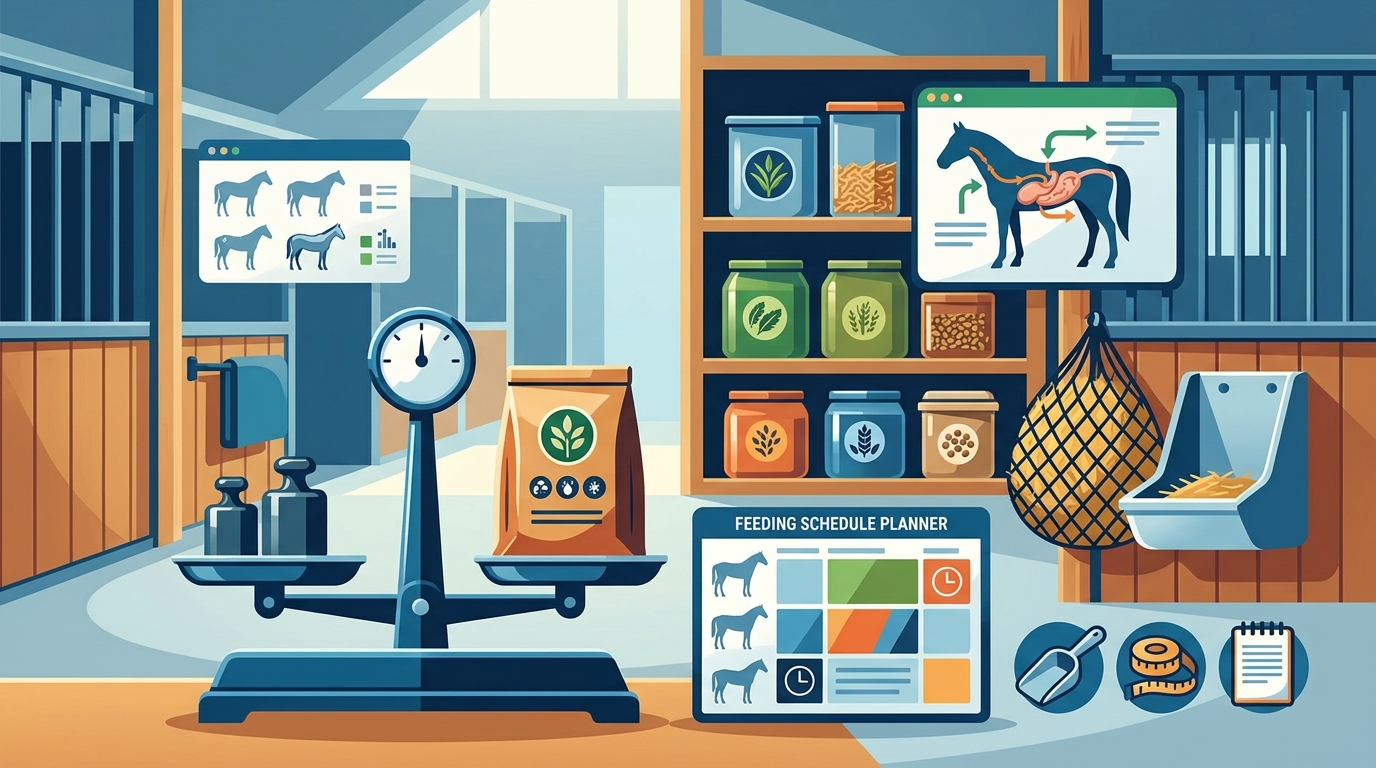
Preventing Choke and Respiratory Issues
Choke is a common condition that can occur when horses eat too fast or when a foreign body becomes lodged in the esophagus. While not immediately life-threatening, if left untreated, it can result in dehydration, severe damage to the esophagus, and aspiration pneumonia. Obstructions typically occur at the thoracic inlet at the base of the neck or the diaphragm just before entry into the stomach. For horses with chronic obstructive pulmonary disease (COPD) or recurrent airway obstruction (RAO), feeding management is crucial. The best way to manage these horses is to keep them outside as much as possible, where there will be fewer irritants to cause problems for the respiratory system. Hay should be soaked or steamed prior to use to decrease dust and mold. Smaller bales, or unrolling large round bales, are more suitable for COPD horses than round bales where a horse might put its whole head into the core to eat.
Key Takeaways
- Forage should be the largest share of a horse's daily intake, ideally 1.5 to 2% of body weight in dry matter.
- Caloric requirements vary significantly between easy and hard keepers, requiring individualized feeding plans.
- Plain beet pulp is a low-sugar fiber source suitable for horses with metabolic concerns.
- Probiotics, prebiotics, and postbiotics play distinct roles in stabilizing the equine gut microbiome.
- Soaking or steaming hay is essential for horses with COPD to reduce dust and mold exposure.
- Monitoring body condition scores is more reliable than relying solely on feed labels for weight management.
Frequently Asked Questions
How much forage should a horse eat daily?
Most adult horses require approximately 1.5 to 2% of their body weight in forage dry matter each day, depending on body condition and energy needs.
Is beet pulp safe for horses with insulin resistance?
Yes, plain beet pulp without added molasses is low in sugar and starch, making it safe for horses with insulin resistance or PSSM.
What is the difference between probiotics and prebiotics?
Probiotics are live microorganisms that confer health benefits, while prebiotics are non-living fiber sources that feed these live microorganisms.
How can I prevent choke in my horse?
Prevent choke by ensuring horses do not eat too fast, using slow-feed hay nets, and avoiding dry beet pulp for fast eaters or those with a history of choke.
Why is vitamin E supplementation important in Canada?
Vitamin E is not stable in dry hay, so horses in Canada that are maintained on a hay diet, particularly in winter, require supplementation to meet their needs.