

Investing in high-quality horse tack is not merely a matter of aesthetics; it is a critical component of equine welfare and rider safety. According to recent industry data, improper tack fit contributes to approximately 30% of behavioral issues in horses, making the selection of reputable brands essential for any serious equestrian. When you evaluate different horse tack brands, you are assessing the intersection of material science, ergonomic design, and ethical manufacturing practices. This guide provides a rigorous framework for analyzing tack quality, ensuring that every piece you purchase supports the health of your horse and the longevity of your investment. (Horse Sport)
Material Analysis: Leather, Synthetic, and Hybrid Options
The foundation of any tack evaluation begins with the raw materials used in construction. High-quality brands are transparent about their sourcing and processing methods. The primary materials fall into three categories: full-grain leather, high-performance synthetics, and hybrid composites.Full-grain leather remains the gold standard for traditional tack due to its ability to mold to the horse's body over time. However, not all leather is created equal. Premium brands use vegetable-tanned leather, which is more durable and environmentally friendly than chrome-tanned alternatives. When inspecting leather, look for a consistent grain pattern without excessive correction or heavy finishing that masks defects.
Synthetic tack has evolved significantly in recent years. Modern materials like ballistic nylon and reinforced polymers offer superior weather resistance and require minimal maintenance. According to a 2024 report on equestrian equipment trends, synthetic tack sales have grown by 15% annually among competitive riders due to their consistency in varying climates. Evaluate synthetic brands by checking the density of the weave and the quality of the stitching. Cheap synthetics often delaminate under tension, leading to catastrophic failure during use.
Hybrid tack combines the best of both worlds, using leather contact points for grip and comfort, while utilizing synthetic webbing for strength and lightness. When evaluating these brands, ensure that the transition points between materials are reinforced. Poorly executed hybrids can create pressure points where the materials rub against each other, causing discomfort for the horse.
Fit and Ergonomics: The Anatomical Imperative
Quality is not just about the material; it is about how that material interacts with the horse's anatomy. A brand that prioritizes fit will provide detailed sizing guides and anatomical diagrams. The shoulder blade clearance in saddles and the withers pressure distribution in bridles are critical metrics.
When evaluating a brand's saddle line, look for designs that accommodate modern horse conformation. Many traditional saddles are too narrow for today's horses, leading to back pain and restricted movement. Reputable brands invest in research and development to create treeless or flexible tree options that distribute weight evenly. Check if the brand offers multiple tree widths or adjustable gullet systems.
For bridles and halters, the evaluation focuses on the noseband and crownpiece. A well-designed bridle will have a noseband that sits two fingers below the cheekbone, avoiding the sensitive trigeminal nerve. Brands that publish their fitting protocols demonstrate a commitment to equine welfare. Look for brands that offer adjustable headstalls and nosebands to accommodate different head shapes.
Brand Reputation and Industry Recognition
Brand reputation is a proxy for consistency and customer service. In the equestrian world, word-of-mouth travels fast. A brand with a long history of supporting competitive riders often has its products tested in the most demanding environments. Look for brands that sponsor national or international competitions, as this indicates confidence in their product's performance under pressure.
Another indicator of quality is the brand's presence in professional circles. If a tack brand is frequently used by Olympic-level trainers or recognized veterinary professionals, it is likely a sign of superior quality. You can explore the Canadian Stable Directory to see which stables and trainers are associated with specific brands in your region.
Customer service is also part of the brand evaluation. High-quality brands stand behind their products with robust warranty policies. They should offer repair services or replacement parts for broken buckles or worn stitching. This commitment to longevity is a hallmark of a premium brand.
Durability Testing and Long-Term Value
Evaluating durability requires looking beyond the initial purchase price. The concept of cost per use is essential in tack evaluation. A $1,000 saddle that lasts 10 years is a better investment than a $500 saddle that lasts 2 years. Brands that use high-grade hardware, such as stainless steel or brass buckles, ensure that the tack does not corrode or break easily.
When inspecting a brand's stitching, look for tight, even stitches with no loose threads. Double or triple stitching at stress points, such as the stirrup leathers and girth straps, is a sign of quality construction. The thread used should be high-tenacity polyester or nylon, which resists UV degradation and moisture.
Consider the brand's approach to maintenance. Quality tack is designed to be maintained. Brands that provide care instructions and recommend specific conditioners help extend the life of their products. This educational aspect of brand interaction is a valuable indicator of their commitment to customer success.
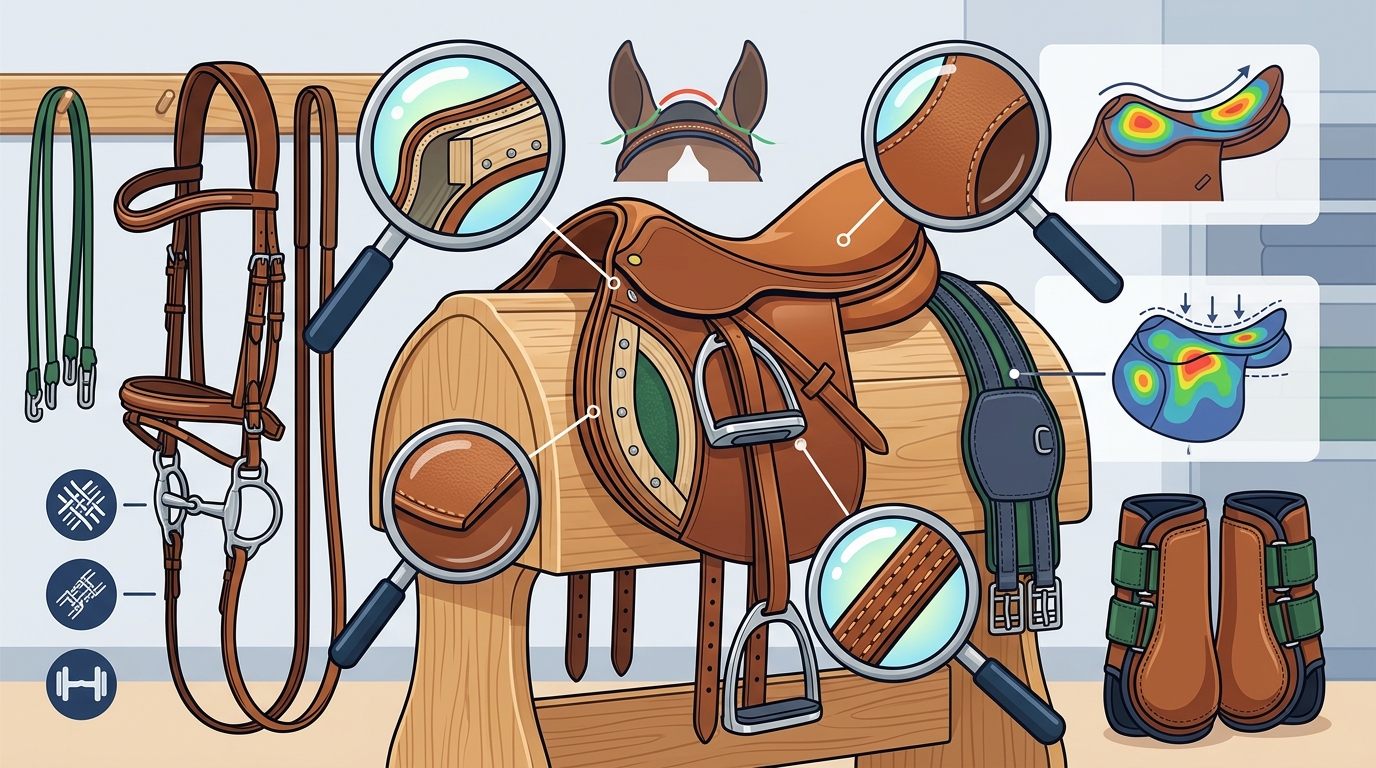
Comparative Analysis of Tack Categories
The following table summarizes the key evaluation criteria for different tack categories, helping you prioritize what to look for in each piece of equipment.
| Tack Category | Primary Quality Indicator | Fit Metric | Brand Red Flag |
|---|---|---|---|
| Saddles | Tree flexibility and panel material | Shoulder clearance and gullet width | Fixed tree with no width options |
| Bridles | Noseband adjustability and padding | Noseband position relative to cheekbone | Non-adjustable nosebands |
| Girths | Stretch recovery and buckle strength | Even pressure distribution along the barrel | Thin, non-stretch webbing |
| Boots | Impact absorption and secure fit | No rubbing at the fetlock joint | Loose Velcro closures |
Key Takeaways
- Material Transparency: Premium brands disclose their leather tanning processes and synthetic material compositions.
- Anatomical Fit: Quality tack is designed to accommodate the horse's shoulder blade and withers without pressure points.
- Industry Validation: Brands sponsored by competitive riders and veterinary professionals often demonstrate superior performance.
- Durability Metrics: High-tenacity stitching and corrosion-resistant hardware are essential for long-term value.
- Customer Support: Robust warranty policies and repair services indicate a brand's confidence in its products.
- Ergonomic Design: Look for adjustable features that allow for precise fitting to individual horse conformation.
- Maintenance Requirements: Quality brands provide clear care instructions to extend the lifespan of their tack.
Frequently Asked Questions
What is the difference between vegetable-tanned and chrome-tanned leather?
Vegetable-tanned leather is tanned using natural tannins from tree bark, resulting in a firmer, more durable leather that molds to the horse over time. Chrome-tanned leather is tanned using chromium salts, making it softer and more water-resistant but less durable in the long run.
How often should I replace my horse's bridle?
With proper care, a high-quality leather bridle can last 5 to 10 years. However, you should inspect it annually for cracks, stretched stitching, or worn padding. Replace it immediately if any structural integrity is compromised.
What is the ideal noseband position on a bridle?
The noseband should sit two fingers below the horse's cheekbone. This position ensures that it does not interfere with the horse's jaw movement or put pressure on the sensitive trigeminal nerve.
Are synthetic saddles as durable as leather saddles?
Modern synthetic saddles are highly durable and often outperform leather in wet conditions. They do not require conditioning and are resistant to mold and mildew. However, they do not mold to the horse's back in the same way leather does.
How do I check if a saddle fits my horse?
Check for shoulder blade clearance by ensuring the saddle panels do not press on the withers. Look for even contact along the panels, with no gaps or excessive pressure points. The saddle should sit level on the horse's back.
What is the cost per use metric?
Cost per use is calculated by dividing the price of the tack by the number of rides or years of use. It helps determine the long-term value of an investment, with lower cost per use indicating a better value.
Why is brand reputation important in tack selection?
Brand reputation reflects the consistency of quality, customer service, and ethical manufacturing practices. Established brands with a history of supporting competitive riders are more likely to produce reliable and safe tack.
Contact Horse Sport for Expert Advice
Evaluating horse tack brands requires a keen eye for detail and a deep understanding of equine anatomy. By focusing on material quality, fit, and brand reputation, you can make informed decisions that benefit both you and your horse. For more insights on tack and equipment, visit our Tack & Equipment section. If you have specific questions or need personalized advice, please contact us directly. Our team is dedicated to supporting the equestrian community with accurate and timely information.