
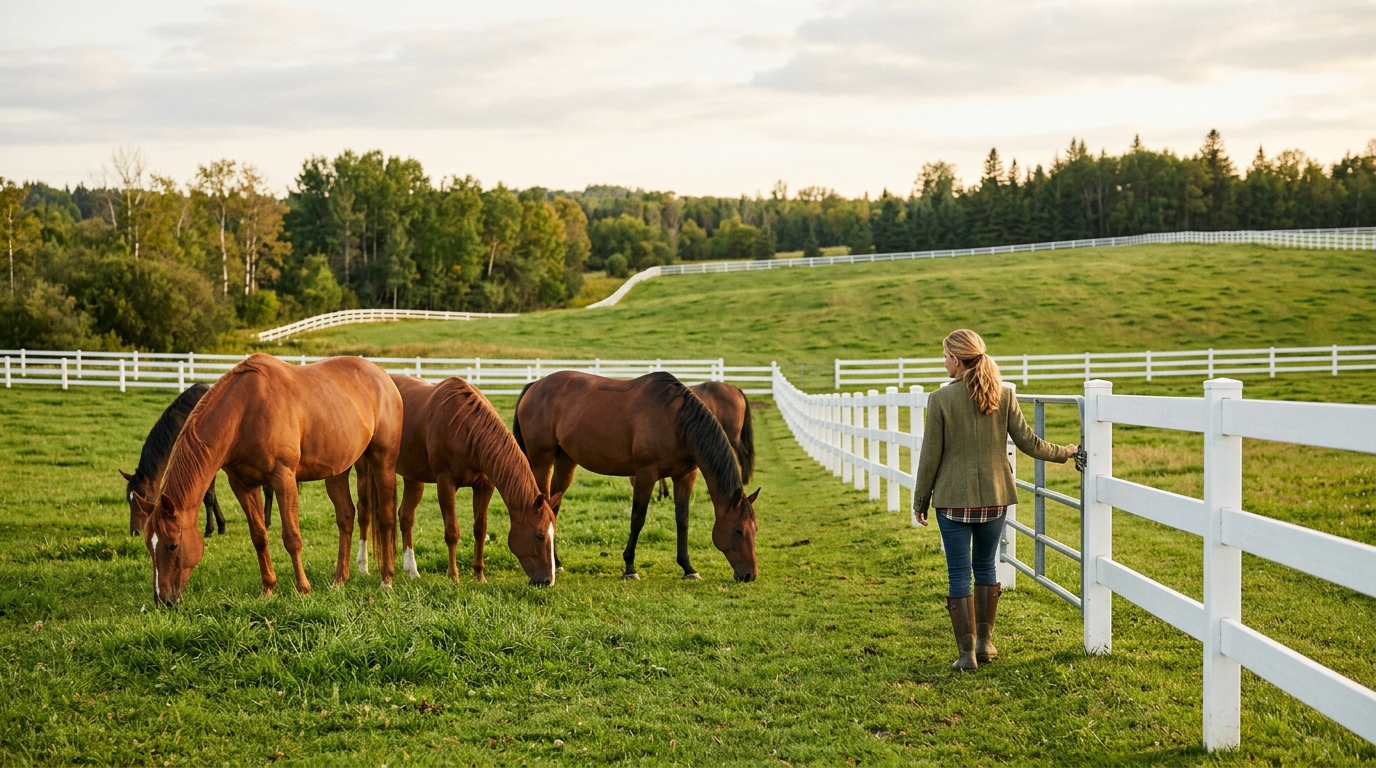
Effective pasture management is the cornerstone of equine health and farm sustainability. According to recent agricultural data, properly managed pastures can reduce feed costs by up to 40% while significantly improving soil health and biodiversity. This guide outlines the essential strategies for maintaining lush, safe, and productive grazing lands for your horses. (Quiz 8211 Horse Sport)
Understanding Pasture Ecology
Pasture is not just a lawn for horses. It is a complex ecosystem of grasses, legumes, and forbs that requires careful stewardship. Pasture is a managed grassland used for grazing livestock. When horses graze, they selectively eat the most palatable plants, which can lead to overgrazing of preferred species and the dominance of less desirable weeds if left unchecked. (Shop 8211 Horse Sport)
To maintain a balanced ecosystem, you must understand the growth cycles of your specific forage types. Cool-season grasses like fescue and bluegrass thrive in spring and fall, while warm-season grasses like Bermuda and orchard grass peak in summer. Rotating your horses through these different growth phases ensures they receive optimal nutrition and prevents any single plant species from being depleted.
For more insights on equine health and management, explore our Health section. Additionally, understanding the Nutrition needs of your horses is directly linked to the quality of their forage.
Soil Health and Testing
Healthy soil is the foundation of a healthy pasture. Without proper nutrients, grasses cannot grow vigorously, leaving gaps where weeds can take hold. Soil testing is the process of analyzing soil composition to determine nutrient levels and pH. This should be done every two to three years, or annually if you are actively amending the soil.
Key Soil Parameters
- pH Level: Most pasture grasses prefer a pH between 6.0 and 7.0. If your soil is too acidic, apply lime to raise the pH.
- Phosphorus and Potassium: These macronutrients are critical for root development and disease resistance. Apply based on test results.
- Organic Matter: Increasing organic matter improves water retention and nutrient availability.
For detailed advice on farm management, check out our article on The Science of Pasture Management. This resource provides a ground-up look at maintaining soil and plant health.
Grazing Strategies
Continuous grazing is the most common but least effective method for pasture health. It leads to uneven forage utilization and increased parasite loads. Instead, implement rotational grazing systems to allow pastures time to recover.
Rotational Grazing Benefits
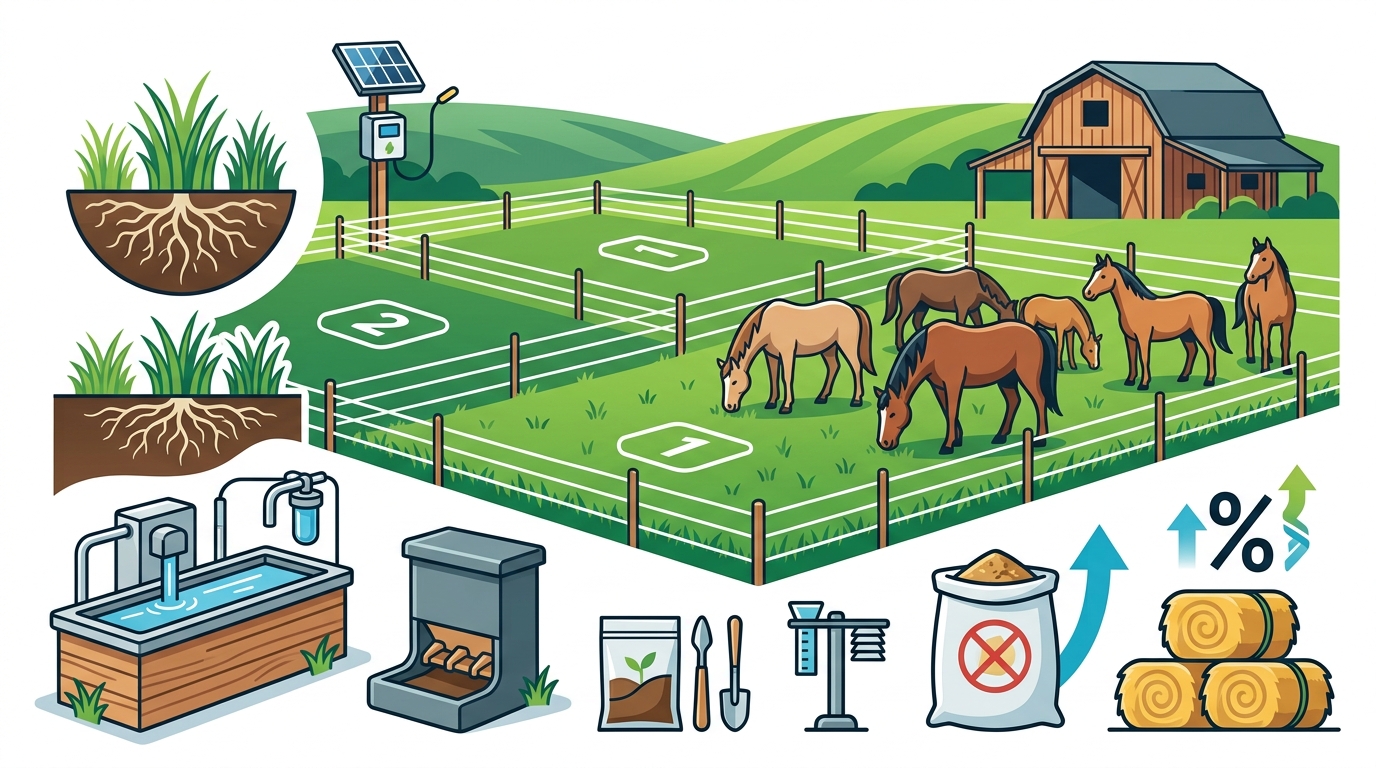
Rotational grazing involves dividing pastures into smaller paddocks and rotating horses through them. This allows grasses to regrow to a height of at least 4 to 6 inches before being grazed again. Rotational grazing is a management system that divides pastures into smaller sections to allow for rest and regrowth. This practice not only improves forage quality but also breaks the life cycle of internal parasites.
According to equine research, horses that graze on diverse, well-managed pastures have lower parasite burdens and better overall health. For more on this topic, read our piece on Feeding Behaviour and Overnight Rhythms in Horses, which discusses natural grazing patterns.
Rest Periods
Rest periods vary by season and climate. In the spring, grasses may need 21 to 28 days of rest. In the hot summer months, growth slows, and rest periods may need to be extended to 30 to 45 days. Monitor your pastures closely and adjust your rotation schedule accordingly.
Weed and Toxin Control
Weeds not only compete with desirable grasses for nutrients but can also be toxic to horses. Common toxic plants include black cherry, red maple, and buttercups. Toxic plants are vegetation that contains compounds harmful to equine health when ingested. Early identification and removal are key to preventing poisoning.
Integrated Weed Management
- Manual Removal: Pull small infestations by hand before they go to seed.
- Targeted Herbicides: Use herbicides sparingly and only when necessary, following local regulations.
- Overseeding: Fill in bare spots with competitive grass varieties to prevent weed establishment.
For more information on equine welfare and safety, visit our Equine Welfare page. You can also find a comprehensive list of facilities in our Canadian Stable Directory to see how other farms manage their pastures.
Maintenance and Reseeding
Regular maintenance is essential for long-term pasture success. This includes harrowing, dragging, and reseeding. Harrowing is the process of dragging a heavy implement over the pasture to break up manure piles and distribute nutrients. This helps to kill weed seeds and promote even growth.
When to Reseed
Reseeding is necessary when desirable grass coverage drops below 80%. Choose grass varieties that are well-suited to your local climate and soil type. Cool-season grasses like tall fescue and Kentucky bluegrass are popular in northern regions, while warm-season grasses like Bermuda are better for southern climates.
For seasonal tips, read our Summer Tips from Equine Vets article, which includes advice on pasture care during hot months.
Key Takeaways
- Soil Testing: Test your soil every two to three years to ensure proper nutrient levels and pH balance.
- Rotational Grazing: Divide pastures into smaller paddocks to allow for rest and regrowth, reducing parasite loads.
- Weed Control: Identify and remove toxic plants early to prevent equine poisoning.
- Rest Periods: Allow grasses to regrow to at least 4 to 6 inches before grazing again.
- Overseeding: Fill in bare spots with competitive grass varieties to prevent weed establishment.
- Harrowing: Drag manure piles to distribute nutrients and kill weed seeds.
- Reseeding: Reseed when desirable grass coverage drops below 80%.
Frequently Asked Questions
How often should I test my pasture soil?
Soil testing should be done every two to three years, or annually if you are actively amending the soil with lime or fertilizer.
What is the best grass for horse pastures?
The best grass depends on your climate. Cool-season grasses like fescue and bluegrass are ideal for northern regions, while warm-season grasses like Bermuda are better for southern climates.
How can I prevent toxic plants in my pasture?
Regularly inspect your pastures and remove toxic plants by hand before they go to seed. Overseeding with competitive grass varieties can also help prevent weed establishment.
What is rotational grazing?
Rotational grazing is a management system that divides pastures into smaller sections to allow for rest and regrowth, improving forage quality and reducing parasite loads.
How do I know when to reseed my pasture?
Reseed when desirable grass coverage drops below 80%. Bare spots are a clear indicator that reseeding is needed.
What is harrowing?
Harrowing is the process of dragging a heavy implement over the pasture to break up manure piles and distribute nutrients.
How does pasture management affect horse health?
Proper pasture management reduces parasite loads, improves nutrition, and prevents exposure to toxic plants, all of which contribute to better overall horse health.
Contact Us
Ready to transform your pastures? Contact Horse Sport today for expert advice and resources on equine management. Visit our Donate page to support independent Canadian equestrian journalism.