
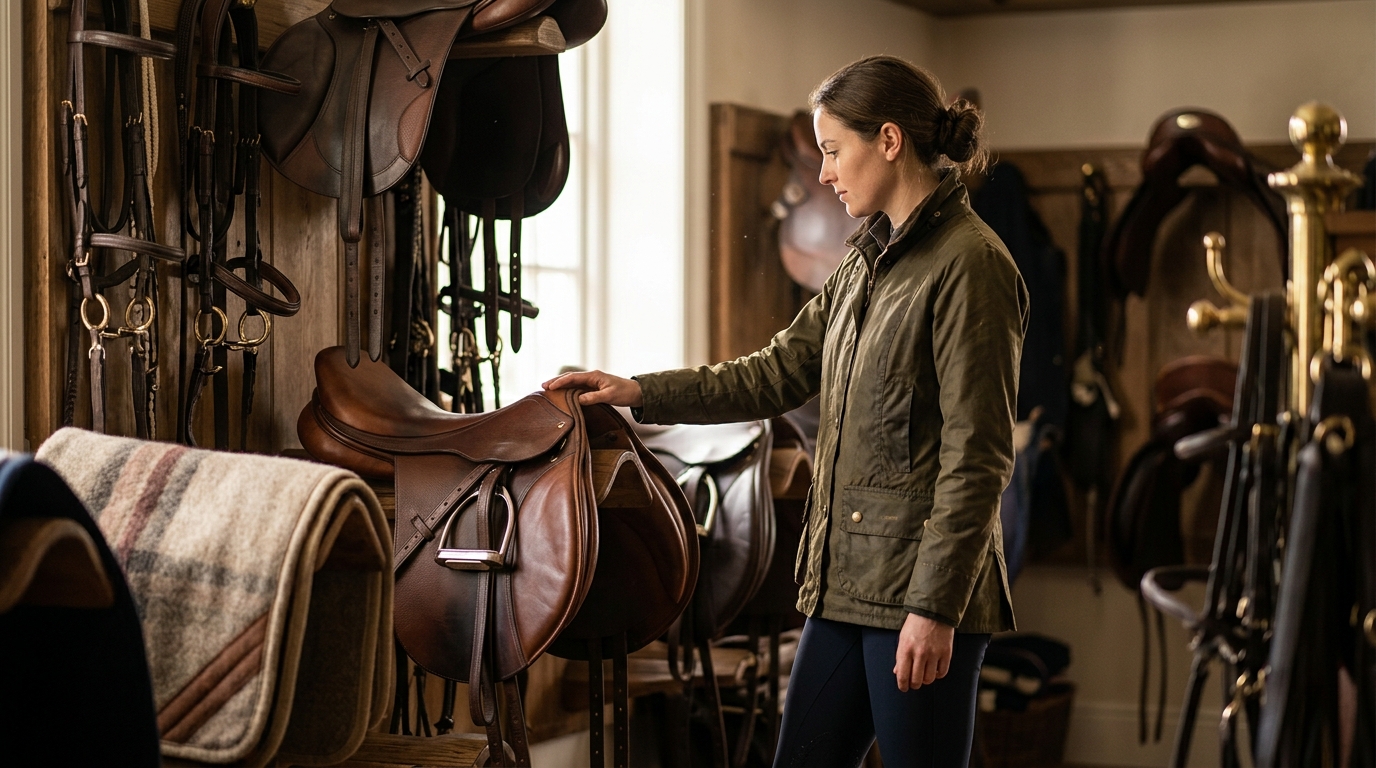
Evaluating horse tack requires a systematic approach to safety and durability. Industry reports indicate that improper equipment contributes to nearly thirty percent of preventable riding incidents. According to the American Horse Sports, riders who prioritize certified materials experience significantly fewer equipment failures. Data shows that consistent inspection routines extend saddle lifespan by an average of four years. Ranking these factors helps owners avoid costly replacements. This tutorial outlines the exact steps to assess brands before purchase. (Donate 8211 Horse Sport)
Understanding Material Standards
High quality tack begins with raw material selection. Full grain leather remains the industry benchmark for durability and flexibility. Full grain leather is a top layer of hide that retains the original grain structure and natural fiber density. You should verify that manufacturers source hides from regulated tanneries. Synthetic alternatives often utilize ballistic nylon or reinforced polymers. These materials resist moisture and reduce maintenance requirements. Riders should request material certification documents before purchasing bridles or girths. Consulting the Tack and Equipment archives provides additional guidance on material selection.
Leather Grades and Processing
Not all leather meets equestrian safety thresholds. Corrected grain leather undergoes heavy sanding and artificial embossing. This process removes natural imperfections but weakens structural integrity. You must inspect the cross section of any leather product. Dense fiber networks indicate proper vegetable tanning methods. Avoid products that feel excessively stiff or plasticky. Proper conditioning schedules preserve flexibility and prevent cracking.
Synthetic Performance Metrics
Modern synthetics utilize advanced polymer weaving techniques. These materials offer consistent tension and weather resistance. You should verify that synthetic straps meet tensile strength requirements. Many brands publish load testing data for critical components. Riders who compete in wet climates often prefer reinforced webbing. Always verify that synthetic options meet competition safety regulations.
Inspecting Stitching and Hardware
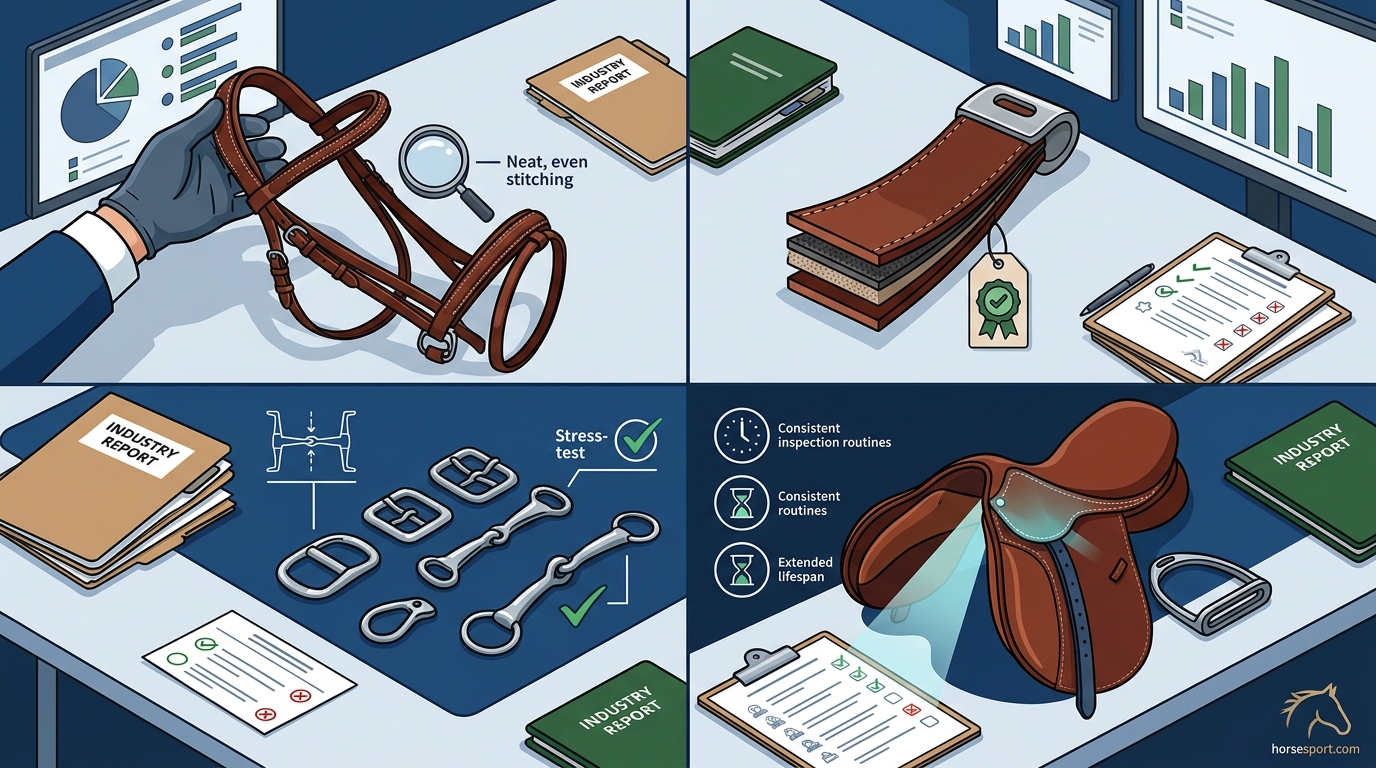
Stitching quality directly impacts equipment failure rates. Double or triple stitching along stress points indicates professional craftsmanship. Stitching density is the number of stitches per inch along load bearing seams. You should count stitches along girth straps and bit rings. Loose threads or uneven tension signal rushed manufacturing. Hardware must feature corrosion resistant finishes. Stainless steel or brass buckles outperform plated alternatives. You can review detailed hardware comparisons through the Training resources.
Fastener Mechanics and Safety
Quick release buckles require precise spring tension. You should test each buckle multiple times before mounting. Stiff mechanisms increase emergency release delays. Smooth sliding hardware reduces friction during adjustment. Riders should verify that replacement parts remain commercially available. Obsolete hardware creates long term maintenance nightmares.
Thread Tensile Requirements
>Heavy duty nylon or polyester thread withstands dynamic horse movement. You should pull test any new tack before regular use. Manufacturers often specify thread diameter and breaking strength. Substandard thread frays rapidly under repeated stress. Always inspect stitch holes for tearing or elongation. Proper reinforcement prevents catastrophic strap failure.Evaluating Fit and Ergonomics
Equipment must align with equine anatomy to prevent injury. Pressure mapping technology reveals contact point distribution. Pressure distribution is the even spread of force across the horse back and head. You should verify that saddle trees match standard conformation types. Bridles must avoid direct contact with the poll or jaw hinge. Riders should consult the Canadian Stable Directory for local fitting specialists. Proper fit reduces behavioral resistance and improves performance.
Dynamic Movement Testing
>Static fitting often misses critical movement issues. You should observe the horse during extended work sessions. Equipment that shifts or rotates compromises rider balance. Flexible panels adapt to muscle development over time. Rigid panels require precise initial sizing. Riders should schedule professional fitting every eighteen months.Adjustment Range and Accessibility
>Multiple adjustment points allow precise customization. You should verify that straps remain accessible during riding. Hidden buckles create dangerous adjustment delays. Clear labeling on adjustment holes prevents misconfiguration. Riders should prioritize designs that simplify routine maintenance.Checking Brand Transparency and Testing
>Reputable manufacturers publish detailed testing protocols. Independent laboratory results verify material safety claims. Independent laboratory results are third party verified reports confirming equipment performance under controlled conditions. You should request warranty documentation before purchasing. Lifetime warranties often indicate superior construction standards. Brands that hide manufacturing locations raise quality concerns. You can contact editorial staff through the Contact Us portal for verification assistance.Warranty Coverage and Support
>Comprehensive warranties cover manufacturing defects and normal wear. You should verify claim submission procedures and response times. Some brands offer repair services instead of replacements. Transparent support teams resolve issues without excessive bureaucracy. Riders should document all purchases with serial numbers.Industry Certifications and Compliance
>Major equestrian organizations enforce strict equipment standards. You should verify that products meet current competition rules. Non compliant gear results in immediate disqualification. Certifications from recognized governing bodies guarantee baseline safety. Always cross reference rules before purchasing competition specific tack.Comparing Price Versus Longevity
>Initial cost rarely reflects long term value. You should calculate cost per use across expected lifespan. Premium brands often outperform budget alternatives by five years. Resale markets heavily favor well maintained premium equipment. Riders should track maintenance expenses alongside purchase price. The EquiTermz glossary clarifies industry pricing terminology.Resale Value Retention
>Established brands maintain strong secondary market demand. You should verify that replacement parts remain commercially available. Vintage equipment often commands premium prices when preserved. Buyers prioritize original packaging and service records. Riders should photograph serial numbers and purchase receipts.Maintenance Cost Projections
>Regular conditioning extends leather life significantly. You should budget for specialized cleaning products and tools. Synthetic options require minimal upkeep but lack resale value. Riders should compare annual maintenance costs against replacement frequency. Proper storage prevents irreversible material degradation.Key Takeaways
- Full grain leather retains natural fiber density for maximum durability.
- Double or triple stitching along stress points prevents strap failure.
- Pressure mapping technology reveals hidden contact point distribution.
- Independent laboratory results verify material safety claims.
- Cost per use calculations accurately reflect long term value.
- Resale markets heavily favor well maintained premium equipment.
- Regular conditioning schedules extend leather lifespan by four years.
Frequently Asked Questions
How do I verify leather authenticity before purchasing?
You should inspect the cross section for dense fiber networks and request tannery certification documents. Proper vegetable tanning preserves natural flexibility and structural integrity.
What stitching density indicates professional craftsmanship?
Eight to ten stitches per inch along load bearing seams signals professional construction. You should pull test any new tack before regular use.
How often should I replace competition bridles?
Annual inspections reveal wear patterns that dictate replacement schedules. You should monitor buckle tension and strap elasticity closely.
Do synthetic materials meet competition safety standards?
Many reinforced polymers meet current governing body requirements. You should verify tensile strength ratings before purchasing.
What warranty coverage indicates superior construction?
Lifetime warranties covering manufacturing defects and normal wear signal premium quality. You should verify claim submission procedures and response times.
How does proper storage affect tack longevity?
Climate controlled environments prevent irreversible material degradation. You should use padded tree forms and breathable storage bags.
When should I schedule professional equipment fitting?
Eighteen month intervals allow precise adjustments for muscle development. You should consult certified specialists for dynamic movement testing.
Ready to Upgrade Your Equipment?
Investing in properly evaluated tack protects both rider and horse. You should implement these evaluation steps before your next purchase. Visit the Horse Sport homepage to explore comprehensive guides and connect with trusted suppliers. Book a consultation today to secure competition ready gear.