

Modern athletic horses require precise caloric and micronutrient management to sustain peak physical output. According to recent industry data, competitive equestrians report that optimized feeding protocols increase sustained energy levels by approximately twenty percent across rigorous training cycles. This nutritional shift directly impacts muscle recovery, joint resilience, and overall metabolic efficiency. Understanding these biological demands allows trainers to construct targeted dietary frameworks that prevent fatigue and support long-term athletic viability. The following analysis breaks down the essential components required for elite equine conditioning.
Understanding Metabolic Demands
High-performance horses operate under significantly elevated physiological stress. Their bodies convert dietary energy into mechanical work at accelerated rates. This process requires a continuous supply of glucose and fatty acids to maintain muscle contraction. When energy expenditure outpaces intake, athletes experience rapid glycogen depletion. Trainers must monitor these metabolic shifts to prevent performance drops. Equine metabolism is the biochemical process by which horses convert feed into usable energy for physical exertion. Proper monitoring ensures that caloric deficits never compromise athletic output.
Stall confinement often reduces natural forage intake. This restriction forces handlers to rely on concentrated feeds. Concentrated feeds deliver dense calories but require careful portion control. Overfeeding starch can trigger digestive disturbances. Underfeeding protein limits muscle repair. Balancing these inputs demands precise measurement and consistent scheduling.
Macro-Nutrient Balancing
Macronutrients form the foundation of any athletic feeding program. Carbohydrates provide immediate fuel for high-intensity bursts. Proteins supply essential amino acids for tissue regeneration. Fats deliver concentrated energy while supporting joint lubrication. Each component serves a distinct physiological function. Handlers must calculate ratios based on workload intensity and seasonal changes.
Carbohydrate Management
Complex carbohydrates release glucose gradually. This steady release prevents sudden blood sugar spikes. Fiber-rich forages remain the primary carbohydrate source. Processed grains offer concentrated energy but require strict limits. Excessive starch intake can disrupt hindgut pH balance. Maintaining a forage-first approach protects digestive health.
Protein Requirements
Quality protein supports muscle development and recovery. Lysine and methionine are critical building blocks. Young athletes require higher protein percentages for skeletal growth. Mature competitors need adjusted ratios to maintain lean mass. Feed manufacturers often list crude protein percentages. These numbers rarely reflect actual digestible amino acid availability. Selecting highly digestible protein sources maximizes athletic returns.
Fat Integration
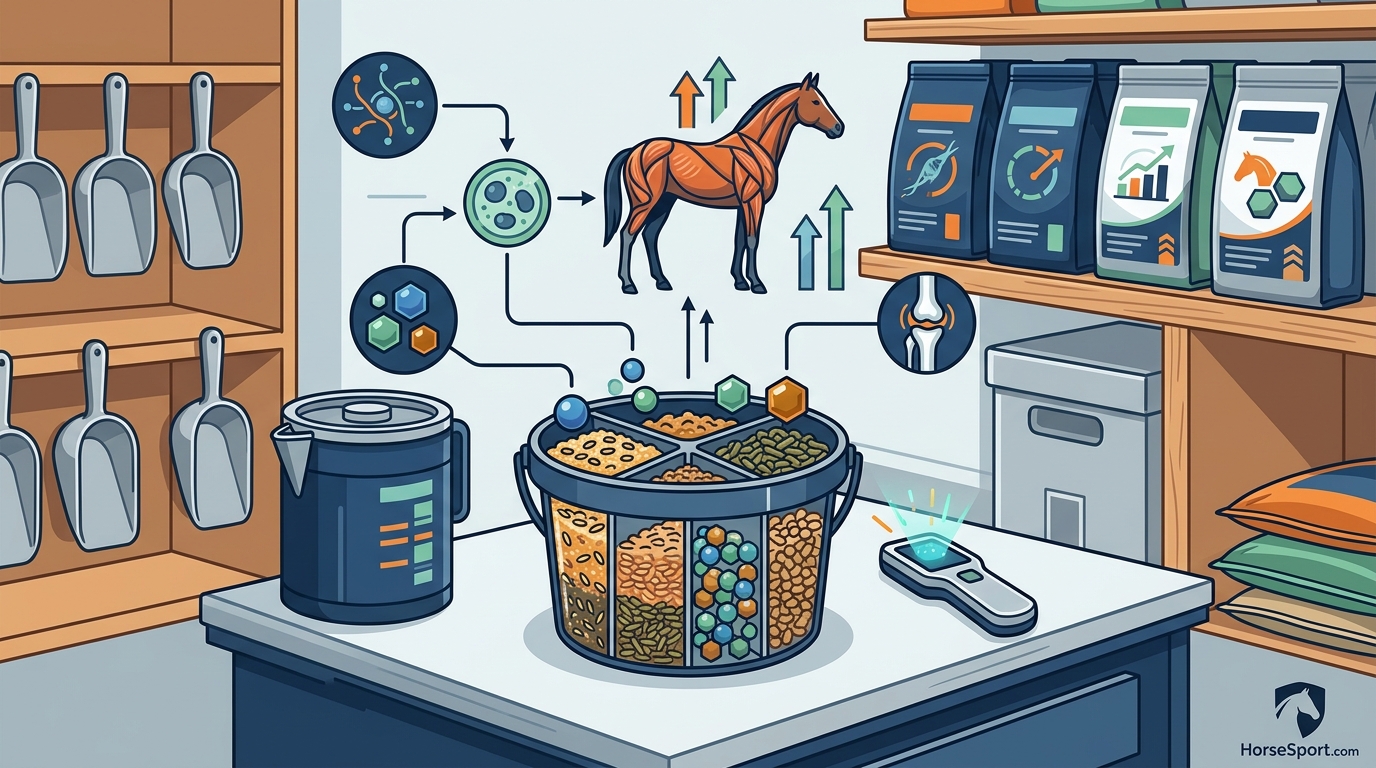
Dietary fats provide nearly two and a half times more energy than carbohydrates. This density allows handlers to increase caloric intake without expanding stomach volume. Vegetable oils and stabilized rice bran are common additions. These ingredients support coat shine and sustained endurance. Introducing fats gradually prevents digestive upset. Gradual integration allows the hindgut microbiome to adapt efficiently.
Micronutrient Supplementation
Vitamins and minerals operate as enzymatic cofactors throughout the body. They regulate nerve transmission, blood clotting, and immune response. Deficiencies manifest as poor coat quality, weak hooves, and delayed recovery. Athletic horses burn through these reserves faster than sedentary counterparts. Targeted supplementation bridges these nutritional gaps. Micronutrient balance is the precise ratio of vitamins and minerals required to support enzymatic reactions and metabolic pathways. Maintaining this balance prevents subclinical deficiencies that silently degrade performance.
Selenium and vitamin E work synergistically to protect muscle cells from oxidative stress. Copper and zinc support connective tissue integrity. Magnesium aids in muscle relaxation and nerve function. Iron transports oxygen to working tissues. Each mineral plays a specific role in high-output physiology. Handlers should verify feed analyses before adding supplements. Redundant dosing can trigger toxic accumulation. Professional guidance ensures safe and effective mineral stacking.
Hydration and Electrolytes
Water constitutes the majority of equine body weight. Dehydration impairs thermoregulation and nutrient transport. Sweating during intense exercise accelerates fluid loss. Horses can lose liters of water during prolonged competition. Replenishing these fluids requires careful electrolyte management. Plain water alone rarely restores lost sodium and potassium. Equine hydration is the physiological maintenance of fluid balance and electrolyte concentration necessary for thermoregulation and nutrient transport. Proper hydration protocols prevent heat stress and maintain cardiovascular efficiency.
Electrolyte powders and pastes replace critical ions lost through sweat. Sodium chloride remains the primary component. Potassium and magnesium support nerve signaling and muscle contraction. Handlers should offer electrolytes before and after competition. Monitoring urine color provides a simple hydration indicator. Darker concentrations signal dehydration. Lighter shades indicate adequate fluid intake. Consistent monitoring prevents performance-depleting water deficits.
Feeding Schedule Optimization
Timing meals around training sessions maximizes nutrient absorption. Pre-competition feeds should focus on easily digestible carbohydrates. Post-competition meals require protein and electrolytes for recovery. Feeding large meals before intense work increases colic risk. Smaller, frequent portions maintain steady energy levels. Handlers must align feeding windows with training intensity. This synchronization prevents digestive stress and optimizes athletic output.
Pre-Workout Protocols
Light meals two hours before competition prevent gastric discomfort. Hay remains the safest pre-workout option. Concentrates should be introduced gradually. Sudden dietary changes trigger digestive upset. Handlers should establish consistent morning routines. Predictable schedules support metabolic stability and reduce stress hormones.
Post-Workout Recovery
Recovery meals replenish glycogen stores and repair muscle fibers. Protein ratios should increase immediately after competition. Electrolyte solutions restore fluid balance. Cool walking periods aid circulation and waste removal. Handlers should monitor appetite closely. Reduced feed intake signals digestive distress. Adjusting portion sizes prevents secondary complications.
Comparative Feed Formulations
Different feed types serve distinct athletic purposes. Pelleted concentrates offer precise nutrient control. Extruded grains provide higher digestibility. Fermented feeds support hindgut health. Each formulation carries specific advantages and limitations. Selecting the right product depends on workload intensity and individual horse response. Feed formulation is the scientific process of combining ingredients to meet specific nutritional requirements for athletic performance. Understanding these formulations prevents costly feeding errors and supports long-term health.
| Feed Type | Primary Benefit | Best Use Case | Handling Requirement |
|---|---|---|---|
| Pelleted Concentrates | Precise nutrient control | High-intensity training | Strict portion measurement |
| Extruded Grains | Enhanced digestibility | Hard keepers | Gradual introduction |
| Fermented Feeds | Hindgut support | Sensitive digestion | Moisture management |
| Forage-First Blends | Natural grazing simulation | Maintenance and recovery | Consistent availability |
Key Takeaways
- Optimized feeding protocols increase sustained energy levels by approximately twenty percent across rigorous training cycles.
- Complex carbohydrates release glucose gradually to prevent sudden blood sugar spikes.
- Lysine and methionine are critical protein building blocks for muscle regeneration.
- Dietary fats provide nearly two and a half times more energy than carbohydrates.
- Selenium and vitamin E work synergistically to protect muscle cells from oxidative stress.
- Sodium chloride remains the primary electrolyte component replaced through sweat.
- Small, frequent portions maintain steady energy levels and reduce colic risk.
Frequently Asked Questions
How much forage should a high-performance horse consume daily?
Most athletic horses require one to two percent of their body weight in forage daily. This baseline ensures proper hindgut function and natural grazing rhythms. Handlers can adjust hay quantities based on workload intensity and seasonal changes. Consistent forage availability prevents gastric ulcers and supports digestive health.
When is the best time to administer electrolytes?
Electrolytes should be offered before competition to prime fluid balance. Post-competition administration replaces critical ions lost through heavy sweating. Handlers should monitor urine color to gauge hydration status. Adjusting dosage based on sweat loss prevents over-supplementation.
Can concentrated feeds replace hay entirely?
Concentrated feeds should never replace hay for athletic horses. Forage provides essential fiber that maintains hindgut pH balance. Removing hay increases colic risk and disrupts natural digestion. Handlers must prioritize forage-first formulations when designing diets.
How do I identify protein deficiencies in competitors?
Protein deficiencies manifest as poor muscle tone, weak hooves, and delayed recovery. Handlers should track coat quality and energy levels closely. Adjusting protein ratios under veterinary guidance resolves most nutritional gaps. Regular feed analysis prevents subclinical deficiencies.
What role do fats play in endurance performance?
Fats deliver concentrated energy while supporting joint lubrication. They allow handlers to increase caloric intake without expanding stomach volume. Vegetable oils and stabilized rice bran are common additions. Gradual integration allows the hindgut microbiome to adapt efficiently.
How often should feed analyses be conducted?
Feed analyses should be conducted quarterly to track nutritional changes. Seasonal pasture variations alter mineral content significantly. Regular testing ensures supplements match actual feed composition. Adjusting formulations based on lab results prevents toxic accumulation.
Is it safe to feed multiple supplements simultaneously?
Multiple supplements can trigger toxic accumulation if not carefully managed. Handlers should verify ingredient overlap before stacking products. Professional guidance ensures safe and effective mineral balancing. Redundant dosing wastes resources and compromises horse health.
Next Steps for Athletic Feeding
Implementing precise nutritional protocols requires careful planning and consistent monitoring. Trainers should consult veterinary nutritionists to design customized feeding programs. Regular feed analysis ensures supplements match actual dietary composition. Adjusting formulations based on lab results prevents toxic accumulation. Visit our main platform to access comprehensive training resources and connect with certified equestrian professionals. Explore our stable directory to locate specialized facilities. Review our editorial team for expert guidance. Support independent journalism by visiting our support page. Stay informed through our featured farm profiles.