
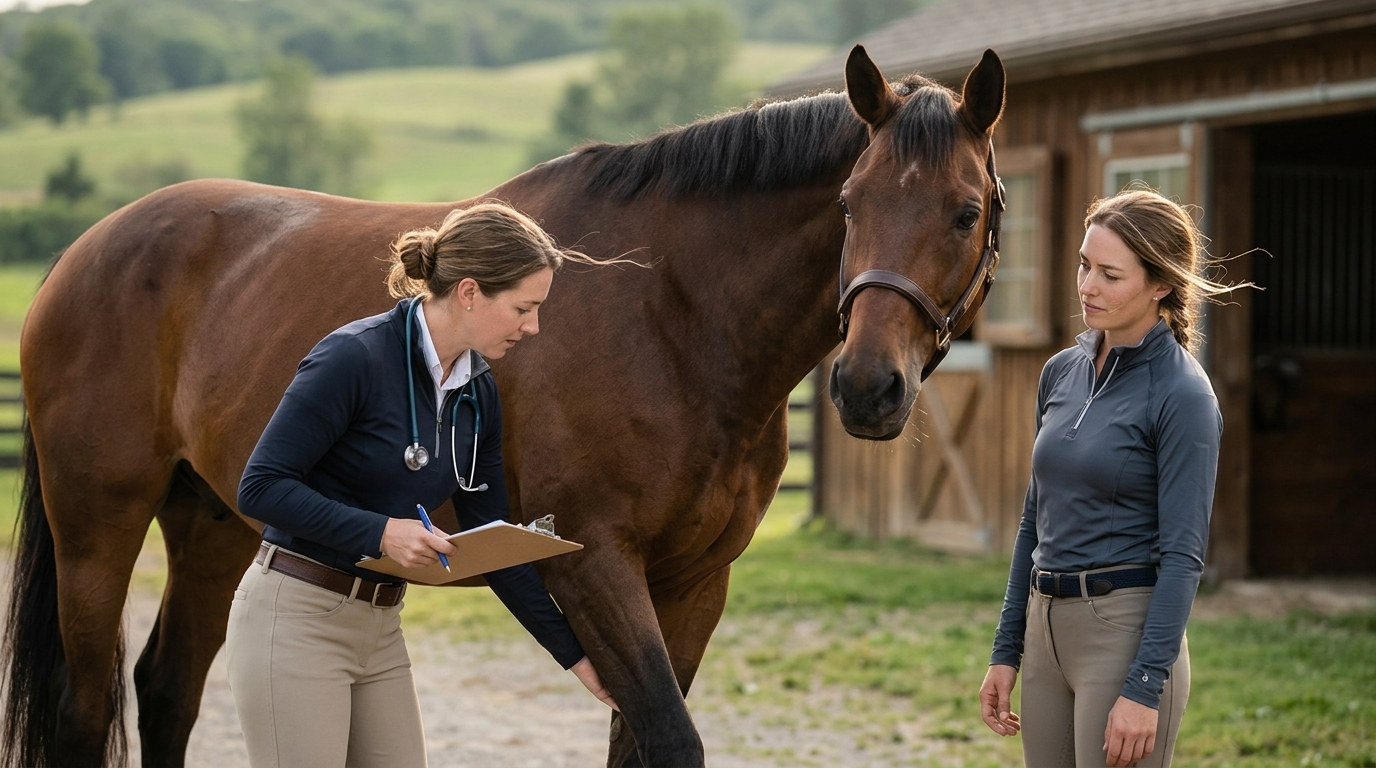
Buying a horse is one of the most exciting decisions an equestrian can make, but it is also one of the most consequential. Whether you are a first-time buyer searching for a reliable trail partner or a seasoned competitor shopping for your next show prospect, the process demands honest self-assessment, careful research, and professional guidance. Rushing into a purchase without evaluating the right factors can lead to frustration, financial strain, and even safety risks. In this guide we break down every key consideration, from matching your riding level to understanding the true cost of ownership, so you can find the right horse with confidence.
1. Assess Your Riding Level and Goals
Before you browse a single listing, take an honest look at where you are as a rider. As multi-discipline coach Lindsay Grice has noted, buying the wrong horse is like trying to fit a square peg into a round hole. A mismatch between rider ability and horse experience is the most common cause of buyer regret.
Be Honest About Your Abilities
If you are a novice, your best bet is a mature horse with solid training, a kind nature, and good brakes. The old adage holds true: a green horse and a green rider make a poor combination. Get candid feedback from your coach before you start shopping.
Define Your Intended Use
Are you looking for a competitive dressage partner, a weekend trail horse, or a junior hunter? Your intended discipline directly shapes breed selection, age range, and budget. High Performance coaches Tina and Jaimey Irwin emphasize that matching abilities, budget, and goals with the appropriate animal should be the top priority.
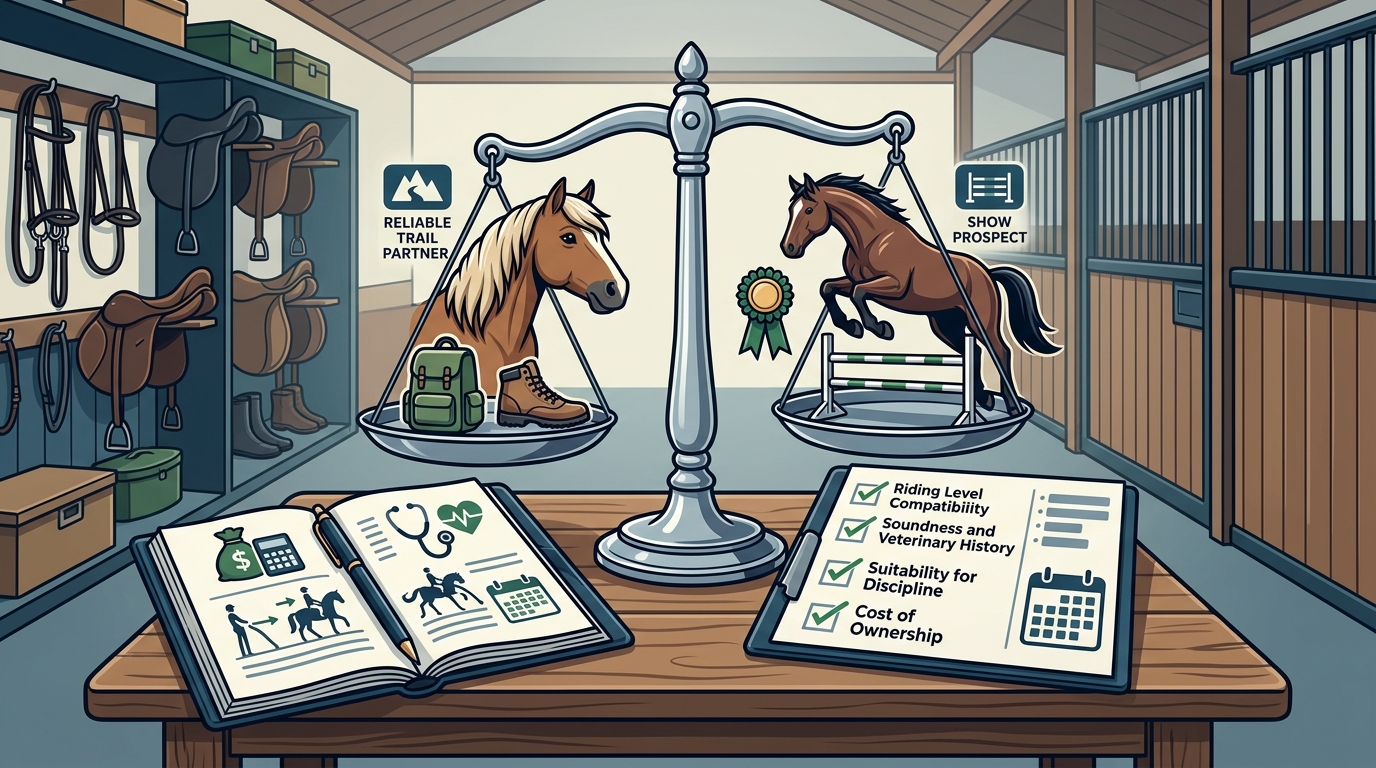
2. Match Breed and Temperament to Your Discipline
A breed is a population of horses sharing common ancestry, conformation traits, and aptitudes that make it suited to specific activities. Not every breed is suitable for every discipline. You would not choose a heavy draft cross for barrel racing, just as a hot Thoroughbred fresh off the track may not suit quiet trail rides.
| Discipline | Recommended Breeds | Key Traits |
|---|---|---|
| Dressage | Warmblood, Hanoverian, KWPN | Elastic gaits, trainability |
| Show Jumping | Warmblood, Thoroughbred, Holsteiner | Scope, bravery, power |
| Western/Reining | Quarter Horse, Paint, Appaloosa | Athletic stops, calm temperament |
| Trail Riding | Quarter Horse, Canadian, Arabian | Sure-footed, steady disposition |
| Eventing | Thoroughbred, Irish Sport Horse | Stamina, versatility, courage |
Temperament is the horse's natural behavioral disposition. A horse with a calm, cooperative temperament is safer and more enjoyable for beginner riders. Spend time observing how the horse responds to handling, mounting, and unfamiliar situations before making a decision.
3. Evaluate Conformation and Soundness
Conformation is the overall physical structure and proportional correctness of a horse's body. Good conformation reduces injury risk and supports long-term athletic performance. According to Horse Sport's conformation series, deviations from ideal leg alignment can lead to future lameness from excessive stress on bones and ligaments.
What to Look For
Check for balanced proportions, straight legs when viewed from the front, clean joints, and healthy hooves. As noted in our guide to hunter and jumper conformation, correct conformation in the legs and feet most often results in fewer soundness issues over the years. Minor faults can be acceptable if they do not hinder the horse's intended use.
4. Invest in a Pre-Purchase Exam
A pre-purchase exam (PPE) is a veterinary evaluation designed to assess a horse's current health and detect physical defects before you commit to buying. According to the American Association of Equine Practitioners (AAEP), it is one of the most important exams performed in equine practice.
What the Exam Covers
A basic PPE includes a review of medical history, vital signs at rest and after exercise, and evaluation of respiratory and digestive systems, eyes, mouth, legs, back, joints, and hooves. For performance horses, your vet may recommend X-rays, ultrasound, or blood work. Costs typically start around $200 for a basic clinical exam and can reach $3,000 or more for a comprehensive workup with full imaging, as outlined in Horse Sport's pre-purchase exam guide.
Choose an Independent Vet
Always select a veterinarian who is independent of the seller to avoid conflicts of interest. Make sure the vet knows exactly what discipline you plan to pursue, as the intended use directly affects which tests are recommended.
5. Understand the True Cost of Horse Ownership
The purchase price is often the least expensive part of owning a horse. Ongoing costs include boarding, feed, farrier visits, veterinary care, insurance, and training fees. A rule of thumb from breeders is roughly $10,000 per year for a young horse until it reaches the age of three or four.
| Expense | Low Estimate | High Estimate |
|---|---|---|
| Board (full care) | $3,600 | $18,000+ |
| Farrier (every 6-8 weeks) | $1,200 | $3,000 |
| Veterinary (routine) | $600 | $2,400 |
| Feed & supplements | $1,200 | $4,800 |
| Insurance | $600 | $3,000 |
| Training / lessons | $0 | $12,000+ |
Before you shop, set a realistic total budget that accounts for at least 12 months of care beyond the purchase price. Read our ultimate guide to choosing a boarding stable to understand facility costs in your area.
6. Work With a Trusted Professional
Whether it is your first horse or your fiftieth, partnering with a trusted professional is the single most important step. Your instructor or coach knows your abilities, has relationships with reputable sellers, and can assess a horse's suitability in person. Learn more about using an agent when buying a horse to understand the legal duties an agent owes you.
If you are shopping overseas, agents who watch horses compete at shows can recommend prospects they have followed from young-horse classes through higher levels, as detailed in our article on buying horses in Europe.
7. Protect Yourself With Proper Documentation
The dominant legal principle in horse sales is caveat emptor, or "let the buyer beware." That means it is your responsibility to investigate the horse thoroughly. Always insist on a written purchase agreement that includes the horse's identity, purchase price, health disclosures, and any representations made by the seller.
Several states, including Florida and California, require written bills of sale with medical disclosures. Failing to obtain proper documentation can leave you without legal recourse if problems arise after the transaction.
Trial Periods and Insurance
If a trial period is offered, both parties should sign a detailed contract outlining responsibilities for veterinary emergencies. Consider a full mortality insurance policy during the trial to protect both buyer and seller.
Key Takeaways
- Be honest about your riding level and get your coach's input before shopping.
- Match breed and temperament to your discipline rather than shopping by color or gender.
- Evaluate conformation carefully because structural flaws can cause long-term soundness problems.
- Always get a pre-purchase exam from an independent equine veterinarian.
- Budget for ongoing costs, not just the purchase price; board, farrier, and vet bills add up fast.
- Partner with a trusted professional who knows you, your goals, and the market.
- Insist on a written contract with full health disclosures to protect your investment.
Frequently Asked Questions
What is a pre-purchase exam and why do I need one?
A pre-purchase exam is a veterinary evaluation of a horse's health and soundness conducted before a sale. It helps detect issues like lameness, respiratory problems, or hidden injuries that could affect the horse's ability to perform your intended activities. The exam typically costs $200 to $3,000 depending on the level of diagnostic work.
How much does it really cost to own a horse per year?
Annual ownership costs typically range from $7,000 to $30,000 or more, depending on where you live, the level of care, and whether you compete. Board, farrier, veterinary care, feed, and insurance are the primary ongoing expenses.
Should a beginner buy a young or older horse?
Beginners should look for a mature, well-trained horse, ideally 10 years or older. Younger or green horses require experienced handling. The old expression "green plus green equals black and blue" is a reliable rule of thumb.
How important is breed when buying a horse?
Breed matters most when you have a specific competitive discipline in mind. For pleasure riding, temperament and training matter more than pedigree. Keep an open mind and avoid being overly rigid about breed or color preferences.
Can I buy a horse without a trainer or agent?
You can, but it is not recommended, especially for first-time buyers. An experienced trainer or agent can identify suitability issues you might miss and negotiate on your behalf. Their expertise often saves money in the long run.
What questions should I ask the seller?
Key questions include: Does the horse have any health issues or history of colic or surgery? Is it on any medications or supplements? Are there behavioral issues such as cribbing or rearing? What is the horse's training and show record? Can I see veterinary records?
Is it safe to buy a horse sight unseen?
Buying sight unseen became more common during the pandemic, but it carries obvious risks. If you must buy remotely, use a trusted agent, request thorough video footage, and always conduct a pre-purchase exam with an independent vet before finalizing the deal.
Should I consider a trial period before buying?
Trial periods can be beneficial, especially for first-time owners. However, both parties should agree on a written contract that covers liability for injuries or illness and consider temporary insurance during the trial.
Ready to Find Your Perfect Horse?
Start your search the smart way. Explore expert horse shopping tips on Horse Sport, partner with a trusted coach, and set up your budget before you fall in love with the first prospect you see. The right preparation today leads to years of rewarding partnership in the saddle.