
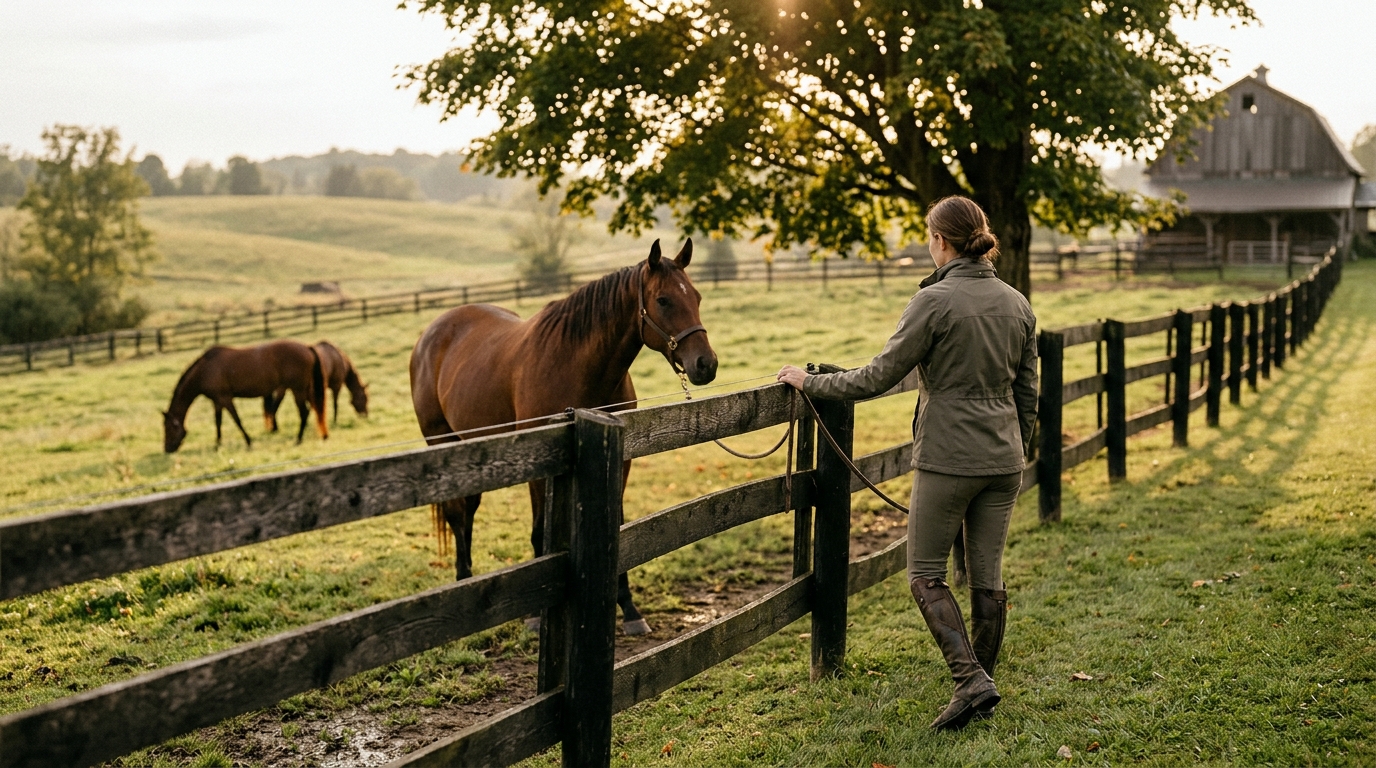
Buying a horse is one of the most exciting and significant decisions an equestrian can make. Whether you are a first-time buyer or a seasoned competitor searching for your next partner, the process demands careful evaluation of your goals, budget, riding ability, and the horse itself. According to a recent report cited by Horse Sport, there are an estimated 500,000 horses in Canada, with roughly 855,000 people involved in the industry. With that many horses changing hands each year, knowing what to look for can save you thousands of dollars, months of frustration, and potential heartbreak. This guide walks you through every critical factor so you can make a confident, informed purchase.
1. Assess Your Riding Goals and Experience Level
Before you browse a single listing, take an honest look at your abilities. A riding goal is the specific discipline or activity you plan to pursue with your horse, such as dressage, trail riding, or show jumping. Multi-discipline coach Lindsay Grice, featured on Horse Sport's shopping tips guide, compares buying the wrong horse to fitting a square peg into a round hole.
If you are a novice rider, your best bet is a mature horse with solid training, a kind nature, and good brakes. As the old adage warns, a green horse and a green rider make a poor combination. Be honest about whether you want a horse that can compete immediately or one you will develop over time.
Questions to Ask Yourself
- Am I a beginner, intermediate, or advanced rider?
- Do I plan to compete, trail ride, or ride for pleasure?
- Will other family members also ride this horse?
2. Set a Realistic Budget
A horse-buying budget is the total financial plan covering the purchase price plus all ongoing ownership costs. The purchase price is often the least expensive part of owning a horse. According to Mad Barn's ownership cost guide, purchase prices typically range from $1,000 to over $15,000 USD depending on age, breed, pedigree, and training level.
Ongoing costs add up quickly. Factor in boarding, feed, farrier visits, veterinary care, insurance, and training fees before committing. In Canada, average monthly boarding costs sit around $430 CAD, though urban centres like Toronto can run $1,800 to $2,500 per month.
| Expense Category | Low Estimate | High Estimate |
|---|---|---|
| Boarding / Stabling | $3,600 | $24,000 |
| Feed and Hay | $600 | $1,800 |
| Farrier (every 6-8 weeks) | $350 | $1,300 |
| Veterinary Care (routine) | $300 | $800 |
| Insurance (mortality) | $300 | $500 |
| Tack and Equipment | $300 | $1,000 |
| Training Fees | $0 | $6,000+ |
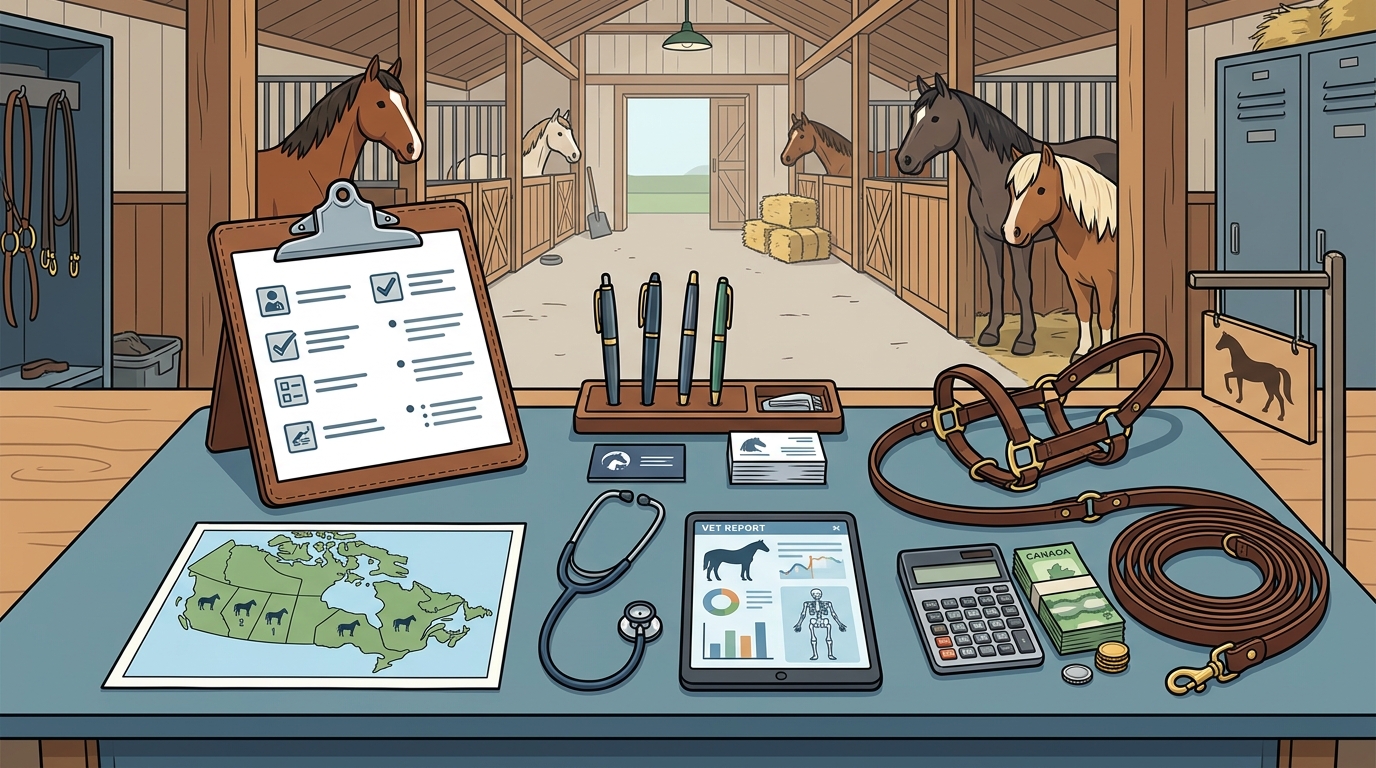
3. Match Breed and Temperament to Your Discipline
Not every breed is suitable for every activity. You would not buy a heavy Warmblood for barrel racing, yet that same horse could excel in dressage. Conversely, an easy-going Quarter Horse, Appaloosa, or Canadian breed may be ideal for relaxed trail riding. Review our breed overview on Horse Sport to compare breed strengths.
Temperament Matters
A horse's temperament is its natural disposition and behavioral tendencies. Spend time observing how the horse interacts with people and other horses, and watch for signs of aggression, fear, or resistance. A mismatch in temperament can lead to frustration and safety concerns.
Age and Gender
For a first horse, a minimum age of 10 years is a safe starting point. Gender does not matter as much as temperament, but unless you plan to breed or compete at an elite level, avoid stallions, which can be strong-willed and unpredictable. Keep an open mind about color; as experts remind us, a great horse is never a bad color.
4. Evaluate Conformation and Soundness
Conformation is the horse's inherited physical structure, including proportions, angles, and alignment. While excellent conformation does not guarantee performance, poor conformation invariably contributes to structural weakness, unsoundness, or impaired performance. Learn to assess conformation through resources like Horse Sport's conformation analysis series.
Ideally, the horse should be square (as long from shoulder to buttocks as it is tall), balanced (shoulders, barrel, and hindquarters each making up about one-third of the horse), and symmetrical when viewed from front or rear. Minor faults can be tolerated if they do not hinder the horse's intended job.
5. Schedule a Pre-Purchase Veterinary Exam
A pre-purchase exam (PPE) is a veterinary evaluation designed to detect physical defects and assess whether the horse is suitable for its intended use. As equine lawyer Catherine Willson writes on Horse Sport, the purpose of the PPE is to obtain as much information as possible so the buyer can make an educated decision.
What a PPE Includes
A standard exam covers vital signs, respiratory and digestive evaluation, eyes, mouth, legs, back, joints, and hooves. Depending on intended use, additional diagnostics such as flexion tests, x-rays, ultrasounds, and blood work may be recommended. A PPE typically costs $250 or more, according to Chewy's horse cost breakdown.
Choosing the Right Vet
Always hire an independent equine veterinarian rather than the seller's vet to avoid conflicts of interest. Make it clear what you are buying the horse for, since the intended purpose may dictate the types of tests required. Courts have indicated that a proper pre-purchase opinion must account for the buyer's intended use.
6. Work with Trusted Professionals
Whether it is your first horse or your fiftieth, partnering with a trusted professional is the single most important thing you can do. Your instructor or coach will know your abilities and have relationships with reputable sellers and breeders. Learn more about the role of agents in the Horse Sport guide to using an agent.
Remember that agents work for whoever pays their commission. If you have not hired the agent, they may be working for the seller. A clear written agreement outlining scope of authority will help avoid misunderstandings and protect your interests.
7. Understand Legal and Contractual Protections
The legal principle of caveat emptor (let the buyer beware) still applies to horse sales. It remains up to the buyer to investigate and ask the right questions. Statements made by the seller about a horse's qualities are considered representations, and if proven false after the sale, the buyer may have legal recourse.
If a trial period is involved, both parties should draft a detailed contract addressing liability for injury, illness, or death. Full mortality insurance with the owner named as beneficiary is strongly recommended. AQHA's horse-buying checklist also recommends verifying registration certificates and obtaining current Coggins papers before finalizing any purchase.
Key Takeaways
- Honestly assess your riding experience and discipline goals before shopping.
- Budget for ongoing costs (boarding, feed, vet, farrier), not just the purchase price.
- Match breed, temperament, and age to your skill level and intended use.
- Evaluate conformation carefully; poor structure leads to soundness problems.
- Always schedule an independent pre-purchase veterinary exam.
- Partner with a trusted coach, trainer, or agent throughout the buying process.
- Protect yourself legally with written contracts, insurance, and thorough documentation.
Frequently Asked Questions
What is the most important factor when buying a horse?
Matching the horse's temperament, training level, and physical suitability to your own riding ability and goals is the single most important consideration. A mismatch leads to frustration, safety risks, and wasted money.
How much does it cost to buy a horse?
Purchase prices range widely from $1,000 for a basic pleasure horse to $15,000 or more for a trained sport horse. The initial price, however, is typically the smallest part of the total ownership cost.
What is a pre-purchase exam and why do I need one?
A pre-purchase exam is a thorough veterinary evaluation of a horse's health and soundness before you buy. It helps detect current problems and potential future issues, giving you the information needed to make an educated decision.
Should I buy a young horse or an older horse?
For beginners, an older horse (10 years or more) with established training is the safest choice. Younger horses may offer a longer partnership but require more experience and training investment from the rider.
Do I need a trainer or agent to help me buy a horse?
While not legally required, working with a knowledgeable professional dramatically reduces risk. They can evaluate suitability, identify red flags, and leverage industry connections to find the right horse.
What ongoing costs should I expect after buying a horse?
Expect monthly expenses for boarding ($300 to $2,500), feed, farrier visits every 6 to 8 weeks, routine veterinary care, insurance, and tack maintenance. Annual costs often range from $5,000 to $15,000 or more.
What questions should I ask the seller?
Ask about health history (colic, surgeries, medications), behavioral issues (rearing, cribbing), training background, show record, and reason for selling. Request veterinary records and registration papers before scheduling a visit.
What legal protections should I have when buying a horse?
Obtain a written bill of sale, verify registration documents, request a Coggins test, and use a detailed contract for any trial period. Consider mortality insurance and consult an equine lawyer for high-value purchases.
Ready to Find Your Perfect Horse?
Explore more expert advice on horse shopping, ownership, and equestrian sport at HorseSport.com. Subscribe to our newsletter for the latest articles from Canada's leading equestrian authority, delivered straight to your inbox.