
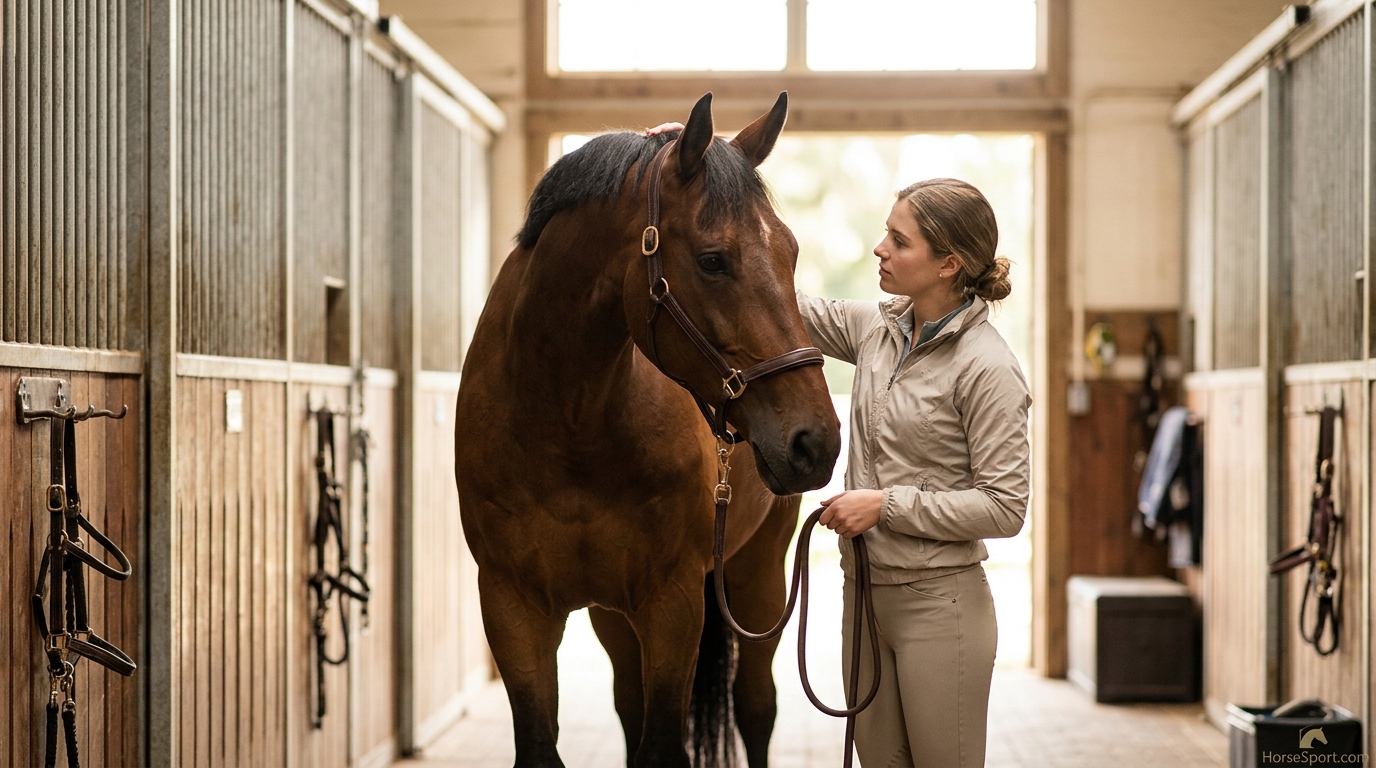
Understanding why your horse acts the way it does is one of the most rewarding skills a new equestrian can develop. Horse behavior is the study of how horses communicate, respond to their environment, and interact with humans and other horses. Whether you are trying to decode ear positions, manage a nervous horse, or simply build a stronger partnership, the right reading material makes all the difference. This guide walks you through exactly where to find trustworthy, beginner-friendly articles on horse behavior and how to get the most out of them.
Why Understanding Horse Behavior Matters
Horses communicate primarily through body language and vocalizations. As trainer Anne Kruger-Degener explains in her Horse Sport article on objective observation, reading a horse's behavior should be the top priority as you educate yourself. Misunderstanding signals can lead to unsafe situations and a weaker bond with your horse.
For beginners especially, learning to distinguish between normal equine behavior and signs of discomfort is critical. Research shows that even experienced riders often struggle to recognize pain signs, frequently blaming a horse's personality instead of investigating the root cause.
Where to Find Beginner-Friendly Behavior Articles
The best place to start is a dedicated editorial section focused on equine behavior. Horse Sport maintains a Behaviour archive filled with expert-written articles covering everything from social dynamics to training science. Each piece is written or reviewed by credentialed professionals, including PhDs in equine science and certified equine behaviorists.
What Makes a Source Trustworthy
Look for articles that cite peer-reviewed research, name specific studies, and are authored by professionals with verifiable credentials. The International Society for Equitation Science (ISES) is one gold-standard organization whose conference findings are regularly reported by Horse Sport.
Using Category Navigation
On horsesport.com, articles are organized under clear categories such as Behaviour, Training, Health, and Equine Welfare. You can also explore the equine welfare section for overlapping content about horse comfort and rider responsibility.
Core Behavior Topics Every Beginner Should Read
Not all behavior content is equal. As a beginner, focus on foundational topics first before moving into specialized areas. The table below maps essential topics to recommended reading on Horse Sport.
| Topic | What You Will Learn | Recommended Article |
|---|---|---|
| Social behavior and grief | How horses form bonds and respond to loss | Do Horses Grieve the Loss of a Friend? |
| Boredom and enrichment | Signs of behavioral boredom and prevention strategies | Is My Horse Bored? |
| Pain and behavior | How pain manifests as unwanted behavior | Pain and Behaviour Problems in Horses |
| Positive reinforcement | How reward-based training works | Positive Reinforcement in Equine Training |
| Recognizing a happy horse | Identifying comfort vs. discomfort under saddle | Recognizing Happy Horses, with Sue Dyson |
| Stall enrichment | Music, toys, and mirrors for stabled horses | Music and Toys: Stabled Horse Welfare Studies |
Reading Your Horse's Body Language
Equine body language is the set of physical signals a horse uses to express its emotional and physical state. According to Anne Kruger-Degener, a horse always communicates clearly and speaks only one language through body cues and vocalizations. Learning to read these signals objectively, without projecting human emotions, is the foundation of good horsemanship.
Key Signals to Watch
Pay attention to ear position, tail carriage, head height, and overall muscle tension. A relaxed horse typically shows soft eyes, gently swiveling ears, and a level head. In contrast, a tense horse may pin its ears, swish its tail rapidly, or hold its head abnormally high.
Context Is Everything
No single signal tells the whole story. As Horse Sport's coverage of the Ridden Horse Pain Ethogram by Dr. Sue Dyson explains, you must look at the totality of signals to draw accurate conclusions about your horse's state of mind.
Common Behavior Problems and What They Mean
Many behaviors that beginners label as "bad" are actually the horse communicating discomfort. Behaviors such as biting, kicking, or bucking may be indicators of pain rather than disobedience. Lauren Fraser's article on pain and behaviour problems explains that untrained observers often mislabel these responses, calling a horse aggressive or dominant when the root cause is physical.
Mounting Block Avoidance
A common issue for lesson barns is horses that swing away from the mounting block. A Delaware Valley University study presented at the 2024 ISES conference found that using positive reinforcement (treats over the wither) reduced average mounting time from 86 seconds to just 18 seconds in two months.
Feeding Aggression
Feeding aggression is competitive or hostile behavior exhibited around mealtimes. Research published in the Journal of Equine Veterinary Science and covered by Horse Sport's feeding aggression article found that smaller, more frequent concentrate meals can actually elevate aggression within group-fed herds.
The Science Behind Equine Behavior
Equine behavior science draws from ethology, learning theory, and veterinary medicine. Operant conditioning is the process by which horses learn to associate their actions with consequences. Most traditional riding relies on negative reinforcement, which is the removal of pressure when the horse performs the desired action. However, research by Antonia Henderson, PhD, published on Horse Sport, shows that horses trained with positive reinforcement learn more quickly, retain lessons longer, and show more positive behavior toward handlers.
Organizations like the International Society for Equitation Science and the FEI are increasingly integrating behavioral assessment into welfare standards. In 2026, the FEI began formally considering mental fitness as part of its revised Veterinary Regulations, acknowledging that a horse must be psychologically capable of handling the competition environment.
Key Takeaways
- Horse behavior knowledge is foundational for safety and partnership, not optional.
- Horse Sport's Behaviour archive offers a curated library of expert-written, research-backed articles.
- Start with core topics: body language, pain signals, social behavior, and reinforcement theory.
- Always look at the totality of signals rather than one isolated cue.
- Many "bad" behaviors are actually pain responses that require veterinary investigation.
- Positive reinforcement training produces faster learning and better horse-human relationships.
- Trusted sources cite peer-reviewed research and credentialed authors.
Frequently Asked Questions
What is the best beginner article on horse behavior?
A great starting point is Horse Sport's article on Training in Harmony: Objective Observation by Anne Kruger-Degener, which teaches you how to read your horse without projecting human emotions.
How do I know if my horse is in pain?
Look for subtle changes in facial expression, ear position, and jaw tension. The Horse Grimace Scale (HGS) is a validated tool that measures these signs. Read more in Pain and Behaviour Problems in Horses.
Can horses feel emotions like grief?
Research published in ScienceDirect and covered by Horse Sport found that horses display grief-like behaviors after losing a companion, including increased vocalization and heightened alertness lasting months.
What is positive reinforcement in horse training?
Positive reinforcement is a learning principle where a desired behavior is made more likely to recur by following it with a reward. Clicker training is one popular method based on this approach.
Do horses get bored?
Yes. Behavioral boredom in horses can lead to stereotypic behaviors, gastrointestinal issues like ulcers, and reduced overall welfare. A species-appropriate lifestyle with ample turnout and forage access helps prevent it.
Where can I find peer-reviewed equine behavior research?
Databases like ScienceDirect and journals such as the Journal of Equine Veterinary Science publish original studies. Horse Sport regularly synopsizes these findings for general audiences.
Is horse behavior the same across all breeds?
The fundamental communication system is the same. As multi-discipline trainer Caleb Clingen explains in A Horse is a Horse: Training Fundamentals, every horse communicates the same way whether it is a Warmblood or a Quarter Horse.
How can I support Horse Sport's behavior coverage?
Horse Sport is an independent Canadian equestrian publication. You can fund their journalism for as little as $5 per month through their Support page.
Your Next Step
Ready to dive in? Visit the Horse Sport Behaviour section and bookmark it. Start with one article per week, take notes on what you observe in your own horse, and compare. Building behavior literacy takes time, but every article you read makes you a safer, more empathetic equestrian.