
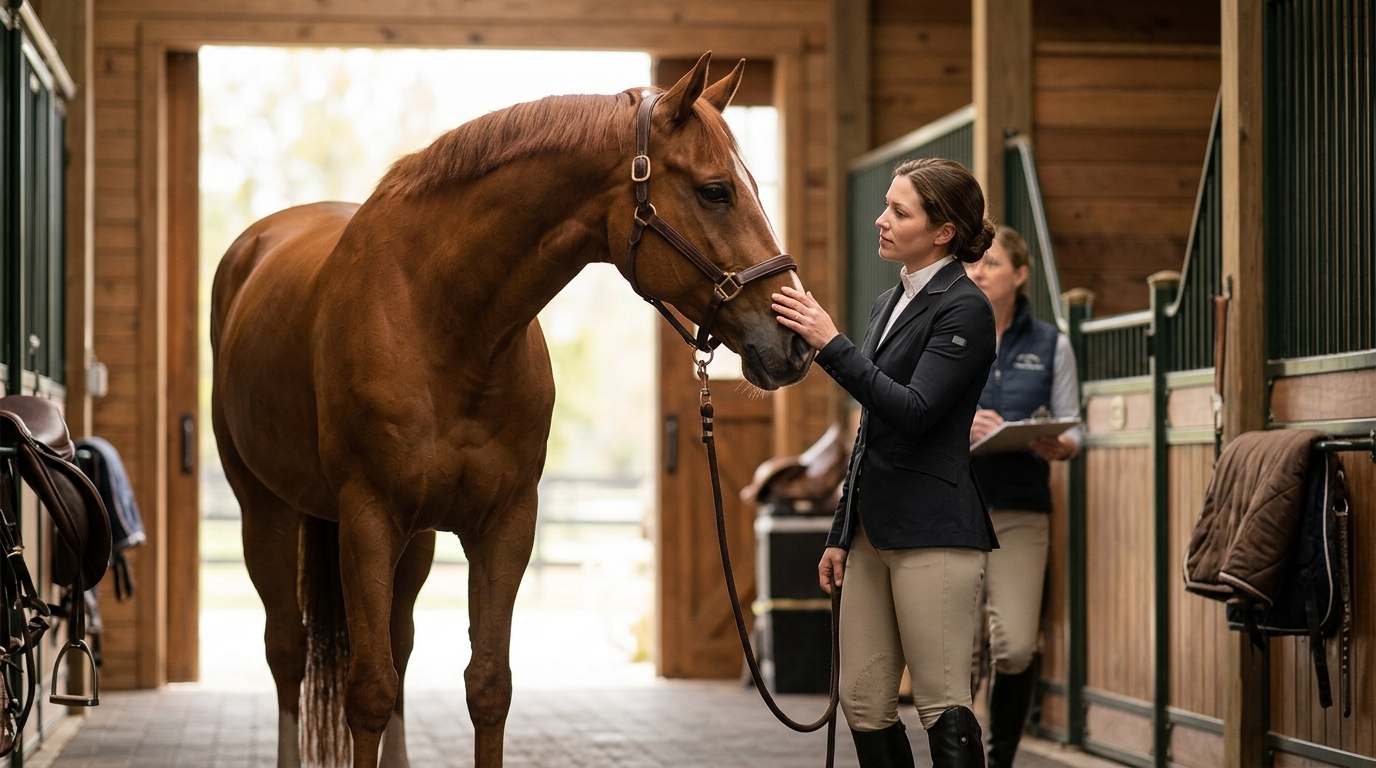
Buying a horse is one of the most exciting decisions an equestrian can make, but it is also one of the most complex. Whether you are a first-time buyer or a seasoned competitor searching for your next partner, a structured approach will save you time, money, and heartbreak. From assessing your own riding ability to scheduling a thorough veterinary exam, every step matters. This guide walks you through the key factors that separate a smart purchase from a costly mistake, drawing on expert advice from top coaches, veterinarians, and industry professionals.
Define Your Riding Goals and Experience Level
Before browsing listings, take an honest look at why you want a horse and what you plan to do with it. Are you a casual trail rider seeking a quiet, confidence-building mount? A junior competitor aiming for the show ring? A seasoned amateur ready to move up a level? Your answers will shape every decision that follows.
As multi-discipline coach and judge Lindsay Grice notes, buying the wrong horse is like fitting a square peg into a round hole. If you are a novice rider, your best bet is a mature horse with solid training, a kind nature, and good brakes. Be honest about your abilities and get advice from your coach or a knowledgeable friend who can assess your riding level.
Buying for a Child Rider
When purchasing for a young equestrian, look for a horse that is suitable right now. A horse that is too big, too strong, or too fast can be discouraging or even dangerous for a child. Both Grice and hunter/jumper specialist Beth Underhill stress the importance of a horse that is conventional for the discipline.
Match Breed and Discipline
A breed is a population of horses sharing distinct physical and behavioural traits that are consistently passed from one generation to the next. Not every breed is suited to every activity. For example, you would not choose a heavy Warmblood for barrel racing, yet that same horse could excel in dressage. An easy-going Quarter Horse or Appaloosa may be perfect for relaxed trail riding, while a Thoroughbred off the track could be ideal for eventing.
| Breed | Typical Disciplines | Temperament Notes |
|---|---|---|
| Quarter Horse | Western, trail, ranch work | Calm, versatile, beginner-friendly |
| Thoroughbred | Eventing, show jumping, hunters | Athletic, forward, can be hot |
| Warmblood | Dressage, show jumping, hunters | Powerful, scopey, trainable |
| Arabian | Endurance, trail, sport horse | Hardy, intelligent, sensitive |
| Canadian | Trail, driving, all-around | Tough, willing, easy keeper |
Explore what experts look for in hunter/jumper conformation or read about hind-leg conformation and its impact on soundness before narrowing your search.
Evaluate Temperament and Behaviour
Temperament is the horse's natural disposition toward people, other animals, and its environment. It is arguably the single most important factor in a successful partnership. A mismatch in personality leads to frustration and, in some cases, safety issues.
What to Observe
Watch how the horse behaves during grooming, tacking up, and riding. Ask the seller about vices such as cribbing, weaving, or bucking. A well-mannered horse should stand quietly for handling and respond predictably to aids. Gender rarely matters for recreational riders, but stallions can be strong-willed and are inadmissible for junior competitors in many associations.
Second Visits and Different Settings
If you like what you see the first time, arrange a return visit. Beth Underhill suggests trying the horse at a secondary location or even at a show to see how it handles new environments.
Assess Conformation and Soundness
Conformation is the overall structure and proportions of a horse's body, including how its bones, joints, and muscles are arranged. Good conformation usually correlates with fewer long-term soundness problems. While correct legs and feet are critical, no horse is perfect.
Linda Allen, an internationally respected FEI course designer, has noted that correct conformation, especially in the legs and feet, most often results in fewer soundness issues over the years. However, exceptions exist at even the highest levels of sport. Accept that minor imperfections are normal, particularly on a modest budget.
Schedule a Pre-Purchase Veterinary Exam
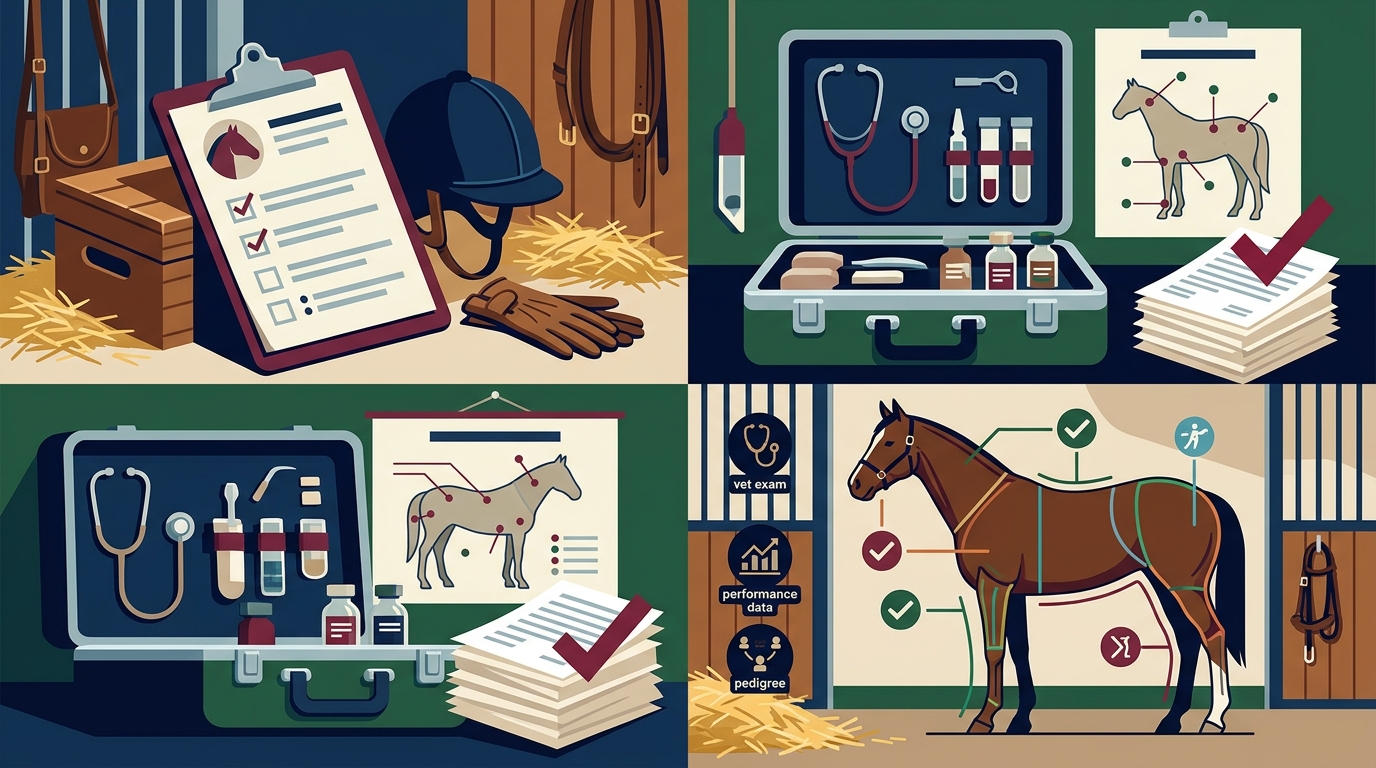
A pre-purchase exam (PPE) is a veterinary evaluation designed to detect physical defects and health issues before you commit to buying. The American Association of Equine Practitioners (AAEP) recommends a PPE for every horse purchase, regardless of price.
What the Exam Covers
A standard PPE includes a review of the horse's medical history, vital signs before and after exercise, and evaluation of the respiratory system, eyes, mouth, legs, joints, and hooves. Dr. Mary Bell, an Ontario-based veterinarian who has performed an estimated 2,500 to 3,000 PPEs, says the physical exam is the most critical component. For competition horses, radiographs and ultrasonography are often added to screen for arthritis, OCD lesions, and soft-tissue issues.
Cost and Practicalities
A basic PPE typically starts around $250, with X-rays and blood work adding to the total. Always hire an independent veterinarian rather than the seller's vet to avoid conflicts of interest. Make the horse's intended use clear so the vet can tailor the exam. As equine lawyer Catherine Willson explains, courts expect a proper pre-purchase opinion to account for the buyer's intended purpose.
Budget Beyond the Purchase Price
The purchase price is often the least expensive part of owning a horse. Ongoing costs add up quickly and must be factored into your decision before you sign a bill of sale.
| Expense | Low Estimate | High Estimate |
|---|---|---|
| Board (pasture) | $150 | $500 |
| Board (full, with stall) | $400 | $1,500+ |
| Feed and hay | $100 | $300 |
| Farrier (every 6-8 weeks) | $35 | $150 |
| Veterinary (routine, annualized) | $50 | $150 |
| Insurance (mortality + medical) | $50 | $200 |
Unexpected vet bills can run into thousands of dollars. Equine insurance helps offset these costs, with medical and surgical coverage available for as little as $225 per year for $2,500 to $5,000 of protection. Competition costs such as entries, travel, and training fees are additional line items that vary widely by discipline and region.
Work with Agents and Arrange Trial Rides
Many buyers rely on a trainer or agent to locate suitable horses and negotiate the deal. An agent is someone employed by a principal to negotiate on their behalf with a third party. Understanding the agency relationship is essential: if you have not hired the agent, they may be working for the seller, not you.
Trial periods, typically two weeks to a month, allow you to evaluate a horse in your own environment. However, trials carry risk for both parties, so a detailed contract and full mortality insurance with the owner named as beneficiary are strongly recommended.
If you are considering importing a horse, read our guide to buying horses in Europe, which covers agents, dealing barns, PPEs abroad, and import logistics.
Key Takeaways
- Be honest about your riding level and goals before you start shopping.
- Choose a breed and type that naturally suits your intended discipline.
- Prioritize temperament: a willing, well-mannered horse is worth more than flashy talent you cannot manage.
- Always schedule a pre-purchase veterinary exam with an independent vet.
- Budget for ongoing costs including board, feed, farrier, vet care, and insurance.
- Work with a trusted agent or trainer, but understand whose interests they represent.
- Accept that no horse is perfect; know which imperfections you can live with and which are deal-breakers.
Frequently Asked Questions
What is the most important factor when buying a horse?
Temperament and suitability for your riding level are the most important factors. A mismatch in skill and horse can lead to frustration, setbacks, or safety issues. Experts consistently advise pairing a green rider with an experienced, well-trained mount.
How much does a pre-purchase exam cost?
A basic PPE starts around $250 in most regions. Adding radiographs, blood work, or ultrasound can bring the total to $1,000 or more, depending on the scope and your veterinarian's fees.
Should I buy a young horse or an older horse?
Younger horses may offer a longer partnership but need more training. Older, experienced horses are calmer and better suited to novice riders. A horse in the 8 to 15 year range often strikes a good balance of soundness and schooling.
Do I need an agent to buy a horse?
An agent is not required, but a knowledgeable trainer or horse professional can help you avoid costly mistakes. Be clear about who the agent works for and ensure a written agreement outlines the scope of their authority.
How do I budget for ongoing horse ownership costs?
Start by tallying monthly board, feed, farrier visits, routine vet care, and insurance. Then add variable costs like training, competition fees, and emergency veterinary bills. Most owners spend between $500 and $2,000 per month depending on their location and goals.
Is a trial period a good idea?
Trials let you test a horse in your own environment, which is valuable. However, both buyer and seller should sign a detailed contract covering liability, insurance, and expenses in case of injury or illness during the trial.
What conformation faults are deal-breakers?
Deal-breakers depend on your discipline. Severe limb deviations, chronic lameness indicators, or respiratory issues are concerns for any use. Minor blemishes or cosmetic imperfections are usually acceptable, especially at lower levels of competition.
Can I buy a horse without riding experience?
It is strongly recommended that you take lessons and gain basic handling skills before purchasing. A good instructor can help you understand what to look for and, when you are ready, guide you through the buying process.
Ready to Start Your Search?
Explore more expert advice on equine ownership, from horse shopping tips to understanding pre-purchase exams, right here on Horse Sport. Subscribe to our newsletter for the latest articles from Canada's equestrian authority delivered straight to your inbox.