
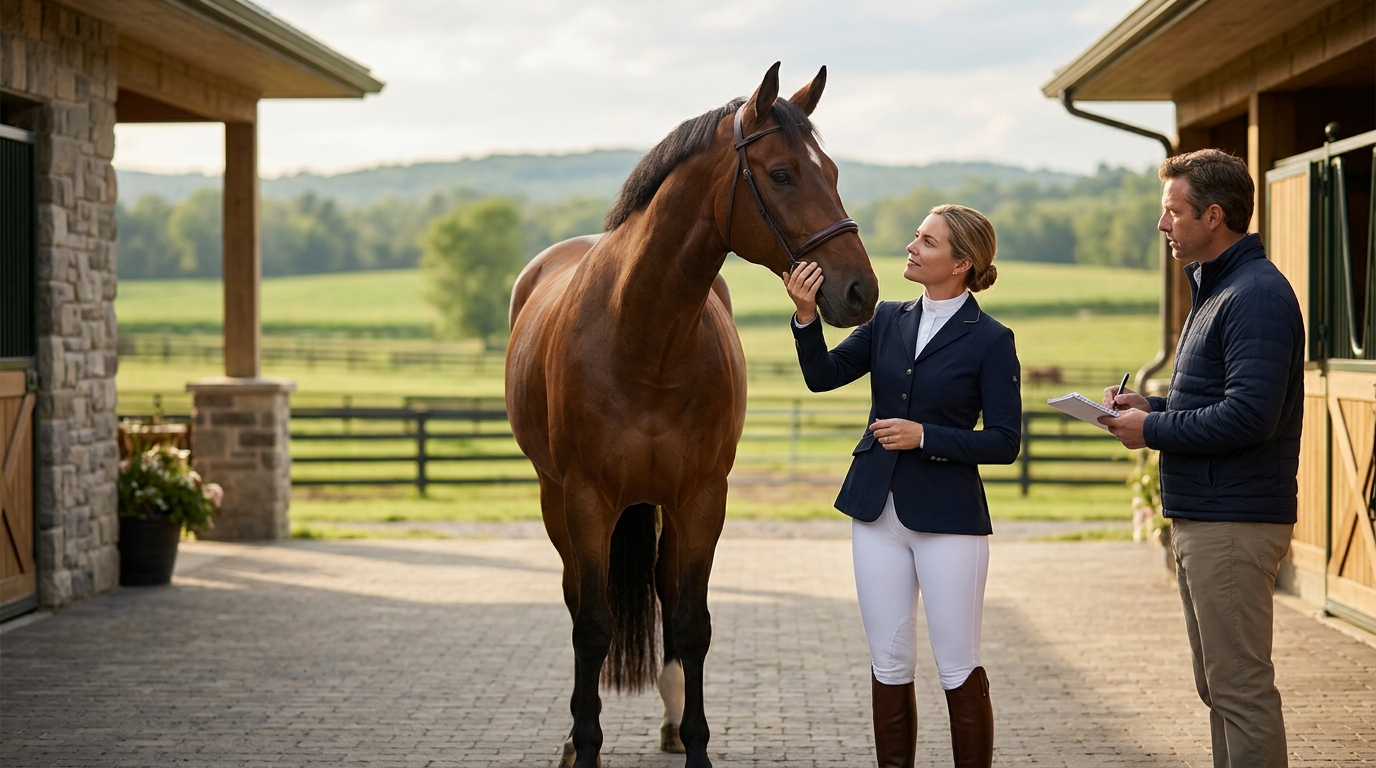
Buying a horse is one of the most exciting decisions an equestrian can make, but it is also one of the most consequential. From matching the right breed and temperament to your riding goals, to budgeting for years of ongoing care, the process demands careful planning. Whether you are a first-time buyer or a seasoned competitor looking for your next partner, understanding the key factors before you sign a bill of sale will save you money, heartache, and risk. This guide breaks down everything you need to evaluate so you can find the right horse and start your partnership on solid ground.
Define Your Riding Goals and Experience Level
Before you browse a single listing, take an honest look at your abilities and ambitions. Are you a casual trail rider who values a calm, steady mount, or a competitor aiming for the dressage ring or the hunter/jumper circuit? Your answer will shape every other decision you make.
As multi-discipline coach Lindsay Grice has noted, buying the wrong horse is like trying to fit a square peg into a round hole. If you are a novice rider, your best bet is a mature horse with solid training, a kind nature, smooth gaits, and good brakes. Experts such as hunter/jumper specialist Beth Underhill stress that beginners should look for a horse that is conventional for the discipline so the rider can learn proper fundamentals. Read more in our horse shopping tips guide for detailed advice on matching rider to horse.
Choose the Right Breed and Temperament
A horse breed is a population of horses selectively bred over generations for specific physical and behavioral traits. Not every breed is suitable for every activity, and temperament often matters more than pedigree.
Match Breed to Discipline
If you are interested in jumping, eventing, or dressage, consider Thoroughbreds, Warmbloods, or sport-horse crossbreds. For western disciplines like reining or barrel racing, a Quarter Horse, Paint, or Appaloosa is typically a better fit. Trail riders who want a relaxed partner may thrive with a Quarter Horse, Canadian, or gaited breed. The American Quarter Horse Association's buyer checklist is a useful starting resource for western-discipline shoppers.
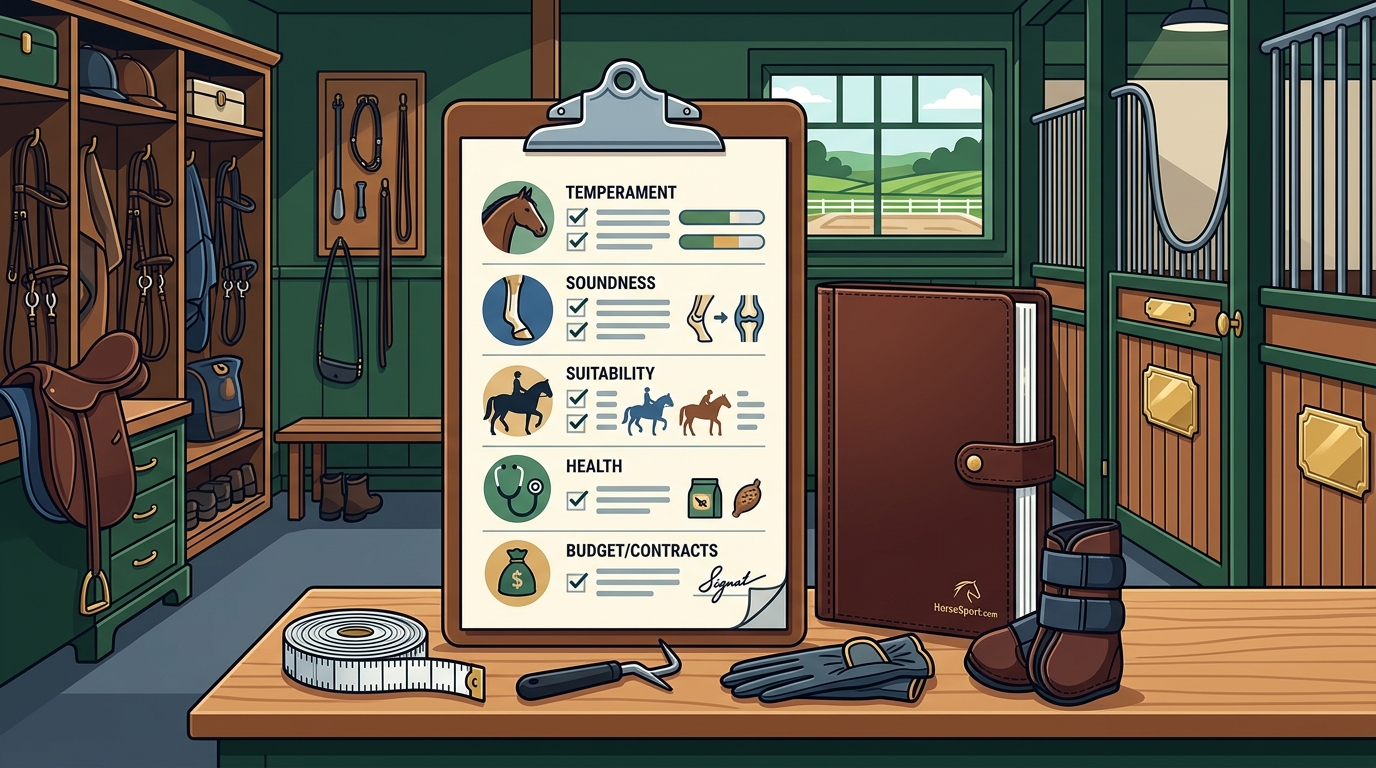
Assess Temperament in Person
Spend time with any prospect on the ground and under saddle. Observe how the horse reacts to handling, mounting, bridling, and hoof care. A horse with consistent, calm behavior is more predictable and builds trust faster. Ask the seller about vices such as cribbing, weaving, or bucking, and watch for reactive or spooky tendencies during your visit.
Evaluate Age, Training, and History
Age, training level, and performance history all affect a horse's suitability and price. A well-trained horse between eight and 14 years old often represents the sweet spot for amateur and intermediate riders: enough experience to be reliable, with many productive years ahead.
The old adage holds true: a green horse and a green rider make a poor combination. Younger horses may cost less upfront but require significant professional training investment. According to Canadian breeders, the cost of raising and starting a young sport horse can reach $15,000 to $20,000 before a buyer even comes to look. Always ask for veterinary records, competition history, and trainer references before committing.
Schedule a Thorough Pre-Purchase Exam
A pre-purchase exam (PPE) is a veterinary evaluation designed to detect physical defects and obtain as much information as possible about a horse's health before the sale is finalized. It is one of the most important steps in the buying process.
What a PPE Includes
A standard PPE typically consists of flexion tests, a lameness evaluation under saddle, a review of vital signs, and an assessment of respiratory, digestive, and musculoskeletal systems. Depending on the horse's intended use and price, you may add x-rays, ultrasounds, or blood work. As equine lawyer Catherine Willson explains in her guide to pre-purchase exams, courts have indicated that a proper PPE must take into account the buyer's intended purpose for the horse.
Choose an Independent Vet
Always hire a reputable equine veterinarian who is not the seller's regular vet to avoid conflicts of interest. Make your intended use clear so the vet can tailor the scope of the exam accordingly. A competitive show horse purchase, for example, may require more extensive imaging than a recreational trail horse.
Budget for Purchase Price and Ongoing Costs
The purchase price is often the least expensive part of horse ownership. According to a Synchrony Equine Lifetime of Care study, lifetime ownership costs range from $300,000 to $924,000 over an average 25-year lifespan. Annual costs typically fall between $8,600 and $26,000 depending on location, care level, and discipline.
| Expense Category | Estimated Annual Cost (USD) |
|---|---|
| Boarding / Housing | $3,000 - $18,000 |
| Feed & Supplements | $1,200 - $4,800 |
| Routine Veterinary Care | $300 - $700 |
| Farrier Services | $400 - $2,000 |
| Training / Lessons | $2,400 - $6,000 |
| Insurance | $300 - $800 |
| Tack & Equipment | $500 - $2,000 |
| Total Range | $8,100 - $34,300 |
Our money-saving tips for horse people offers practical strategies for reducing costs without compromising care. Consider leasing or part-boarding as a lower-risk entry point if full ownership stretches your budget.
Where to Find Horses for Sale
Horses can be purchased from private sellers, professional dealers, breeders, rescue organizations, or auctions. Each source carries different levels of transparency and risk. Private sellers and breeders typically provide detailed histories, while auctions offer lower prices but far less background information.
Talk to local coaches, veterinarians, and farriers who are often the first to know of horses for sale in your area. If you are considering an overseas purchase, our article on buying horses in Europe covers everything from working with agents to navigating import regulations. Trusted agents can be invaluable: they spend time watching horses compete and can stand behind their recommendations because their own reputations are at stake.
Legal Considerations and Contracts
A bill of sale is a written document that records the terms of a horse purchase transaction, including price, payment terms, and any warranties or conditions. Never finalize a purchase on a handshake alone. The legal principle of caveat emptor (let the buyer beware) applies to horse transactions, so the burden is on you to do your due diligence.
If you use a trainer or agent to help find your horse, understand how agency relationships work and whose interests the agent represents. Always clarify commission structures and put agreements in writing. For trial periods, draft a detailed contract covering liability, insurance, and veterinary expenses.
Key Takeaways
- Honestly assess your riding level and goals before you start shopping. The right match prevents costly mistakes.
- Breed matters, but temperament and training level are often more important for rider safety and satisfaction.
- Always commission an independent pre-purchase veterinary exam tailored to your horse's intended use.
- Budget for ongoing annual costs of $8,600 to $26,000 or more on top of the purchase price.
- Use trusted professionals such as coaches, vets, and agents to guide your search and evaluation.
- Put every agreement in writing, from the bill of sale to trial period terms and agent commissions.
- Consider leasing before buying if you are unsure about the financial or time commitment of full ownership.
Frequently Asked Questions
What is the average cost of buying a horse?
Purchase prices vary widely. A sound recreational horse typically costs between $3,000 and $8,000, while trained competition horses can range from $10,000 to well over $100,000 depending on breed, training, and pedigree.
Why is a pre-purchase exam important?
A pre-purchase exam gives you a professional veterinary assessment of the horse's current health and soundness. It can reveal conditions like lameness, respiratory issues, or joint problems that could prevent the horse from performing its intended job.
Should a beginner buy a young horse?
Generally, no. Inexperienced riders are best matched with mature, well-trained horses. Young or green horses require professional training and confident handling that most beginners do not yet possess.
How much does it cost to own a horse per year?
Annual ownership costs in the United States typically range from $8,600 to $26,000, depending on boarding arrangements, geographic location, veterinary needs, and competitive goals. Emergency vet bills can add thousands more in any given year.
What is the best breed for a first-time horse owner?
There is no single best breed, but Quarter Horses, Appaloosas, and Morgans are popular choices for beginners due to their generally calm temperaments and versatility. Focus on the individual horse's training and disposition rather than breed alone.
Should I use an agent or trainer when buying a horse?
Working with a knowledgeable professional can help you find suitable prospects and avoid costly mistakes. Just be sure you understand who the agent is working for and how they are compensated. A clear written agreement protects both parties.
What should I look for during a test ride?
Evaluate the horse's responsiveness to aids, smoothness of gaits, lead changes, willingness to halt, and overall demeanor. Have the seller ride first, then ride the horse yourself. Bring an experienced friend or coach for a second opinion.
Is leasing a horse a good alternative to buying?
Leasing can give you many benefits of ownership without the full financial commitment or long-term responsibility. It is an excellent way to test your readiness and preferences before making a purchase.
Ready to Find Your Perfect Horse?
Explore more expert advice on equine ownership, health, and training at Horse Sport, Canada's equestrian authority for over 50 years. Subscribe to our newsletter for the latest articles delivered straight to your inbox.