
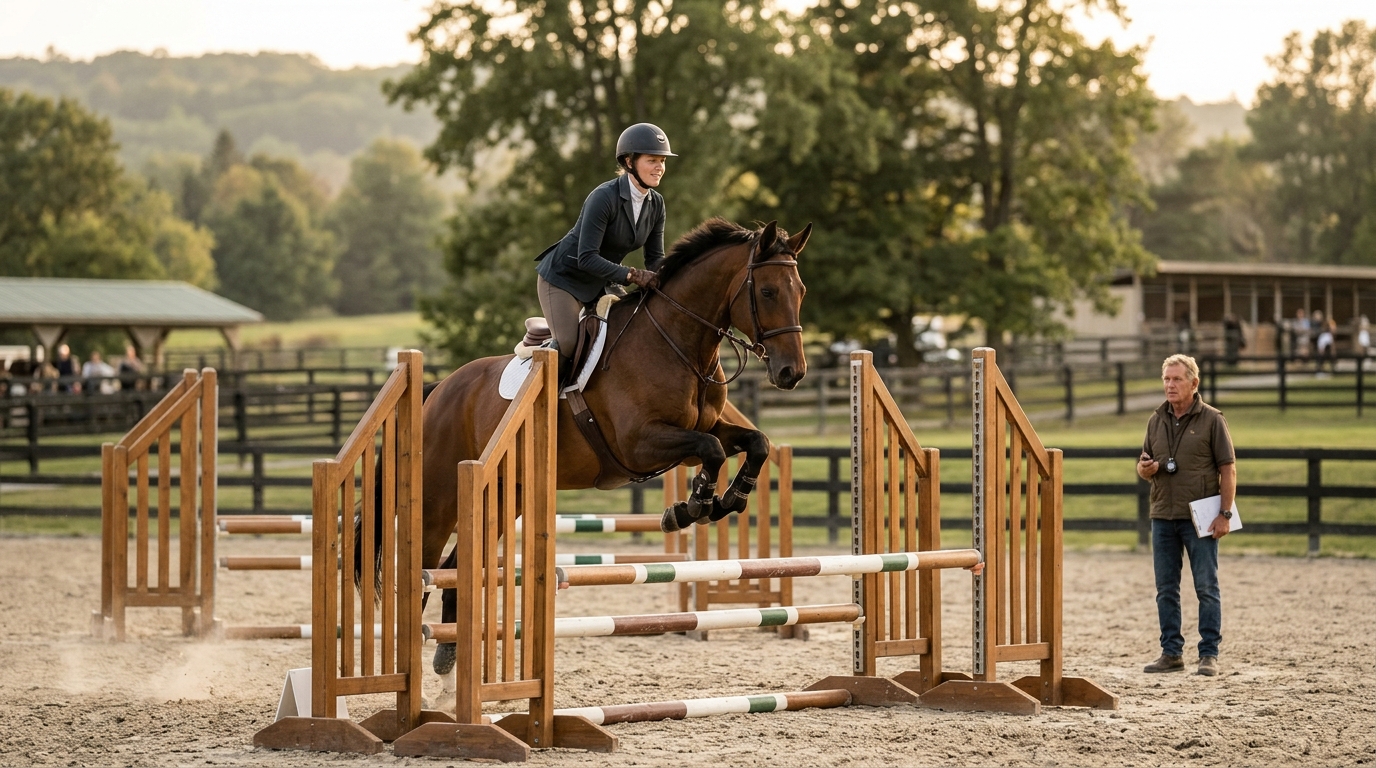
Whether you are preparing a green horse for its first 0.80m class or sharpening a seasoned competitor for grand prix, effective show jumping training follows a consistent set of principles. Flatwork quality, gymnastic exercises, stride adjustability, rider position, and mental preparation all play essential roles. In this guide we break down the most effective training techniques used by top coaches across North America, drawing on decades of expertise shared through Horse Sport's Jumping Lessons series. Use these methods to build confidence, improve technique, and produce cleaner rounds in the competition ring.
Why Flatwork Is the Foundation of Every Good Jump
Flatwork is the collection of ridden exercises performed without jumps that develop a horse's balance, straightness, and responsiveness to the aids. As Canadian Show Jumping Team veteran Mac Cone explains, the first goal every ride is to get the horse "in front of your leg, going up into your hand, and going straight." These basics apply whether the horse is dead green or an experienced campaigner. Learn more in Flatwork Basics for Jumpers with Mac Cone.
Frequent transitions, lateral work such as leg yields and counter-canter, and pole exercises on the flat build the suppleness and obedience that translate directly to the jumping ring. Hunter trainer Bobbie Reber keeps a line of poles set 72 feet apart in her ring to practise shortening and lengthening in the canter. A show jumping horse also needs a quality gallop and the ability to make both sharp and wide turns while maintaining balance.
Gymnastic Exercises and Grid Work
A gymnastic is a series of poles and fences set at measured distances that train the horse to use its body efficiently without relying on the rider to find every distance. Gridwork is the cornerstone of show jumping training because it develops rhythm, straightness, self-carriage, and confidence.
Bounce Grids
Calgary-based trainer Holly Grayton uses advanced bounce grids to build a horse's strength and technique. A typical setup might be: Pole, 9 feet to crossrail, 18 feet to vertical, then 10-foot bounces through several verticals, finishing with a one-stride to an oxer. She recommends building the grid progressively, starting with only the pole and first crossrail. Read the full breakdown in Advanced Bounce Grid Exercises.
The 3-1-4-Stride Gymnastic
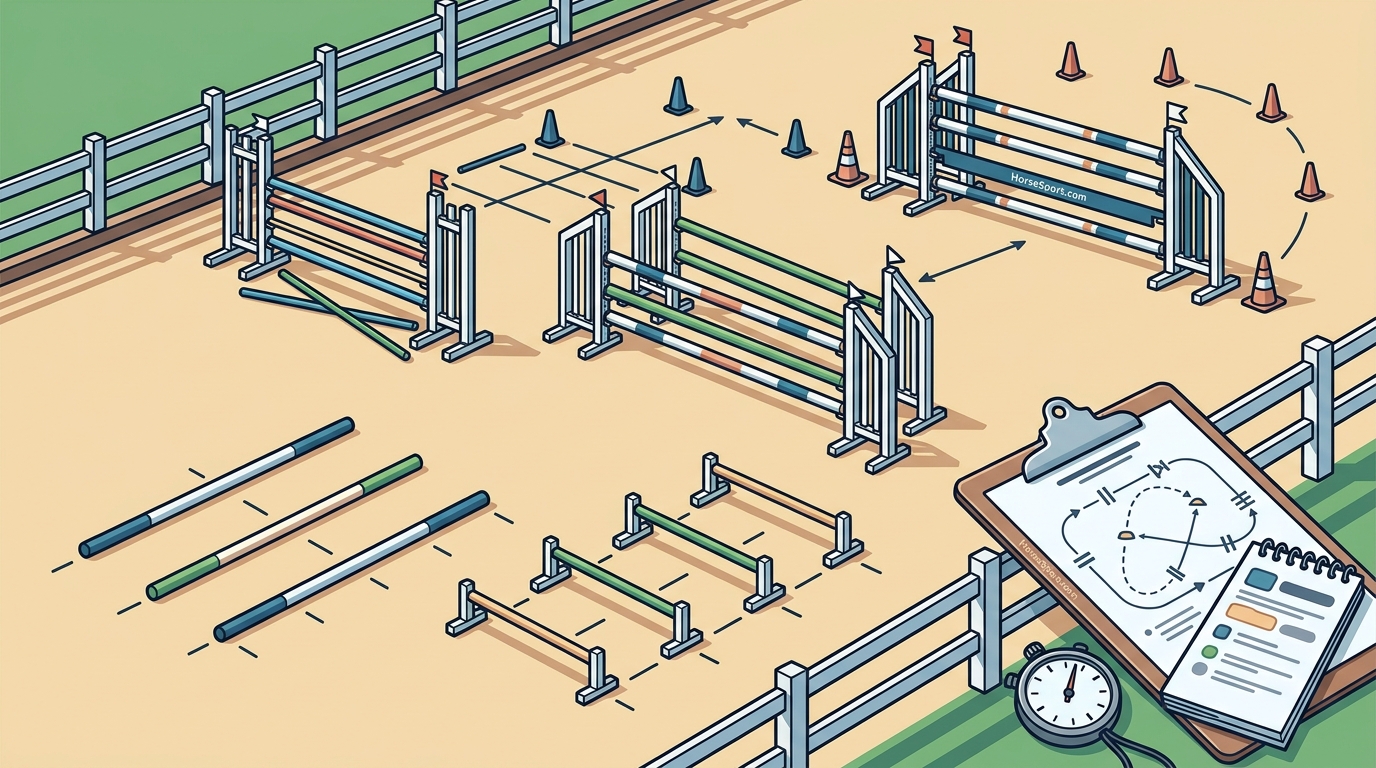
This exercise teaches rhythm, straightness, and patience by using a cavaletti, an oxer at 41 feet, a vertical at 23 feet, and a final cavaletti at 51 feet. Riders work through the line in both directions, adjusting their canter on approach. Explore the details in the 3-1-4-Stride Gymnastic lesson.
Developing Stride Adjustability
Stride adjustability is a horse's ability to lengthen or shorten its canter stride on demand while maintaining rhythm. This skill is non-negotiable for navigating the related distances and bending lines found on modern show jumping courses.
One highly effective drill is the 27-foot pole exercise. Place two poles 27 feet apart, which is a quiet two-stride for most horses, and practise fitting one, two, or three strides between them. The exercise builds confidence in adjusting stride length from a collected canter to an open gallop. As one rider told Grayton after completing it, "That's show jumping: can you go and can you whoa?"
According to the FEI Jumping Rules, combination distances in competition range from 7 metres minimum to 12 metres maximum, meaning horses must be comfortable adjusting within a significant range.
Rider Position and Body Control
Jay Duke, a Canadian Show Jumping Team veteran, maintains a simple axiom: "Good position creates good jumps." A secure, balanced position keeps the rider in sync with the horse, allows them to stay out of the horse's way at the base of the fence, and enables effective riding immediately upon landing.
Duke's position checklist includes consistent weight on the ball of the foot across the stirrup bar, a straight line from heel to hip to shoulder in three-point, and a centred seat that is neither ahead of nor behind the motion. He recommends trotting into gymnastics when working on position, because a trot approach removes anxiety about finding a distance. Explore all three exercises in Three Body Control Exercises for Show Jumping Riders.
Course Simulation at Home
Practising course work at home that is more difficult than what you will face in competition ensures there are no surprises in the ring. A simple indoor course might include an outside line set as a combination at 20 feet then 66 feet, an oxer line at 55 feet, and diagonal jumps for bending-line options. Tall X-rails help direct focus to the centre of each jump without requiring active riding aids.
The oval exercise is another valuable tool. Set two jumps on opposite long sides of the arena and canter an oval, aiming for the same number of strides on each end. This single drill develops five essential skills: eye, rhythm, tracking, balance, and concentration. Details are available in Five Important Jumping Skills, One Simple Exercise.
Mental Preparation and Season Planning
Mental preparation is the process of training your mind to perform under pressure through visualization, breathing techniques, and deliberate practice in stressful scenarios. It is just as important as physical training.
At season's end, take honest stock of your performance. Review video from shows, seek candid feedback from your coach, and ask yourself how your horse handled the workload mentally and physically. These reflections create a roadmap for the off-season. Read more in Season's End is Time to Take Stock.
Before competition season begins, brush up on show jumping etiquette and rules so you can focus on riding rather than worrying about procedural errors.
Training Methods Comparison
| Training Method | Primary Benefit | Best For | Frequency |
|---|---|---|---|
| Flatwork (transitions, lateral work) | Balance, suppleness, obedience | All levels | Daily |
| Bounce grids | Technique, strength, straightness | Intermediate to advanced | 1-2x per week |
| 27-foot pole exercise | Stride adjustability | All levels | 1-2x per week |
| Oval pattern exercise | Eye, rhythm, tracking | All levels | 1-2x per week |
| Course simulation | Ring readiness, confidence | Competition-ready pairs | Weekly |
| Interval/fitness training | Cardiovascular fitness, stamina | Upper-level competitors | 2x per week |
Key Takeaways
- Flatwork quality determines jumping quality. A horse that is straight, balanced, and responsive on the flat will be easier to ride to every fence.
- Gymnastics and grids teach the horse to find its own footwork, reducing rider dependency at the base of the jump.
- Stride adjustability, practised through exercises like the 27-foot pole drill, is essential for navigating related distances.
- Rider position is paramount. A secure leg and balanced upper body allow the rider to stay with the horse from approach through landing.
- Course work at home should be more challenging than competition courses to eliminate surprises in the ring.
- Mental preparation, including visualization and honest self-assessment, complements physical training for consistent performance.
- Progressive training, adding complexity one element at a time, builds lasting confidence in both horse and rider.
Frequently Asked Questions
What is the most important foundation for show jumping training?
Flatwork is universally regarded as the most important foundation. Coaches across disciplines agree that a horse must be balanced, rhythmic, and responsive to the aids on the flat before jumping work begins. Six months of consistent flatwork can accelerate jumping progress considerably.
How often should a show jumper practise over fences?
Most professional programs jump horses two to three times per week, with the remaining days devoted to flatwork, fitness, and rest. Overjumping leads to physical wear, sour attitudes, and diminished technique.
What are gymnastics in show jumping?
Gymnastics are sequences of poles and fences set at predetermined distances that develop a horse's technique, rhythm, and strength. They range from simple trot-in bounces to complex multi-element grids that simulate the demands of a full course.
How do I improve my horse's stride adjustability?
Use pole exercises such as the 27-foot pole drill, where you practise fitting one, two, or three strides between two poles. Flatwork transitions between collected and extended canter also build this skill over time.
Why does rider position matter so much in show jumping?
A secure, balanced position keeps the rider with the horse's motion, prevents interference at takeoff, and allows immediate course corrections on landing. As Jay Duke teaches, good position creates good jumps.
How can I prepare mentally for show jumping competitions?
Use visualization techniques to rehearse your course, practise breathing exercises to manage nerves, and build experience in pressure situations during training. Reviewing video from previous shows helps identify patterns and areas for improvement.
What distances are used in FEI show jumping combinations?
Under FEI Jumping Rules, combination elements must be set between 7 metres minimum and 12 metres maximum. A one-stride distance is approximately 7 to 8 metres, while a two-stride distance is roughly 10 to 11 metres.
At what height should a beginner horse start jumping?
Green horses should begin with 18- to 24-inch crossrails or small verticals. Only progress to cantering fences when the horse is steady and consistent at the trot approach. Patience at this stage prevents confidence issues later.
Start Building Better Rounds Today
Great show jumping is built one exercise at a time. Pick one technique from this guide, add it to your next schooling session, and track your progress over the coming weeks. For more expert training articles, exercise diagrams, and competition coverage, explore the full Jumping Lessons series on Horse Sport and subscribe for new content delivered to your inbox.