

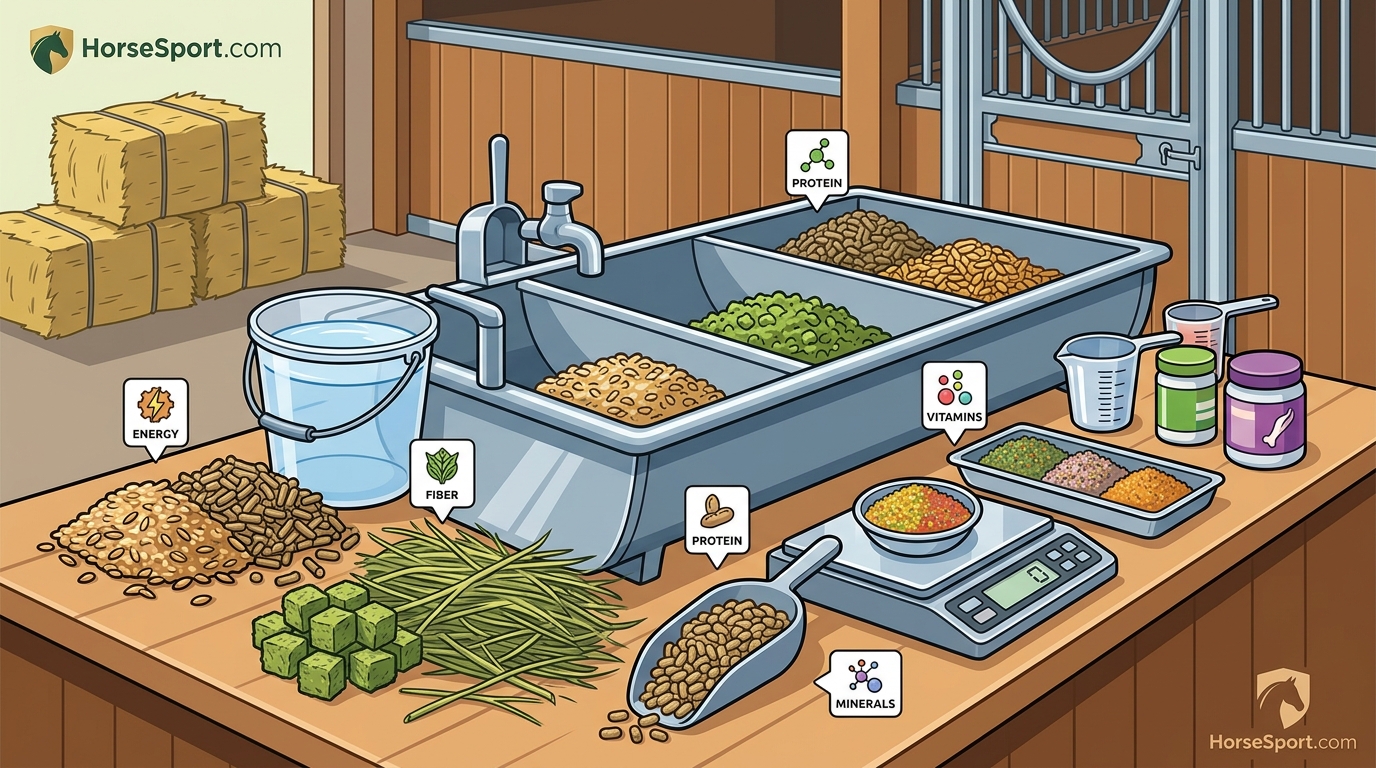
Feeding a high-performance horse is far more than scooping grain into a bucket. Whether your equine athlete competes in show jumping, eventing, dressage, or endurance, the right nutrition program directly affects energy output, recovery speed, and long-term soundness. According to the Rutgers Equine Science Center, all performance horses need water, energy, fiber, protein, and at least minimum levels of vitamins and minerals to maintain desired condition. This guide breaks down the science-backed strategies that keep sport horses performing at their peak, drawing on expert insights featured right here on Horse Sport.
Understanding Energy Demands of Athletic Horses
Adenosine triphosphate (ATP) is the molecule that fuels every muscular contraction during exercise. ATP is produced from carbohydrates (primarily blood glucose and muscle glycogen) and fats, with the fuel type depending on exercise intensity. A horse in heavy training can require 30-50% more digestible energy (DE) per day than one at maintenance, according to the Kentucky Equine Research guidelines.
The Horse Sport article on feeding equine athletes makes a critical point: it is not enough to simply buy venue-provided hay and a grain mix recommended by a salesperson and expect peak output. A structured, science-based feed plan is essential.
How the NRC Classifies Work Levels
The National Research Council's Nutrient Requirements of Horses (2007) divides performance horses into four categories: light, moderate, heavy, and very heavy work. Each category carries distinct calorie, protein, and mineral targets. Understanding which category your horse falls into is the first step toward an accurate ration.
Forage First: The Foundation of Every Feed Program
Forage is the long-stem plant material (hay, pasture, or haylage) that should form the base of every equine diet. Sport horses should consume 1.5-2.5% of their body weight in quality forage daily. For a 500 kg horse, that translates to roughly 7.5-12.5 kg per day.
However, forage quality varies enormously. The DE content of hay can range from 1.5 Mcal/kg to 2.6 Mcal/kg. That variation alone can mean the difference between a horse gaining unwanted weight or losing condition. This is why hay analysis is so important for building an accurate feed program.
Grass Hay vs. Legume Hay
| Factor | Grass Hay (e.g., Timothy) | Legume Hay (e.g., Alfalfa) |
|---|---|---|
| Crude Protein | 6-12% | 15%+ |
| Digestible Energy | Lower (1.5-2.0 Mcal/kg) | Higher (2.0-2.6 Mcal/kg) |
| Calcium | Moderate | High |
| Best For | Easy keepers, light work | Hard keepers, heavy work, broodmares |
Learn more about the differences in our deep dive on forages as the primary component of your horse's diet.
Protein and Amino Acids for Muscle Recovery
Protein is a major component of body tissue and plays a key role in enzymes, hormones, and antibodies. For performance horses, the absolute protein need increases, but the dietary percentage typically stays between 8-12% because the horse is consuming more total feed to meet its energy needs.
Lysine is the first limiting amino acid in equine diets, meaning a deficiency in lysine will restrict muscle protein synthesis regardless of total protein intake. Oats, while an excellent calorie source, are low in lysine, so supplementation with soybean meal or a fortified commercial feed is often necessary. Our guide to protein balance in the equine diet covers over- and under-supplementation risks in detail.
Fats as a Cool Energy Source
Dietary fat is a concentrated energy source that provides more than twice the calories per gram compared to carbohydrates. Fat supplementation is a strategy used by many trainers to boost calorie intake without increasing grain volume, thereby reducing the risk of starch overload and digestive upset.
Adding 2-4 fluid ounces of vegetable oil as a top dressing is a simple starting point. Although horses lack a gallbladder, they digest fats well when introduced gradually. Fat supplements also support coat health and may offer anti-inflammatory benefits through omega-3 fatty acids. Read more about calorie management in our article on adjusting your horse's diet to support weight gain.
Electrolytes and Hydration During Competition
Electrolytes are minerals dissolved in body fluids that regulate nerve and muscle function. Horses are prolific sweaters; a horse can lose up to 10-15 litres of sweat during intense exercise, along with significant amounts of sodium, chloride, and potassium. According to equine nutritionist Dr. Shannon Pratt-Phillips, horses lose between 15-40 g of sodium, 35-90 g of chloride, and 8-21 g of potassium during exercise bouts ranging from low to intense work.
Free-choice salt should be available to all horses year-round, but performance horses in particular need targeted electrolyte supplementation formulated to match equine sweat composition. A 2022 study published in Veterinary Sciences confirmed that dehydration impairs both physical and mental performance and places horse and rider at risk of injury.
Supplements: What Works and What Doesn't
The equine supplement industry is massive, with owners often spending upwards of $100 per month on products for a single horse. Yet not all supplements are backed by research. A well-formulated commercial feed already contains balanced vitamins and minerals, so adding a broad-spectrum vitamin/mineral mix on top can lead to nutritional toxicity.
Evidence-Based Supplement Options
- Omega-3 fatty acids: Supported by research for anti-inflammatory effects, especially in metabolic horses.
- Biotin: Kentucky Equine Research notes biotin supplementation benefits horses needing hoof support.
- Vitamin E: Important for muscle function; levels decline in stored hay over time.
- Resveratrol: Emerging research shows potential for improving insulin sensitivity in horses with metabolic syndrome.
Our equine supplements overview encourages owners to verify any supplement's safety and efficacy through peer-reviewed studies before adding it to the diet.
Common Feeding Mistakes to Avoid
Even experienced horsekeepers fall into predictable traps. Sodium is one of the most commonly deficient nutrients in equine diets because salt licks alone rarely meet requirements. Other frequent errors include not weighing feed, skipping hay analysis, and making abrupt forage changes that cause gastrointestinal upset.
Our nutrition columnist Madeline Boast, MSc, outlines actionable solutions in her article on avoiding four common feeding mistakes. The simplest takeaway: weigh your feed with a kitchen scale and test every new batch of hay.
Key Takeaways
- Forage should form 1.5-2.5% of a performance horse's body weight daily and is the single most important dietary component.
- Hay analysis is essential because DE content can vary from 1.5 to 2.6 Mcal/kg between batches.
- Fat supplementation provides cool, concentrated energy and reduces reliance on high-starch grain.
- Electrolyte replacement must match equine sweat composition; a salt lick alone is not sufficient for working horses.
- Protein percentage need not exceed 8-12% for most performance horses since increased total feed intake covers the extra requirement.
- Supplements should be evidence-based; redundant vitamin/mineral products can cause toxicity when layered on fortified feeds.
- Working with a qualified equine nutritionist (M.Sc. or Ph.D.) delivers a customized, unbiased feeding plan.
Frequently Asked Questions
What is the ideal forage intake for a performance horse?
A performance horse should consume 1.5-2.5% of its body weight in forage daily. For a 500 kg horse, that is approximately 7.5-12.5 kg of hay or equivalent forage per day, providing the fiber needed for gut health and steady energy release.
How many extra calories does a horse in heavy work need?
A 500 kg horse at maintenance requires roughly 16.7 Mcal of digestible energy per day. Heavy work can increase that requirement by 30-50%, pushing daily needs above 22 Mcal depending on the discipline and duration of exercise.
Should I feed oats or a commercial grain mix?
Oats have the most suitable nutritional profile among cereal grains for horses and are economical. However, they are low in calcium and lysine, so the rest of the diet must compensate. Commercial grain mixes are pre-balanced by nutritionists and simplify ration formulation.
How do I know if my horse needs electrolyte supplementation?
Any horse that sweats regularly during training or competition benefits from electrolyte supplementation. Signs of deficiency include fatigue, decreased water intake, and poor recovery. Choose a product formulated to match equine sweat, with sodium, potassium, and chloride as the primary ingredients.
Is protein supplementation necessary for sport horses?
Often, no. Research shows protein excess is more common than deficiency in equine diets. Over-supplementing protein increases urea in urine, leading to dehydration and ammonia buildup in stalls. Get your hay tested before adding protein supplements.
How often should I test my hay?
Test every new batch. Hay nutritional value varies by plant species, maturity at harvest, weather, and storage conditions. Even hay from the same field differs batch to batch, making regular analysis the only reliable way to manage calorie and nutrient intake.
When should I hire an equine nutritionist?
Hire a nutritionist when your horse changes work level, experiences unexplained weight changes, or has a metabolic condition. Independent consultants with graduate degrees (M.Sc. or Ph.D.) provide unbiased dietary evaluations and can save you money by identifying over-supplementation.
Ready to Optimize Your Horse's Nutrition?
Start by getting your hay tested and reviewing your current feed program against your horse's actual workload. For personalized guidance, explore the full library of nutrition articles on Horse Sport written by credentialed equine nutrition experts. Your horse's next personal best may start in the feed room.