
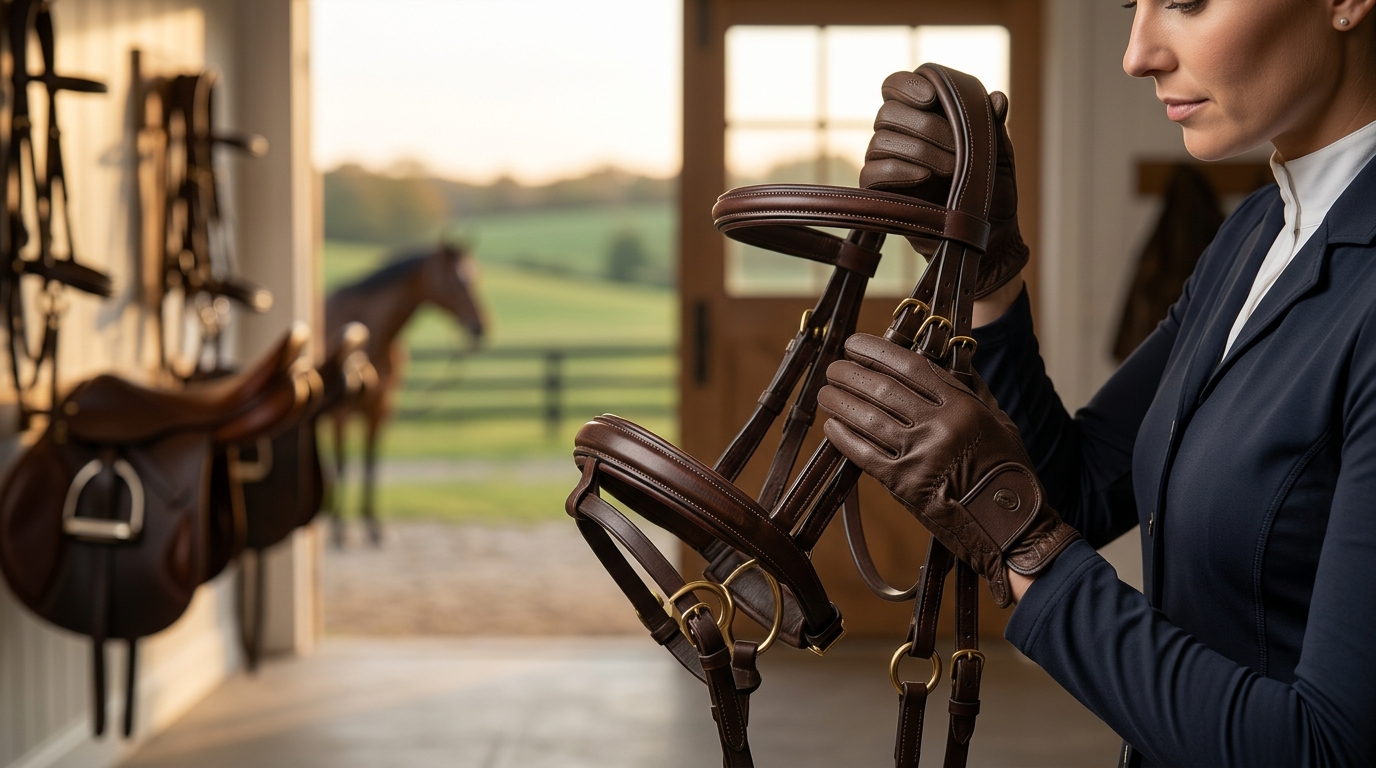
Choosing the right tack is one of the most important decisions any equestrian makes. Poor-quality equipment can compromise your safety, cause your horse discomfort, and cost you more in the long run when it needs replacing after a single season. Whether you are shopping for a new bridle, saddle, or halter, learning to evaluate horse tack brands for quality will help you spend wisely and keep your horse performing at its best. This guide walks you through the key criteria, from leather grade and stitching to hardware and brand reputation, so you can shop with confidence.
Understand Leather Grades
Leather grade is the single most important factor when evaluating tack quality. Full-grain leather is the highest grade of leather, retaining the complete natural grain of the hide for exceptional durability and breathability. It develops a rich patina over time rather than wearing out. Top-grain leather is the second-highest grade, sanded for a more uniform appearance but slightly less durable. Genuine leather and bonded leather sit at the bottom of the scale and should generally be avoided in performance tack.
The Smell and Feel Test
New leather should have an agreeable smell. As the experts at Horse Journals note, an off odour is the first hint of leather that has been tanned quickly and inexpensively. Bend the leather back and forth; there should be no large cracks or fissures. The unfinished side should be free of ragged fibres, cuts, or uneven thickness.
Vegetable-Tanned vs. Chrome-Tanned
Vegetable tanning is a slow process that relies on natural tannins from tree bark and plant sources. It produces leather that starts firm and gradually softens with use, developing a deep, distinctive patina. Chrome tanning is faster and produces softer, more flexible leather from the start, but it will not age with the same character. For tack that will see years of daily use, vegetable-tanned full-grain leather is the gold standard.
Inspect the Stitching
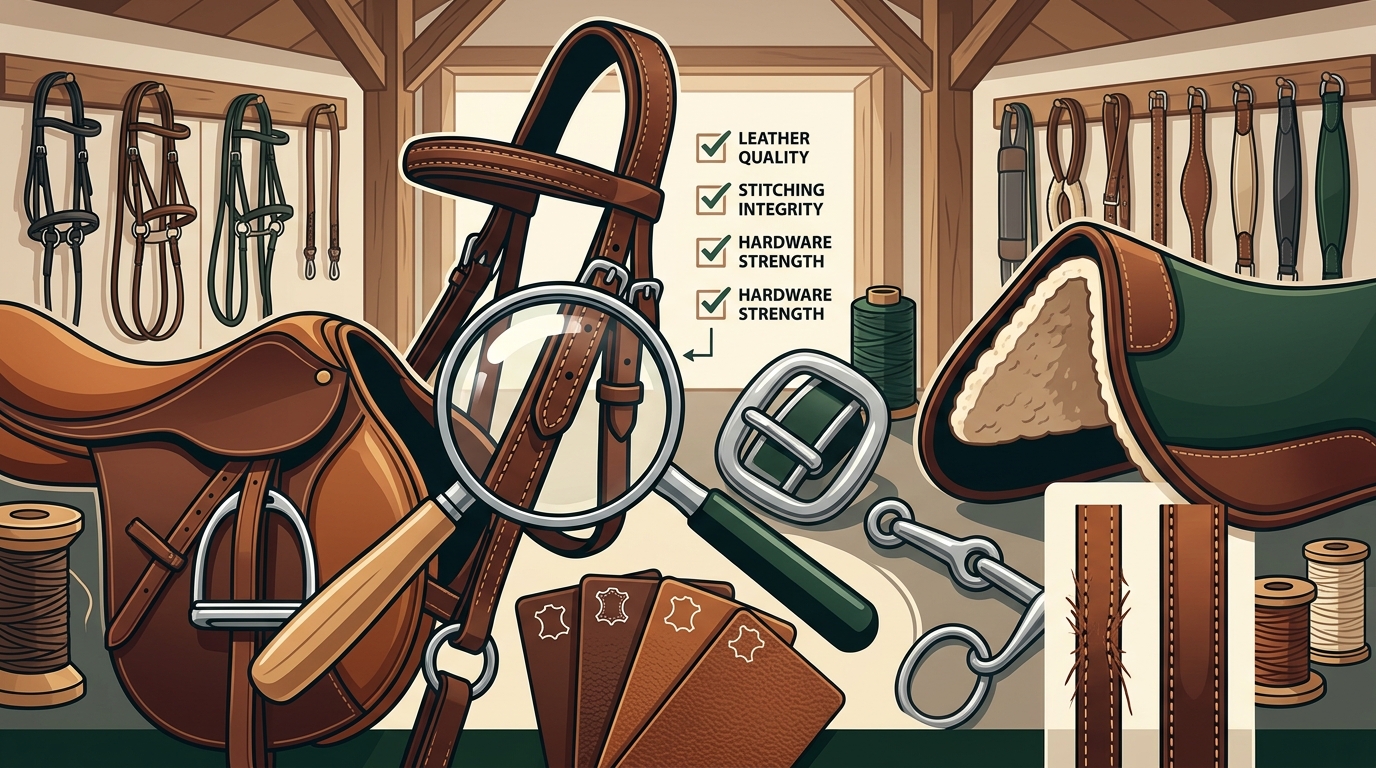
Stitching quality reveals more about a tack brand than almost any other detail. Fine, even stitching with fewer than 12 stitches per inch and neatly finished, tucked ends is a hallmark of quality workmanship. Edges that have been skived and burnished until they are round and hard before being dyed are another sign of careful construction.
Mass-produced tack often features machine-automated stitching that is fast but fails under stress. Look closely at stress points such as billet attachments, cheekpiece connections, and rein buckle loops. Reinforced stitching in these areas is essential for safety. If you want to understand how to inspect and maintain your leather tack, regular checks of all stitching and rivets should become part of your routine.
Evaluate Hardware and Metal Components
Hardware is the structural backbone of any piece of tack. Stainless steel is the preferred material for buckles, D-rings, and bit attachments because it resists corrosion and withstands repeated stress. Solid brass is another durable, long-lasting option often found on premium handcrafted tack. Nickel-plated hardware may look fine initially, but plating can corrode in as little as six months of outdoor exposure.
Look for strong steel tongue buckles with rounded edges that will not cut into the leather. Avoid tack with lightweight stamped buckles, exposed rivets that snag, or hardware with visible casting flaws. For guidance on cleaning and storing tack hardware, remember that metal cleaner applied to buckles and screws prevents rust damage over time.
Assess Fit and Anatomical Design
A beautifully crafted piece of tack is worthless if it does not fit your horse properly. Bridle fit, for example, is considered just as important as saddle fit to maintain your horse's comfort and optimum performance. Research from the Saddle Research Trust, published on Horse Sport, found that different noseband styles create dramatically different pressure patterns on the horse's head, directly impacting movement and welfare.
Saddle Considerations
Professional saddle fitters have become the norm in the equestrian world for good reason. An ill-fitting saddle can cause muscle atrophy, behavioural issues, and long-term back damage. When evaluating saddle brands, look for adjustable tree widths, quality panel flocking, and the ability to have the saddle reflocked as your horse's body changes. Horse Sport's coverage of top saddle fitting problems is a valuable resource.
Bit and Bridle Compatibility
Quality brands design their tack as a system. A well-made bridle should allow the bit to sit correctly and the noseband to be adjusted without creating excessive pressure points. If you are unsure about how to correctly fit a bit, consulting a certified bit fitter can prevent a host of behavioural and comfort issues.
Research Brand Reputation and Warranty
Established tack brands earn their reputations over decades. Look for companies that disclose where their leather is sourced, how it is tanned, and what hardware they use. Transparent supply chains are a strong indicator of quality commitment. A meaningful warranty, covering defects in materials and workmanship for at least one year, is another sign that a brand stands behind its products.
Read reviews from working equestrians, not just casual riders. Ask your trainer, farrier, or saddle fitter which brands hold up under daily professional use. Handcrafted tack from specialist makers often costs more upfront but delivers superior longevity compared to mass-produced alternatives.
Tack Quality Comparison Table
| Quality Indicator | Premium Tack | Mid-Range Tack | Budget Tack |
|---|---|---|---|
| Leather Grade | Full-grain, vegetable-tanned | Top-grain or chrome-tanned | Genuine or bonded leather |
| Stitching | Hand-stitched or <12 stitches/inch, tucked ends | Machine-stitched, even but less refined | Uneven, loose threads visible |
| Hardware | Stainless steel or solid brass | Nickel-plated steel | Plated pot metal |
| Edge Finishing | Skived, burnished, and dyed | Lightly burnished | Raw or painted edges |
| Warranty | 1-5 years or lifetime | 6-12 months | None or 30-day return only |
| Typical Lifespan | 10-20+ years with care | 5-10 years | 1-3 seasons |
Factor in Care and Longevity
Even premium tack needs regular maintenance to reach its full lifespan. Leather tack should be cleaned regularly to remove sweat and dirt and to keep it supple. With proper care, a good-quality saddle can last 15 to 20 years. Store leather in a cool, well-ventilated space, and avoid airtight containers that trap moisture. Learn more about seasonal tack and blanket care to protect your investment year-round.
When evaluating brands, consider whether replacement parts and repair services are available. A brand that offers re-stitching, reflocking, or hardware replacement makes it far easier to extend the life of your tack rather than replacing it entirely.
Key Takeaways
- Full-grain leather is the highest quality grade and develops a desirable patina over time; avoid bonded leather in performance tack.
- Even stitching with fewer than 12 stitches per inch, neatly tucked ends, and burnished edges are hallmarks of quality construction.
- Stainless steel and solid brass hardware outlast nickel-plated alternatives, especially in outdoor conditions.
- Proper fit is non-negotiable. Bridle and saddle fit directly affect your horse's welfare, movement, and performance.
- Reputable brands disclose material sourcing and offer meaningful warranties of at least one year.
- Regular cleaning and conditioning can extend a quality saddle's lifespan to 15-20 years.
- Handcrafted tack from specialist makers typically offers superior longevity compared to mass-produced alternatives.
Frequently Asked Questions
What is the most important factor when evaluating horse tack quality?
Leather grade is the foundational quality indicator. Full-grain leather is the strongest and most durable option, while bonded leather is the lowest grade and should be avoided for any tack that will bear load or stress. After leather grade, inspect stitching and hardware quality.
How can I tell if tack leather is full-grain?
Full-grain leather retains the natural grain of the hide, including minor natural markings such as small scars or insect bites. It feels firm yet supple, bends without cracking, and has a pleasant natural smell. If the surface looks perfectly uniform and plasticky, it is likely corrected or bonded leather.
Does expensive tack always mean better quality?
Not necessarily. Price is influenced by brand marketing, country of manufacture, and retail markup. However, truly cheap tack almost always cuts corners on leather grade, stitching, or hardware. Focus on the specific quality indicators rather than price alone.
How often should I inspect my tack for wear?
Inspect tack before every ride for obvious damage and do a thorough check monthly. On saddles, check all rivets, D-rings, and stitching, especially where billet straps connect. On bridles, inspect all stitching, screws, and pressure points where buckles contact leather.
Is synthetic tack a good alternative to leather?
Synthetic materials like biothane and beta are durable, easy to clean, and weather-resistant, making them practical for trail riding and everyday use. However, they do not mould to the horse's body over time the way quality leather does. For competition and high-performance use, most professionals still prefer leather.
What hardware material lasts the longest?
Stainless steel is widely regarded as the best all-round choice for tack hardware because it resists corrosion, maintains strength under repeated stress, and does not discolour leather. Solid brass is also excellent, particularly on halters and bridles.
Where can I learn more about tack fit and equipment?
Horse Sport's Tack and Equipment section features expert articles on saddle fitting, bridle fit, bit selection, and equipment care from industry-leading professionals.
Start Shopping Smarter Today
Now that you know what separates quality tack from bargain-bin gear, put these criteria to work next time you visit a tack shop or browse online. Bookmark the Horse Sport Tack & Equipment archive for ongoing expert advice, product insights, and the latest research on equine welfare and equipment. Your horse deserves the best; make sure you know how to find it.