
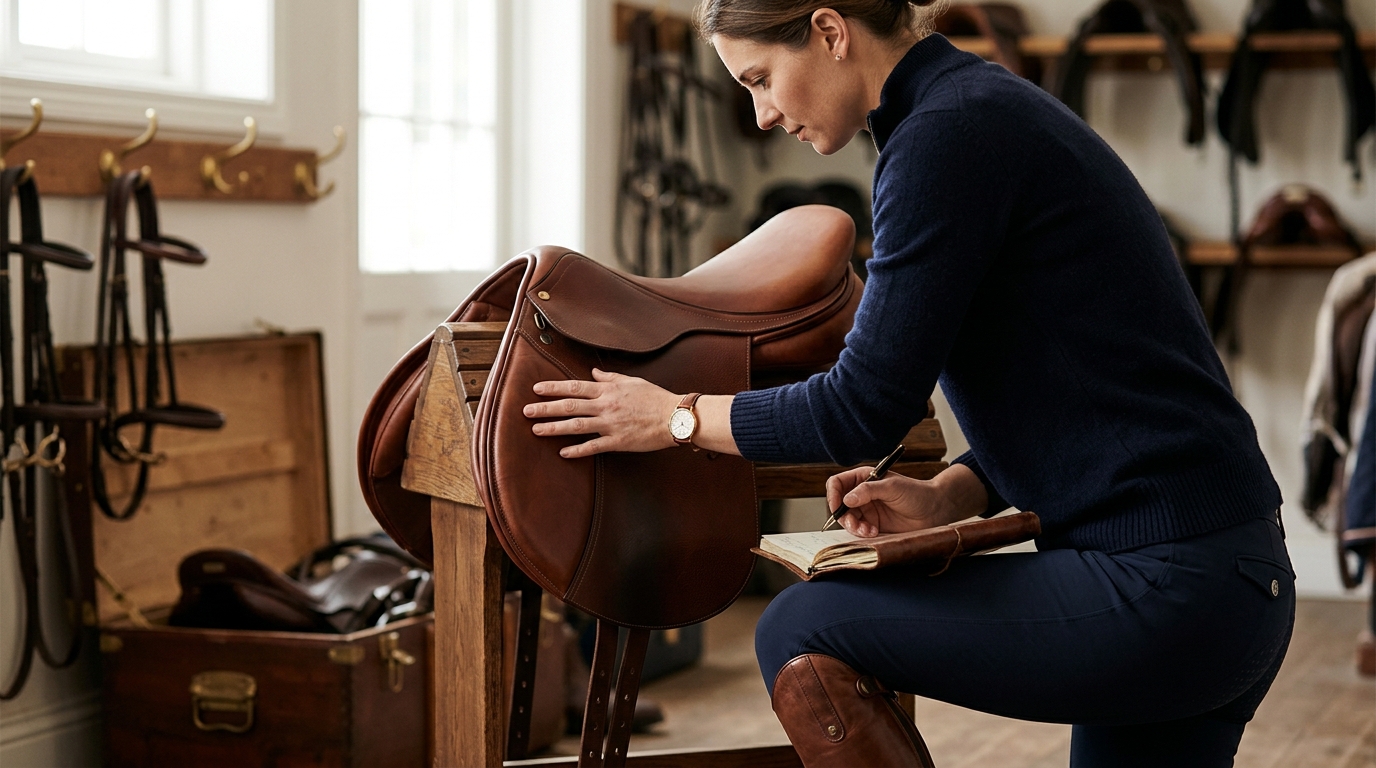
Forget vague advice like 'buy the best you can afford.' This tutorial gives you a concrete, repeatable scoring system you can use in any tack shop, trade show, or online checkout to compare horse tack brands objectively — whether you ride dressage, jump, or work cattle.
Why You Need a Tack-Quality Scorecard
Walking into a tack shop and judging gear by feel alone works if you have decades of experience. For everyone else, a structured evaluation removes guesswork. A scorecard also lets you compare products across different price tiers fairly, because an expensive brand name does not automatically guarantee superior construction.
The seven benchmarks below are drawn from saddlemakers, leather experts, and competitive riders. Rate each benchmark on a 1-to-5 scale. Any item scoring below 21 out of 35 deserves a second look — or a hard pass.
Benchmark 1 — Leather Origin & Tanning Method
Not all leather is created equal. The animal source, the region where it was raised, and the tanning process all influence the final product's durability, feel, and safety.
Full-grain vs. lower grades
Full-grain or top-grain leather retains the natural grain and fibre structure of the hide, which delivers the highest strength. Leather graded B or C will show more surface defects and break down faster under the stress of daily riding.
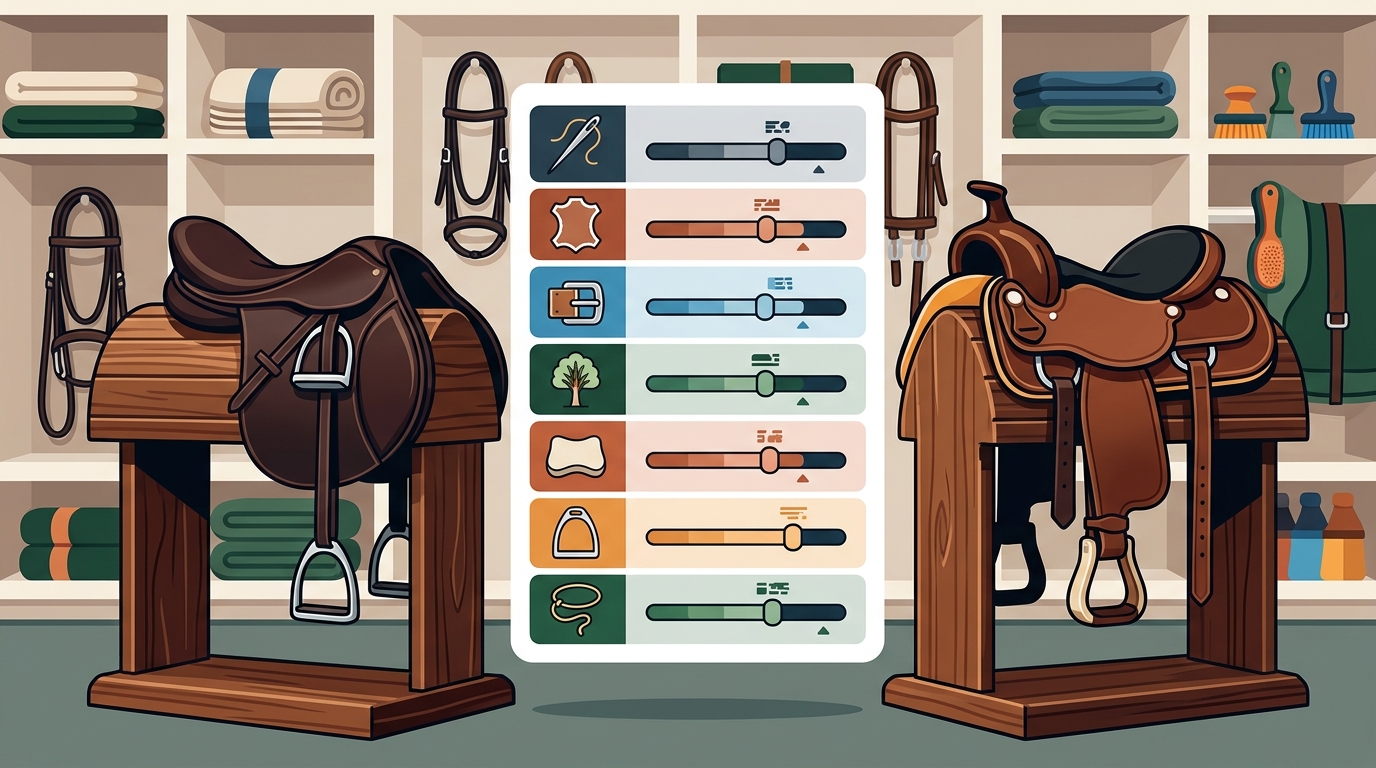
Vegetable tanning vs. chemical tanning
Vegetable-tanned leather uses natural bark extracts, making it safer against your horse's skin and more environmentally friendly. Chrome-tanned leather is produced faster and more cheaply but can carry a chemical or ammonia-like smell — a warning sign of shortcuts in production.
How to score
- 5 points: Brand specifies full-grain, European or North American sourced hides; vegetable-tanned or English bridle leather.
- 3 points: Brand mentions 'genuine leather' without specifying grade or tannery.
- 1 point: No leather origin stated; synthetic marketed as leather-like.
Benchmark 2 — The Bend-and-Smell Test
This is the fastest in-person quality check available and requires zero tools.
The bend test
Fold the leather back on itself gently. Quality leather will flex without cracking. If you see large cracks or fissures opening and closing, that piece is either poorly tanned or dried out beyond recovery. Conversely, be cautious of leather that feels excessively soft and oily on day one — that can be a manufacturer masking inferior hide quality with excess oil treatments.
The smell test
High-quality leather has a warm, pleasant scent regardless of age. An off, chemical, or ammonia-like odour indicates leather that has been tanned too quickly and cheaply. Mould or mildew smell points to poor storage somewhere in the supply chain.
How to score
- 5 points: Supple flex with no cracking; pleasant natural leather smell.
- 3 points: Slight stiffness but no cracks; neutral smell.
- 1 point: Visible cracking on flex or chemical odour present.
Benchmark 3 — Stitching Precision
Stitching is where craftsmanship becomes measurable. A brand can source beautiful leather and still ruin it with sloppy assembly.
What to examine
Look for tight, even stitching with all thread ends neatly finished and tucked in. A useful metric: count the stitches per inch. Fine, quality tack typically shows fewer than 12 stitches per inch in a neat, consistent pattern. Loose threads, uneven spacing, or visible knots suggest either machine shortcuts or poor quality control.
Reinforced stress points
On bridles, check where the cheekpieces attach to the browband. On saddles, inspect the billet straps and stirrup-leather attachment points. Premium brands reinforce these high-load areas with double stitching or rivets.
How to score
- 5 points: Uniform stitch count; no loose threads; reinforced stress points.
- 3 points: Generally even stitching with minor inconsistencies.
- 1 point: Loose threads visible; no reinforcement at stress areas.
Benchmark 4 — Hardware Composition
Hardware fails faster and more dangerously than leather. A snapped buckle on a halter while leading a nervous horse can have serious consequences.
What to look for
Solid stainless steel or solid brass are the gold standards. These metals resist rust, corrosion, and breakage under stress. Plated hardware — steel coated with a thin layer of nickel or chrome — may look identical in photos, but the plating chips and the base metal corrodes, sometimes within months of outdoor use.
The magnet trick
Carry a small magnet when you shop. Solid brass is non-magnetic. If the 'brass' buckle attracts a magnet, it is plated steel — and priced accordingly, even if the tag says otherwise.
How to score
- 5 points: Solid stainless steel or solid brass; rounded edges that will not cut leather.
- 3 points: Plated hardware with decent thickness; no visible corrosion on floor models.
- 1 point: Lightweight hardware with rough edges; rust visible on demo stock.
Benchmark 5 — Edge Finishing & Symmetry
Edges are a quiet tell. Mass-produced tack often leaves leather edges raw, rough, or unevenly dyed.
Burnished vs. raw edges
Quality tack features edges that have been skived (tapered) and burnished — rubbed until they are round, smooth, and hard — before being dyed. This prevents moisture wicking into the leather core and dramatically slows deterioration. Raw or painted-over edges signal cost-cutting.
Symmetry check
Hold a bridle, halter, or breastplate up at eye level and compare both sides. Straight edges and symmetrical construction indicate precision cutting and assembly. Wobbly lines and uneven keepers suggest low quality control.
How to score
- 5 points: All edges burnished and dyed evenly; perfect bilateral symmetry.
- 3 points: Edges dyed but not burnished; minor asymmetry.
- 1 point: Raw, rough, or painted edges; noticeable asymmetry.
Benchmark 6 — Fit Adjustability & Ergonomics
Even beautifully made tack is worthless if it cannot be adjusted to fit your horse properly. Ill-fitting equipment causes discomfort, behavioural issues, and even injury.
Signs of thoughtful design
- Multiple adjustment holes on cheekpieces, nosebands, and girths.
- Anatomically shaped browbands or crownpieces that clear the ears.
- Padded or contoured panels in bridles and breastplates to distribute pressure.
Discipline-specific considerations
A dressage bridle should allow the noseband to sit precisely two fingers below the cheekbone. A western headstall should have enough adjustment range to fit both a Quarter Horse and a warmblood in the same size category. Brands that publish detailed sizing guides and measurement instructions score higher here.
How to score
- 5 points: Generous adjustment range; anatomic shaping; detailed sizing guide provided.
- 3 points: Adequate holes; standard shape; basic sizing chart.
- 1 point: Limited adjustment; no sizing support.
Benchmark 7 — Brand Transparency & Warranty
A brand's willingness to stand behind its products reveals how much it trusts its own quality.
What transparency looks like
- Clearly stating where leather is sourced and where the product is assembled.
- Publishing detailed care instructions specific to each product line.
- Offering a workmanship warranty — ideally covering stitching and hardware failure for at least one year.
Community track record
Check equestrian forums, competition-day tack rooms, and reviews from working professionals — not just social media influencers. Brands that have been trusted for decades (such as Stubben, founded in Germany, or Circle Y, established in the 1960s for western saddles, or Passier, producing premium saddlery since 1867) tend to have visible track records across multiple rider generations.
How to score
- 5 points: Published sourcing info; written warranty; strong professional rider endorsements.
- 3 points: Some sourcing info; return policy only; mixed reviews.
- 1 point: No sourcing info; no warranty; minimal rider feedback available.
Printable Scorecard Template
Use this simple table when you visit a tack shop or evaluate products online. Score each benchmark 1 through 5 and total the results.
| Benchmark | Brand A | Brand B | Brand C |
|---|---|---|---|
| 1. Leather Origin & Tanning | |||
| 2. Bend & Smell Test | |||
| 3. Stitching Precision | |||
| 4. Hardware Composition | |||
| 5. Edge Finishing & Symmetry | |||
| 6. Fit Adjustability & Ergonomics | |||
| 7. Brand Transparency & Warranty | |||
| Total (out of 35) |
Interpretation: 28–35 = Excellent investment. 21–27 = Solid but compare closely. Below 21 = Proceed with caution.
Brands That Score Well — Real-World Examples
These are not endorsements but examples of brands that consistently rate highly against the seven benchmarks above, based on industry reputation and rider feedback.
- Stubben — German-made saddles and bridles known for ergonomic designs and premium leather craftsmanship. A favourite among competitive English riders for comfort and balance.
- Circle Y — A western saddle staple since the 1960s that manufactures its own saddle trees, giving end-to-end quality control over the final product.
- Dy'on — French brand celebrated for anatomically designed bridles and breastplates that consider the horse's physical structure.
- Passier — Producing premium German saddlery since 1867, Passier exemplifies heritage-level craftsmanship with modern ergonomic updates.
- Fairfax — A science-driven UK maker whose saddles, girths, and bridles are designed to relieve pressure, with research published in veterinary journals.
- McCall Saddles — A Utah-based company still making everything by hand, focused on custom-fit western saddles built for long days of ranch work.
Red Flags That Should Drop a Brand's Score
- Chemical or ammonia smell on new products. This reveals leather tanned too quickly and inexpensively.
- Overly oily leather out of the box. Excess oil is a common technique to disguise poor-quality hide.
- Hardware that attracts a magnet when labelled 'brass.' That means plated steel, not solid brass.
- Leather that turns green after the first cleaning. This indicates a bad dye job resulting from cut manufacturing corners.
- Stretchy leather with holes that elongate quickly. Likely cut from the belly portion of the hide, which lacks structural integrity.
- No published warranty or return policy on workmanship defects.
Key Takeaways
- Use a structured scorecard across seven benchmarks to remove emotion from tack purchasing decisions.
- The bend-and-smell test and a pocket magnet are your two most powerful in-store tools.
- Fine stitching with fewer than 12 stitches per inch, neatly finished ends, and reinforced stress points separate quality tack from mass-produced imitations.
- Solid stainless steel or solid brass hardware resists corrosion and failure far longer than plated alternatives.
- Burnished, dyed edges indicate a brand that invested time in finishing — a reliable proxy for overall quality.
- Brands that publish sourcing details, offer warranties, and have multi-generational rider trust are safer investments.
- A total score of 28 or higher out of 35 generally indicates tack worth the investment.
Frequently Asked Questions
How can I tell the difference between full-grain leather and lower-grade leather on tack?
Full-grain leather retains the natural surface of the hide and feels firm yet supple. Lower grades may be buffed smooth to hide imperfections, resulting in a uniform but less durable surface. Flip the leather over: the unfinished side of quality hide should be free of ragged fibres, cuts, or thick-and-thin spots.
Is expensive tack always better quality?
Not necessarily. Price reflects brand positioning, marketing, and country of manufacture as much as material quality. Use the seven benchmarks in this article to compare objectively — a mid-priced item that scores 30 out of 35 is a better buy than a luxury-priced item scoring 22.
What hardware material is safest for horse tack?
Solid stainless steel and solid brass are the most durable and corrosion-resistant options. They will not rust or corrode over time, even with daily outdoor exposure. Avoid plated hardware for any piece of tack that bears load, such as buckles on halters, girths, or bridles.
How often should I inspect my tack for quality degradation?
Perform a quick visual and tactile check before every ride: look for loose stitching, cracked leather at stress points, and corroded or bent hardware. Do a thorough deep inspection — including cleaning, conditioning, and testing buckle strength — at least once a month.
Does the tanning method really affect my horse's comfort?
Yes. Vegetable-tanned leather uses natural bark extracts and is gentler against the horse's skin. Chemically tanned leather processed with harsh agents can retain residues that irritate sensitive skin, particularly around the face and girth area.
Can I evaluate tack quality when shopping online?
Partially. Check whether the brand publishes leather grade, tanning method, hardware material, and country of manufacture. Read verified buyer reviews, especially those mentioning durability after six-plus months of use. However, the bend-and-smell test can only be done in person, so visit a retailer to inspect the brand's products hands-on before committing to larger online orders.