
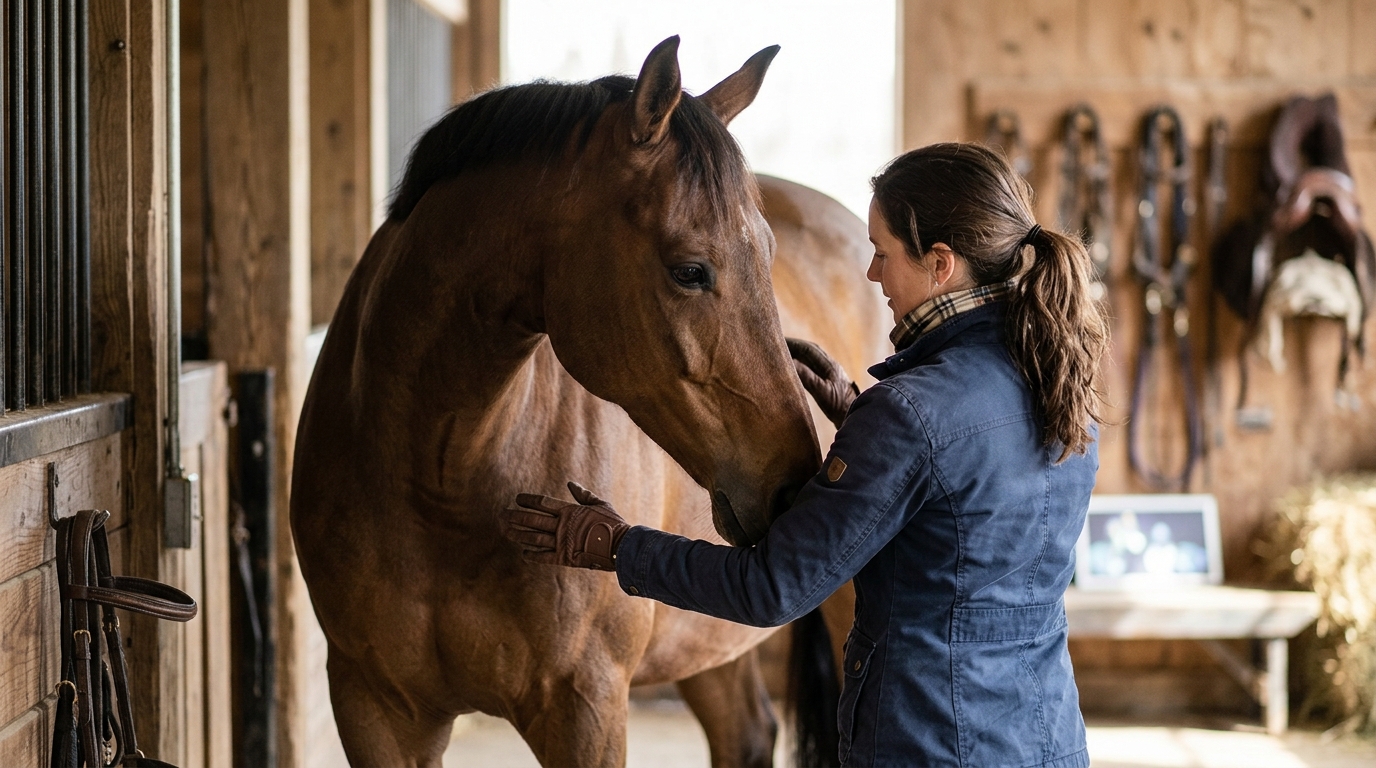
Understanding horse behavior is one of the most rewarding skills a new equestrian can develop. Whether you have just started riding lessons or recently brought home your first horse, learning why horses act the way they do will keep you safer and deepen your partnership. Horse behavior is the study of how horses communicate, learn, and respond to their environment through body language, vocalizations, and social interactions. This guide walks you through the best places to find reliable, beginner-friendly articles on the topic, with a focus on trusted sources like Horse Sport's dedicated Behaviour section.
Why Understanding Horse Behavior Matters for Beginners
Horses communicate entirely through body language and vocalizations. A horse that pins its ears, swishes its tail, or tenses its jaw is sending a message. If you cannot read that message, you risk misinterpreting the horse as "naughty" when it may actually be in pain or confused.
Research featured on Horse Sport shows that even experienced riders struggle with this. As veterinarian Dr. Sue Dyson notes, the normalization of abnormal behaviors is so common that owners often blame a horse's personality for what is actually a pain response. Learning to read behavior early in your equestrian journey gives you a significant safety and welfare advantage.
What to Learn First: Core Behavior Topics
Not all behavior topics are equally urgent for beginners. Start with these foundational areas before moving into advanced training theory.
Body Language Basics
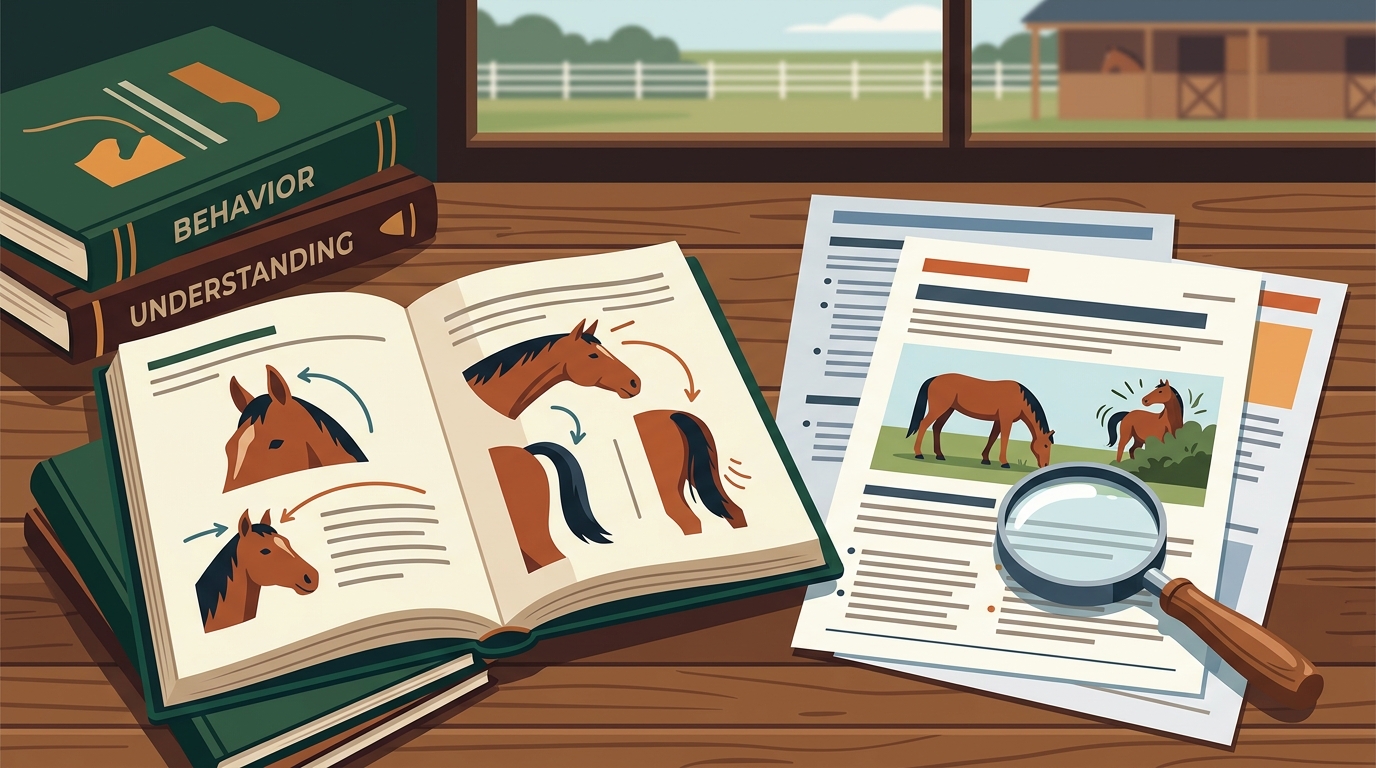
Ear position, tail carriage, eye tension, and overall posture tell you how a horse feels moment to moment. Horse Sport's article What Is My Horse Trying to Tell Me? is an excellent starting point for decoding these signals.
Social Nature of Horses
Horses are highly social animals who form strong bonds with other horses, developing close, affectionate relationships in both wild and domestic settings. Understanding herd dynamics helps you interpret behaviors like calling out, separation anxiety, and pecking-order disputes.
How Horses Learn
Equitation science is a field that applies evidence-based learning theory to horse training and explains horse behavior without attributing human emotions to horses. Grasping the basics of positive reinforcement and negative reinforcement will transform the way you handle and ride.
Where to Find Beginner Horse Behavior Articles
The internet is full of equine content, but quality varies wildly. The table below compares several trusted sources.
| Source | Focus | Beginner-Friendly? | Free Access? |
|---|---|---|---|
| Horse Sport Behaviour Section | Expert-written articles on equine psychology, welfare, training science | Yes | Yes |
| ISES (equitationscience.com) | Peer-reviewed training principles and position statements | Moderate | Partially |
| University extension programs | Research-backed care and behavior guides | Yes | Yes |
| Veterinary journals (e.g., JEVS) | Clinical studies on pain, stress, welfare | No (advanced) | Varies |
For beginners, Horse Sport's behaviour archive is one of the best starting points because each article is written or reviewed by credentialed professionals and presented in accessible language.
Reading Your Horse's Body Language
A horse always communicates clearly, expressing its current emotional state without worrying about consequences. Learning to observe objectively, rather than project human feelings onto the horse, is the first skill every beginner should develop.
Anne Kruger-Degener, author of 25 Ways to Make Your Horse Happy, explains in her Horse Sport feature on objective observation that a single signal is not meaningful on its own. Only the totality of everything we perceive allows us to draw conclusions about the horse as a whole.
Facial Expressions and the Horse Grimace Scale
The Horse Grimace Scale (HGS) is a validated tool that scores subtle facial changes linked to pain, including ear position, eye tension, and mouth behavior. Originally developed for veterinary use, it is increasingly taught to owners as a first line of detection. Horse Sport's article on pain and behavior problems provides a thorough overview.
Pain, Stress, and Behavior Problems
Many so-called behavior problems are actually pain responses. Biting, kicking, bucking, or bolting may all be indicators of underlying discomfort rather than disobedience. Understanding the difference is critical for beginners who might otherwise try to "train out" a symptom while the cause persists.
Boredom is another major driver of unwanted behavior. Horses without adequate turnout, social contact, or foraging time can develop stereotypies and stress-related health issues such as gastric ulcers. Horse Sport covers this in depth in Is My Horse Bored? How to Recognize the Symptoms.
Training Science Every Beginner Should Know
Positive reinforcement is a behavior modification and training method that rewards correct behavior with something the horse values, like food or a scratch. Research shows horses trained this way are more engaged and develop stronger bonds with their handlers.
The International Society for Equitation Science (ISES) publishes 10 foundational training principles grounded in learning theory. These principles cover everything from safety and ethology to operant conditioning and self-carriage. They serve as a gold-standard checklist for any training approach.
Horse Sport has published several articles exploring these ideas in practice, including features on dealing with pushy or nippy horses and recognizing happy horses with Sue Dyson.
Key Takeaways
- Start by learning body language basics: ears, tail, eyes, and posture tell you how your horse feels.
- Many behavior problems are rooted in pain or management issues, not disobedience.
- Horses are social, grazing animals; restricting natural behaviors leads to stress and unwanted habits.
- Positive reinforcement training strengthens the horse-human bond and improves learning outcomes.
- Horse Sport's dedicated Behaviour section offers dozens of free, expert-written articles suited to beginners.
- The ISES 10 Training Principles provide an evidence-based framework every equestrian should study.
- When in doubt about a behavioral change, consult your veterinarian before adjusting training.
Frequently Asked Questions
What is horse behavior?
Horse behavior refers to the way horses communicate, interact, learn, and respond to stimuli. It encompasses body language, vocalizations, social dynamics within herds, and reactions to training or environmental changes.
Where can I find free articles on horse behavior for beginners?
Horse Sport publishes a comprehensive, free-to-read Behaviour archive with articles written by veterinarians, researchers, and certified trainers. Topics range from reading body language to understanding how horses learn.
How do I tell if my horse is in pain or just misbehaving?
Look for subtle signs like changes in facial expression, ear pinning, tail swishing under saddle, or reluctance to move forward. Tools like the Horse Grimace Scale can help. If behavior changes suddenly, schedule a veterinary examination before modifying training.
What is positive reinforcement in horse training?
Positive reinforcement is a training method where a desired behavior is immediately followed by a reward the horse values, such as food or a scratch. This increases the likelihood that the horse will repeat the behavior.
Are horses social animals?
Yes. Horses are herd animals that form strong social bonds. Isolation and restricted social contact are known risk factors for stress, depression-like withdrawal, and stereotypic behaviors such as cribbing or weaving.
What are the ISES Training Principles?
The ISES Training Principles are 10 evidence-based guidelines published by the International Society for Equitation Science. They cover safety, learning theory, emotional welfare, and self-carriage, and are used worldwide as a benchmark for ethical training.
How do I know if a horse behavior article is trustworthy?
Look for articles authored or reviewed by credentialed professionals such as veterinarians, PhDs in animal science, or certified equine behaviorists. Check whether claims reference published research. Reputable outlets like Horse Sport consistently meet these criteria.
Can beginners learn horse behavior on their own?
Reading is a great start, but pairing articles with hands-on mentorship from a qualified instructor accelerates learning and keeps you safe. Use articles to build your knowledge base, then apply what you learn under supervision.
Your Next Steps
Ready to dive in? Browse the Horse Sport Behaviour section and bookmark three articles that match your current experience level. Start with body language, move to pain recognition, then explore training science. Your horse will thank you for it.