
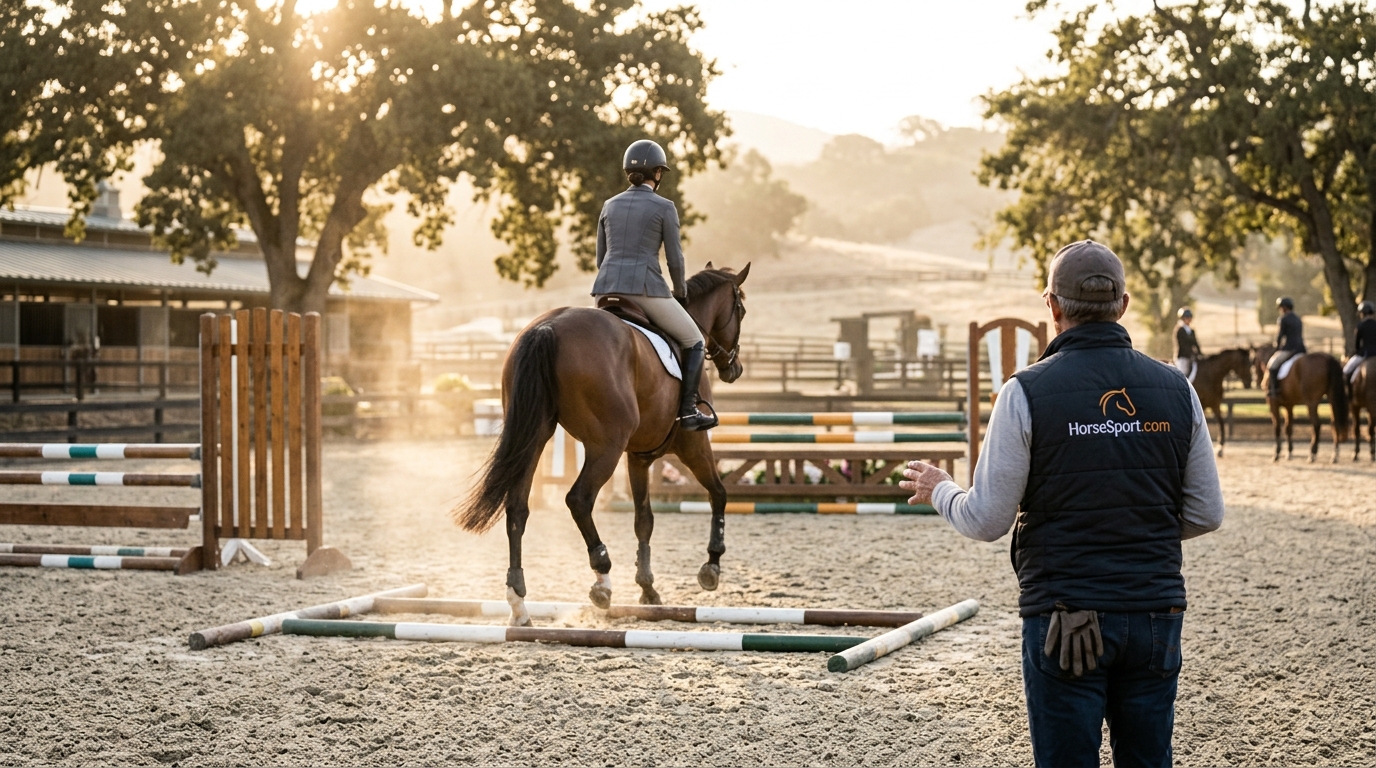
Whether you are schooling your first crossrails or preparing for a grand prix jump-off, effective training is the foundation of every successful round. Show jumping is a discipline that demands precision, rhythm, and partnership between horse and rider. The best trainers in North America agree: consistent, progressive work on the flat and over fences produces confident horses and capable riders. In this ultimate guide, we break down the most effective show jumping training techniques, from flatwork fundamentals and gymnastic grids to course simulation and mental preparation, so you can build a clear path to cleaner rounds.
1. Flatwork: The Non-Negotiable Foundation
Flatwork is the systematic schooling of a horse on the flat to develop balance, suppleness, and responsiveness to the aids. Every elite show jumping trainer emphasizes that the majority of jumping problems are solved without ever leaving the ground. As Canadian coach Mac Cone puts it, over 90 percent of his jumping problems are addressed through flatwork basics for jumpers.
Core Flatwork Skills for Jumpers
A show jumping horse must be in front of the leg, accepting contact, and moving straight before anything else matters. Cone stresses the importance of getting a horse "in front of your leg, going up into your hand, and going straight" as the essential first step. Work on transitions between and within gaits, lateral movements such as leg yields and shoulder-in, and adjustability at the canter. For practical warm-up ideas, review this guide to quality flatwork in the warm-up ring.
Why Dressage Basics Matter
Dressage basics are widely recognized as prerequisites for successful show jumping. Extensions, collections, and bending exercises all translate directly to better turns, smoother lines, and cleaner distances on course. Adding cavaletti and pole work to your dressage routine provides excellent cross-training for the jumping horse.
2. Gymnastic Grid Exercises
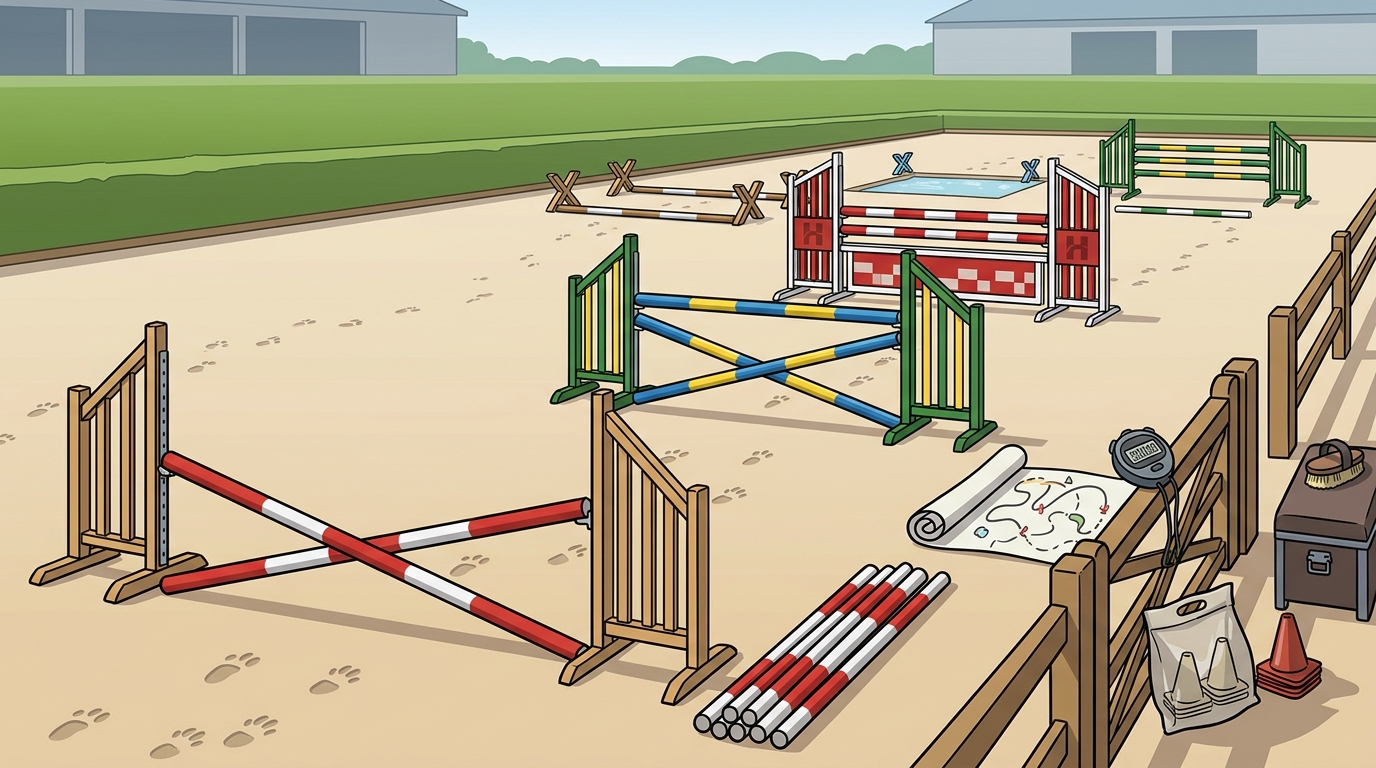
A gymnastic grid is a sequence of poles and fences set at measured distances that develops a horse's strength, coordination, and jumping technique in a controlled environment. Grids remove the complexity of navigating a course, letting the horse focus on movement mechanics while the rider refines timing and balance.
Sample Grid Setups
| Exercise | Setup | Primary Benefit |
|---|---|---|
| Trot-In Bounce Grid | Pole 9 ft to crossrail, 10 ft bounces to vertical, 21 ft to oxer | Hind-end strength, quick footwork |
| 3-1-4 Stride Gymnastic | Cavaletti 41 ft to oxer, 23 ft to vertical, 51 ft to cavaletti | Rhythm, self-carriage, patience |
| One-Stride Combination | Vertical 22 ft to vertical (gymnastic distance) | Balance, straightness, body control |
Holly Grayton of Grayton Farms in Calgary, AB, a regular contributor to Horse Sport's Jumping Lessons series, recommends building grids progressively. Start with just a pole and crossrail, then add elements one at a time. The focus should remain on technique and fundamentals, not on height.
3. Stride Adjustability and Rhythm
Stride adjustability is a horse's ability to lengthen or shorten its canter stride on demand while maintaining balance and rhythm. It is arguably the single most important skill in show jumping. Without it, riders struggle to find distances, manage combinations, and ride efficient tracks.
The 27-Foot Pole Exercise
One highly effective drill is the 27-foot pole exercise. Place two poles 27 feet apart and practice riding the gap in two strides (collected), one stride (open gallop), or three strides (very collected). This teaches both horse and rider to adjust stride length fluidly. As one rider summarized the exercise: show jumping boils down to "can you go and can you whoa?"
Counting Strides on Course
Maintaining a consistent canter rhythm is the key to reliable take-off distances. Practice cantering over ground poles set at measured intervals to build a feel for the correct pace. Adding and removing strides between fences on a straight line trains the adjustability you will need in a jump-off or technical course.
4. Rider Position and Body Control
Canadian Show Jumping Team veteran Jay Duke maintains that "good position creates good jumps." Position is the alignment and stability of the rider's body throughout the approach, flight, and landing phases of a jump. A secure position keeps the rider in sync with the horse and prevents interference at the critical moment of take-off.
Duke's checklist for effective position includes consistent weight on the ball of the foot across the stirrup bar, a straight line from heel to hip to shoulder, and a centered seat that is neither ahead of nor behind the motion. For detailed drills, read about three body control exercises for show jumping riders.
Gymnastic Work for Rider Fitness
Trotting into a gymnastic removes the anxiety of finding a distance and lets the rider concentrate entirely on body position. Staying in two-point through the entire gymnastic prevents an unintentionally deep seat that can push the horse too fast. Riders who lack core strength should supplement their riding with gym workouts targeting the core, legs, and back.
5. Course Simulation at Home
Training at home should replicate, and even exceed, the difficulty of competition courses. Duke advises that course work at home should always be more challenging than what riders encounter at shows so there are no surprises in the ring. Building small courses with true show-ring elements such as bending lines, combinations, and rollback turns helps horse and rider develop flow and confidence.
A practical approach is to set outside lines, diagonal singles, and bending options within your arena. The Jumping Lessons: Riding a Simple Course article from Horse Sport outlines a versatile indoor course that can be ridden in multiple configurations. Using tall X-rails helps with straightness and directs focus to the center of each fence without heavy riding aids.
6. Mental Preparation and Season Planning
Mental preparation is the process of building psychological readiness through visualization, goal-setting, and structured reflection. It is just as important as physical training. Nerves, lack of focus, and poor planning can undermine months of solid schooling.
At the end of each show season, take time to reflect honestly. Review video, seek feedback from your coach, and assess how your horse handled the workload both mentally and physically. Holly Grayton recommends asking yourself pointed questions: What did your coach have to remind you about repeatedly? How did you handle pressure at bigger shows? This off-season reflection creates a roadmap for the months ahead, turning weaknesses into targeted training goals. For a deeper dive into this process, see Season's End is Time to Take Stock.
Key Takeaways
- Flatwork solves over 90% of jumping problems; prioritize it in every training session.
- Gymnastic grids build strength, technique, and confidence when constructed progressively.
- Stride adjustability and a consistent canter rhythm are the keys to reliable distances on course.
- Rider position is paramount; use gymnastic exercises to isolate and improve body control.
- Simulate competition-level course work at home so the show ring holds no surprises.
- Mental preparation, including visualization and season reflection, is as critical as physical training.
- Always work with a qualified coach and tailor exercises to your horse's individual level and needs.
Frequently Asked Questions
What is the most important skill for show jumping?
Stride adjustability and rhythm are widely considered the most important skills. The ability to lengthen and shorten the canter stride while maintaining balance allows a rider to navigate combinations, find distances, and ride efficient tracks on course.
How often should I do grid work with my horse?
Most trainers recommend incorporating grid or gymnastic exercises once or twice per week. Be mindful of repetitions within each session, as bounce grids in particular are physically demanding for the horse.
Do I need to practice dressage if I only do show jumping?
Yes. Flatwork and basic dressage skills such as transitions, lateral movements, and collection are essential for developing the balance and responsiveness a jumping horse needs. According to the FEI, dressage fundamentals underpin all Olympic equestrian disciplines.
How high should I train at home compared to competition height?
Many coaches recommend training at or slightly above your competition height so the show ring feels comfortable. However, the emphasis should be on quality of technique, not sheer height. Gymnastic exercises have tremendous value even at modest fence heights.
What flatwork exercises are best for jumpers?
Key exercises include leg yields, shoulder-in, counter-canter, transitions within and between gaits, and lengthening and shortening the stride on the flat. Mac Cone highlights extensions, collections, and varied turn sizes as essential for developing a competitive show jumping horse.
How do I improve my jumping position?
Use trot-in gymnastics to focus solely on your body without worrying about finding a distance. Work on maintaining a deep heel, quiet seat, and soft hand through the entire grid. Supplementary core and leg strength training at the gym also helps build a more stable position.
When should a young horse start jumping?
A horse should be mentally and physically mature and fit before jumping is introduced. It should be working off its hindquarters and able to collect and lengthen its stride in all three gaits. Start with ground poles, progress to crossrails, and allow ample time at each stage. For a step-by-step approach, see this beginner's guide to teaching a horse how to jump.
How can I calm a horse that rushes fences?
Rushing is usually a sign of anxiety or imbalance, not enthusiasm. Address the root cause through systematic flatwork, correct use of half-halts, and exercises like placing poles before and after jumps that encourage a steady rhythm. Avoid pulling on the reins upon landing, as this often makes the problem worse.
Start Building Better Rounds Today
Consistent, progressive training is the fastest path to cleaner rounds and a more confident partnership with your horse. Explore the full library of Jumping Lessons on Horse Sport for expert exercises you can put to work in your next schooling session. Subscribe to Horse Sport for weekly training insights delivered straight to your inbox.