
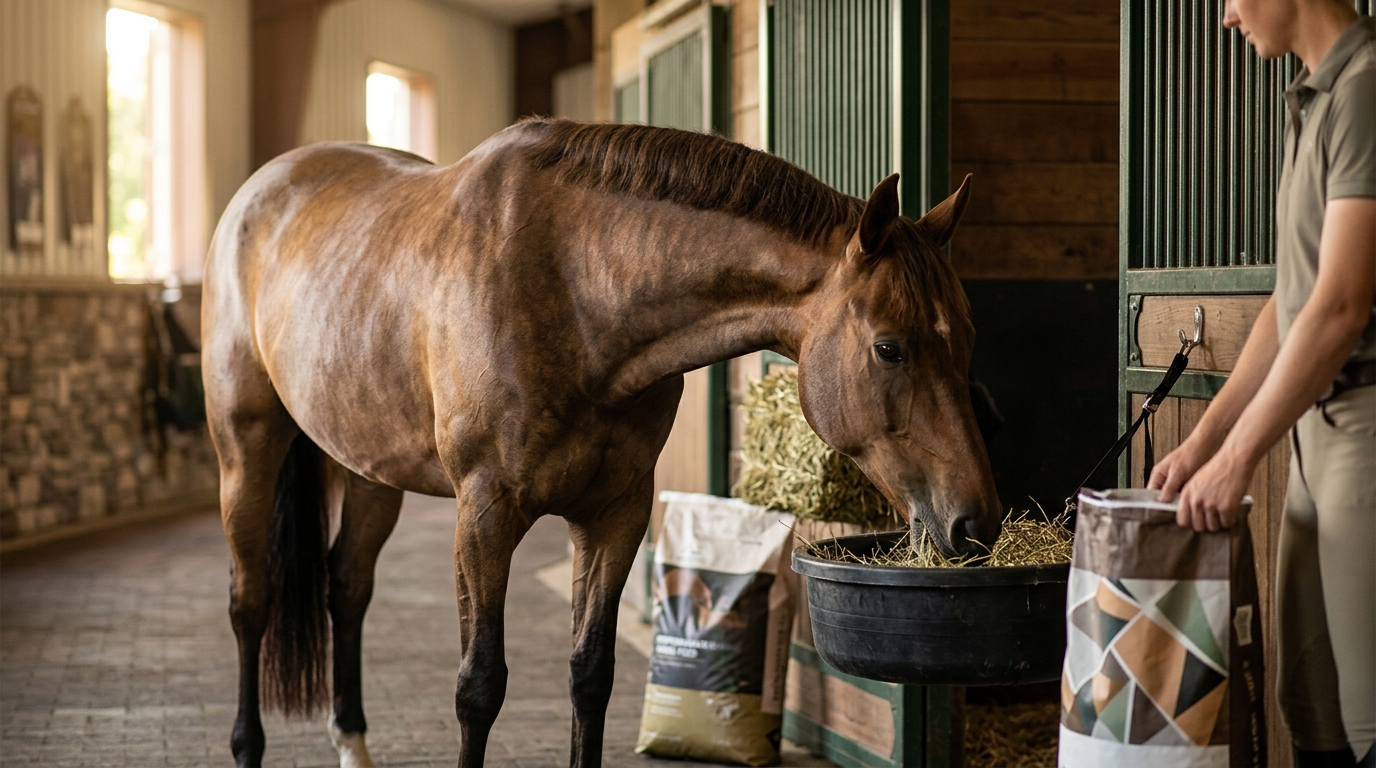
Feeding a high-performance horse is far more complex than tossing hay and grain into a stall. Whether your equine athlete competes in show jumping, eventing, dressage, or endurance, nutrition is the foundation that determines how well it trains, recovers, and performs on competition day. A well-designed feeding program balances energy, protein, minerals, vitamins, and hydration to meet the elevated demands of intense work. This guide breaks down the science-backed principles every competitive rider and barn manager needs to know, drawing on the latest research and expert insight from equine nutritionists across North America.
Understanding Energy Demands
Digestible energy (DE) is the total energy in feed minus what is lost in feces. It is the primary metric equine nutritionists use to determine caloric needs. According to the NRC Nutrient Requirements of Horses (2007), working horses are classified into four exercise categories: light, moderate, heavy, and very heavy. A 500 kg horse in heavy work may need 25 to 30 Mcal of DE per day, compared with roughly 16.5 Mcal at maintenance.
Energy deficits are the single biggest performance limiter. As one Horse Sport analysis of competition horse energy needs notes, without a nutritionally balanced ration, a horse cannot develop the fitness and muscle mass required to perform at its potential. Monitoring body condition score on the Henneke scale (targeting a score of 5 to 6) is the most practical way to judge whether caloric intake is on track.
Forage: The Foundation of Every Ration
Forage is the long stems and leaves of plants, most often offered in the form of pasture, hay, or haylage. It should comprise the majority of any horse's diet. A mature horse needs to consume at least 1 to 1.5 percent of its body weight in forage daily, even at high workloads, to maintain gut health and provide a slow-release energy source.
Hay Quality Varies Widely
The digestible energy content of hay can range from 1.5 Mcal/kg to 2.6 Mcal/kg. That variation alone can mean the difference between a horse maintaining weight and one gaining or losing condition rapidly. Testing each new batch of hay through a laboratory forage analysis is essential for building an accurate feeding program that avoids common mistakes.
Grass vs. Legume Hay
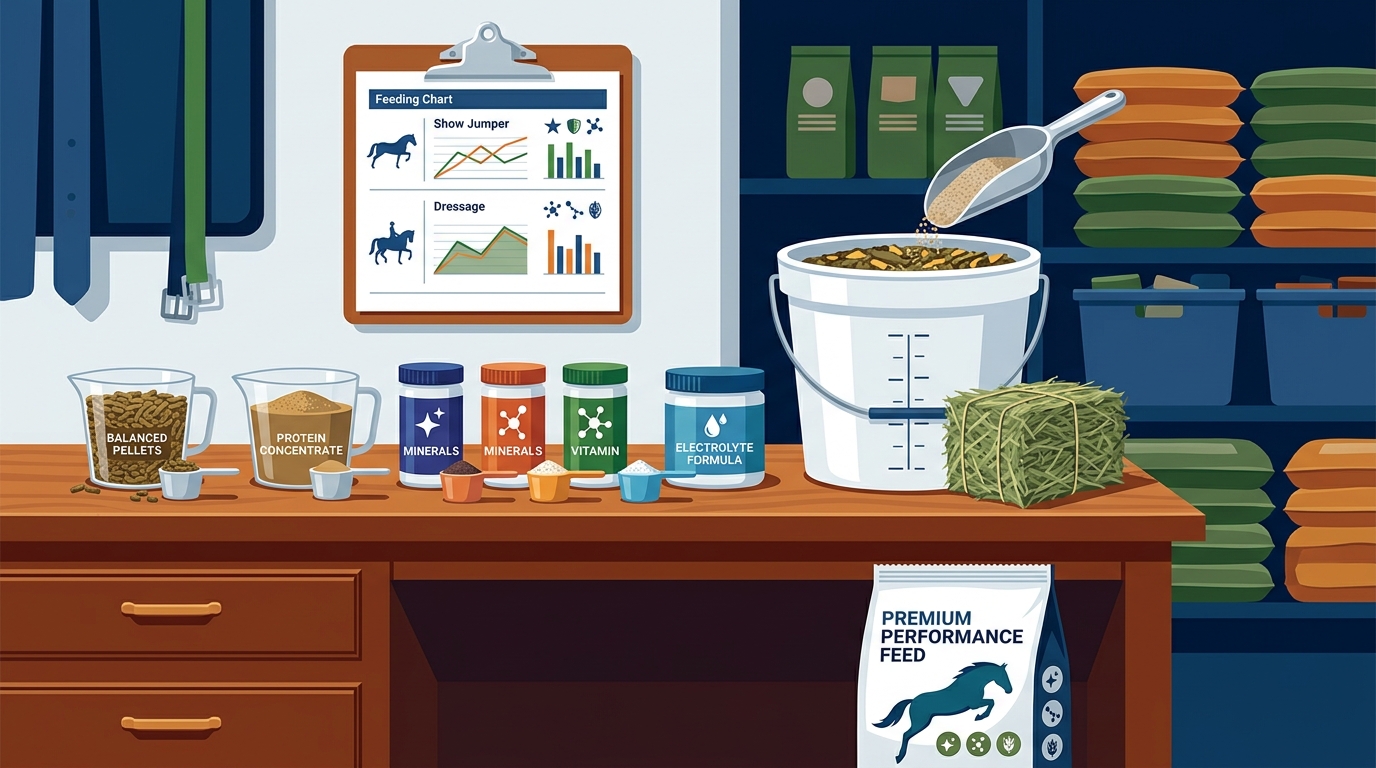
Legume hays such as alfalfa are higher in protein, calcium, and calories than grass hays like timothy or orchardgrass. For performance horses needing extra energy and protein, a grass-legume blend can be an effective strategy. Learn more in this comparison of grass hay vs. legume hay.
Protein and Amino Acids for Muscle Recovery
Crude protein (CP) is a measure of total nitrogen content in a feedstuff, used to estimate the protein available to the horse. Athletic horses require more CP than idle horses to support muscle turnover, tissue repair, and nitrogen lost in sweat. However, research shows that protein deficiency is less common than excess protein in equine diets.
Over-supplying protein can increase urea in urine, leading to greater water loss and potential dehydration. The key is to match protein quantity and quality to workload. Lysine, the first limiting amino acid in most equine diets, deserves particular attention. Soybean meal and alfalfa are reliable sources of lysine for horses that need supplementation beyond what hay provides.
Fats and Oils as Performance Fuel
Supplemental fat is an excellent energy source for performance horses because it increases caloric density without drastically increasing ration size. Horses tolerate dietary fat well when it is introduced gradually, despite lacking a gallbladder. Adding 2 to 4 fl. oz. of vegetable or flaxseed oil daily can boost caloric intake and support healthy weight maintenance.
Plant-based fats like flaxseed oil also provide omega-3 fatty acids, which have demonstrated anti-inflammatory benefits in equine research. When a horse uses fat stores as fuel during aerobic exercise, it conserves glycogen reserves for the anaerobic bursts required during jumping or galloping. This metabolic advantage makes fat a strategic energy source for feeding the equine athlete.
| Nutrient | Maintenance | Heavy Work |
|---|---|---|
| Digestible Energy (Mcal/day) | 16.5 | 26.6 |
| Crude Protein (g/day) | 630 | 862 |
| Calcium (g/day) | 20 | 40 |
| Phosphorus (g/day) | 14 | 29 |
| Sodium (g/day) | 10 | 41 |
| Vitamin E (IU/day) | 500 | 1,000 |
Values adapted from NRC 2007 guidelines. Individual needs vary by breed, temperament, and environment.
Electrolytes and Hydration Strategies
Electrolytes are minerals that carry an electrical charge and are essential for nerve impulse transmission, muscle contraction, and fluid balance. Horses are profuse sweaters and can lose up to 10 to 15 litres of sweat during intense exercise. Unlike human sweat, equine sweat is hypertonic, meaning it contains a higher concentration of electrolytes than circulating body fluids.
Sodium is the most commonly deficient mineral in equine diets. A 500 kg horse in intense work needs approximately 41 grams of sodium per day. Free-choice salt blocks rarely meet this requirement, so supplementing with loose salt and commercial electrolyte products is strongly recommended. Always ensure fresh water is available, as sodium intake drives thirst.
Vitamins and Minerals for the Equine Athlete
Exercise increases the demand for several micronutrients. Vitamin E requirements rise because it functions as a key antioxidant, protecting muscle cells from the oxidative stress produced during work. Selenium works synergistically with vitamin E in this role. Calcium and phosphorus requirements also climb with workload to support bone remodeling, and they should always be provided in approximately a 2:1 ratio.
Before adding supplements, consult a qualified equine nutritionist. As one Horse Sport overview of equine supplements warns, one of the most common causes of nutritional toxicity occurs when owners layer a vitamin/mineral mix on top of a fortified commercial feed. Working with a professional who holds graduate credentials in equine nutrition ensures the diet is balanced, not just supplemented.
Common Feeding Mistakes to Avoid
Even experienced horsemen make errors that undermine performance. Here are three of the most frequent pitfalls:
1. Not Weighing Feed
Scooping grain by volume rather than weight leads to inconsistent nutrient delivery. A kitchen scale solves this problem instantly. Check the manufacturer's recommended feeding rate for your product and weigh accordingly.
2. Skipping Hay Analysis
Without a forage test, it is impossible to know the calorie, protein, or mineral content of your hay. Two bales from the same field can differ significantly.
3. Ignoring Salt Supplementation
Relying solely on a salt block is insufficient. Add two tablespoons of loose salt daily to the feed of a 500 kg horse at maintenance, and increase for working horses.
Key Takeaways
- Energy (calories) is the nutrient most likely to limit performance; monitor body condition score regularly.
- Forage should form the base of every diet, with hay tested for nutrient content at each new batch.
- Protein needs increase modestly with work, but over-supplementation causes dehydration and waste.
- Supplemental fat (oil) is a calorie-dense, gut-friendly energy source ideal for athletic horses.
- Electrolyte replacement is critical because equine sweat is hypertonic and rich in sodium, chloride, and potassium.
- Vitamin E and selenium demands rise with exercise to combat oxidative muscle damage.
- Working with a credentialed equine nutritionist is the single best investment in your horse's feeding program.
Frequently Asked Questions
How many calories does a performance horse need per day?
A 500 kg horse in heavy work requires roughly 26 to 30 Mcal of digestible energy per day, compared to about 16.5 Mcal at maintenance. Exact needs depend on discipline, duration, and environmental conditions.
What is the best type of hay for a competition horse?
A mix of grass and legume hay often works well, providing both moderate energy and higher protein. Always test your hay through a laboratory analysis to confirm its nutritional profile.
How much fat can I safely add to my horse's diet?
Most horses tolerate supplemental fat well. Start with 1 to 2 fl. oz. of oil per day and gradually increase to 2 to 4 fl. oz. Introduce fat slowly over two to three weeks to allow digestive adaptation.
Do performance horses need electrolyte supplements?
Yes. Horses can lose 15 to 40 grams of sodium per exercise session. A salt block alone rarely meets daily requirements, so loose salt and a quality electrolyte product are essential for competing horses.
Is too much protein harmful for horses?
Excess protein increases urinary water loss and can contribute to dehydration and ammonia buildup in stalls. Match protein intake to your horse's workload and have hay tested before adding concentrate protein sources.
How often should I test my hay?
Test every new batch or load of hay. Nutritional values can vary widely even from the same supplier or field, so consistent testing is the only way to maintain an accurate feeding program.
When should I hire an equine nutritionist?
Anytime your horse's workload changes significantly, if it struggles to maintain weight, or if you are unsure whether your current ration is balanced. Look for professionals with a graduate degree (M.Sc. or Ph.D.) in equine nutrition or animal science.
What role does vitamin E play for athletic horses?
Vitamin E is a fat-soluble antioxidant that protects muscle cells from oxidative damage caused by exercise. Requirements increase with workload, and many nutritionists recommend at least 1,000 IU per day for horses in heavy work.
Build a Winning Nutrition Plan Today
Ready to take your horse's performance to the next level? Explore the full nutrition library at Horse Sport for expert articles on feeding strategies, supplement science, and competition-day tips. Then connect with a qualified equine nutritionist to build a ration tailored to your horse's exact needs.