
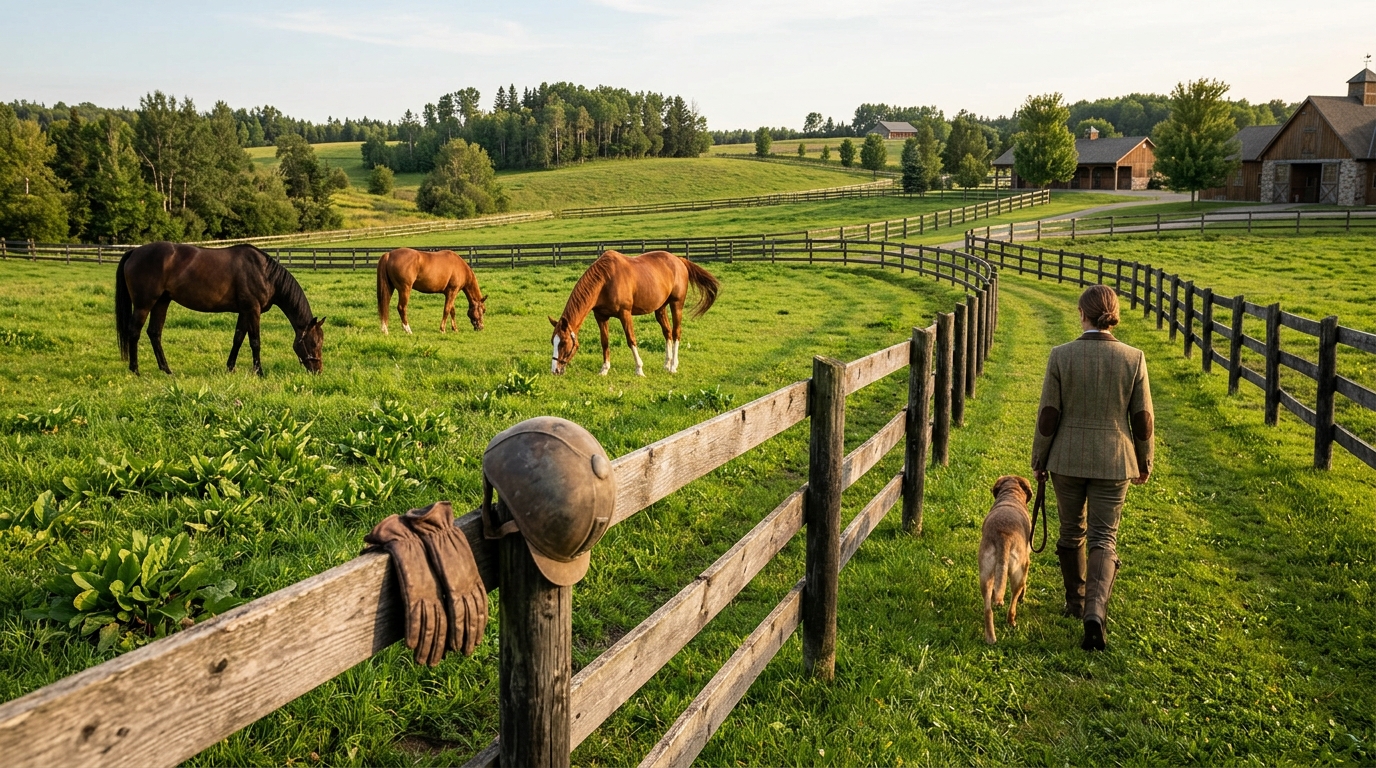
Healthy pastures are the foundation of good horse keeping. Whether you manage a small acreage or a large equestrian facility, the way you care for your grazing land directly affects your horse's nutrition, soundness, and mental well-being. Pasture management is the strategic planning and maintenance of grazing areas to ensure they provide optimal nutrition, safety, and sustainability for horses. In this guide, we break down the essential practices every horse owner should follow, from rotational grazing and soil testing to weed control and seasonal planning, so your fields stay productive and your horses stay healthy year-round.
Why Pasture Management Matters
Forage is the most important component of an equine diet after water. Good pasture provides calories, protein, minerals, and vitamins while allowing horses to express their natural foraging behaviour for up to 18 hours per day. Horses denied adequate forage are more prone to colic, stereotypies like cribbing and weaving, and nutritional deficiencies.
Pasture also has significant advantages over hay, including higher energy density and greater levels of vitamins E and beta-carotene, which degrade once plants are cut and dried. When managed well, pasture can replace hay and reduce concentrate costs for most horses during the growing season, according to Purdue Extension research.
Rotational Grazing: The Single Most Important Practice
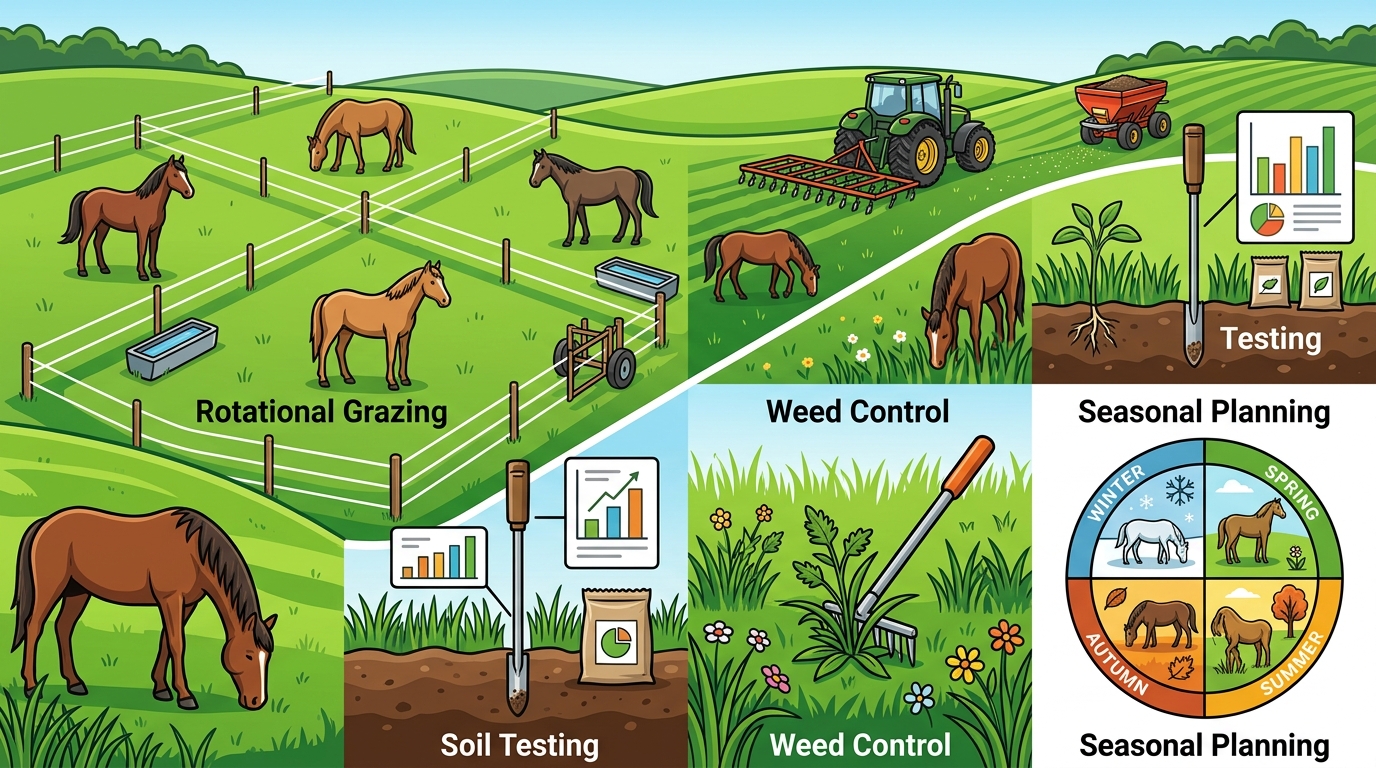
Rotational grazing is a management system in which horses are moved between multiple paddocks on a set schedule, giving grazed areas time to rest and recover. It is universally recommended by agronomists and equine nutritionists as the cornerstone of pasture care.
Why Horses Need Rotation
Horses are selective grazers that repeatedly crop the same favoured plants down to the roots while ignoring other areas. According to Dr. Kimberley Schneider of the University of Guelph, overgrazing depletes root reserves and eventually kills desirable plants, leaving bare soil that invites weeds and erosion.
How to Set Up a System
Even a simple two-paddock rotation will produce results. The Rutgers Cooperative Extension recommends letting horses graze until short grasses reach 2 to 3 inches, then resting the paddock for about three weeks until regrowth reaches 5 to 7 inches. Temporary electric fencing is an economical way to subdivide existing pastures.
Strip Grazing
Strip grazing is a variation of rotational grazing that uses portable electric fencing to give horses access to a narrow strip of fresh pasture at a time. This approach maximizes forage utilization and is particularly useful on smaller properties where acreage is limited.
Soil Health and Fertilization
Ideal pasture maintenance starts from the ground up. A soil test every three years reveals pH, nitrogen, phosphorus, and potassium levels so you can apply amendments precisely. The Ontario Ministry of Agriculture, Food and Rural Affairs (OMAFRA) guidelines note that grass-dominant pastures may require up to 300 kg of nitrogen per hectare for optimal growth, split across spring, late June, and early September applications.
Lime is used to correct acidic soils. Soils with a pH below seven can compromise plant health and reduce nutrient availability. Because lime takes roughly six months to react in the soil, plan applications well ahead of the growing season. Nitrogen applied in early spring jump-starts growth and produces that desirable dark-green colour, while phosphorus supports root development and potassium helps plants survive drought and frost stress.
| Amendment | Primary Benefit | Best Timing | Notes |
|---|---|---|---|
| Nitrogen (N) | Leaf growth, green colour | Split: early spring, late June, early September | Not needed if legumes exceed 30% of stand |
| Phosphorus (P) | Root development, plant quality | After first grazing | Based on soil test results |
| Potassium (K) | Stress tolerance (drought, frost) | After first grazing | Based on soil test results |
| Lime | Raises soil pH | Any time (6-month lag) | Essential for acidic soils |
Always remove horses from pasture after fertilizer application until rain has washed the product off foliage and into the soil.
Stocking Rates and Acreage Planning
Stocking rate is the total number of pasture acres available per horse. Recommendations vary by region, soil quality, and management intensity. Equine Guelph in Ontario recommends allocating two to three acres per horse when pasture is expected to meet most nutritional needs during the growing season. The University of Minnesota Extension similarly suggests 2 acres per 1,000-pound horse on well-managed land.
Stocking rates change with the seasons. A pasture that supports three horses per acre during rapid spring growth may sustain only half a horse per acre in the dry summer months. Monitoring grass height and body condition score throughout the year will help you adjust turnout time and hay supplementation as conditions change.
Weed and Toxic Plant Control
A healthy, dense pasture stand is your best defence against weeds, as thick forage outcompetes invasive species. Regular mowing before weeds produce seedheads limits their spread and keeps the pasture at a uniform stage of maturity. The nutritional makeup of your pasture matters, so protecting desirable forages from weed encroachment should be a priority.
Toxic plants demand special attention. Water hemlock, found in boggy areas across Canada, is considered one of the most deadly plants, capable of killing an animal within minutes. Red maple leaves, buttercups, and nightshade also pose serious risks. Walk your pastures regularly, especially in spring and fall, and remove any suspicious plants immediately.
Manure Management
A 1,000-pound horse produces roughly nine tons of manure per year. Left unmanaged, manure creates bare spots, fuels weed growth, and dramatically increases internal parasite loads. Parasite larvae develop in manure piles and are ingested when horses graze nearby, perpetuating the infection cycle.
Effective strategies include regular manure removal by hand or machine, harrowing during hot, dry weather to expose larvae to sunlight, and composting. If harrowing, complete the process when horses are rotated out and allow two to three days of rest before returning them. Cross-grazing with cattle or sheep can also reduce equine parasite burdens, since strongyle larvae are host-specific and cannot infest other livestock species.
Seasonal Considerations
Spring
Keep horses off pastures until grass reaches 6 to 8 inches of growth. Introduce spring grazing gradually in 15-minute daily increments to avoid digestive upset and reduce the laminitis risk associated with high non-structural carbohydrate (NSC) levels in young grass. Spring is also the ideal time for soil testing, frost seeding bare patches, and applying nitrogen.
Summer
Monitor for drought stress, which slows grass growth and can lead to overgrazing. Adjust stocking rates, supplement with hay if needed, and mow to maintain uniform forage quality.
Fall and Winter
Frost-damaged pastures can accumulate dangerously high sugar levels. The general recommendation is that horses should be kept off pasture for seven days after a killing frost. As noted in Horse Sport's guide to frosty fall pastures, metabolic horses and those prone to laminitis need especially close monitoring during autumn temperature swings. In winter, consider using a designated sacrifice area or dry lot to prevent hoof damage to dormant pastures.
Key Takeaways
- Rotational grazing is the single most effective practice for maintaining healthy, productive pastures.
- Test soil every three years and apply lime, nitrogen, phosphorus, and potassium based on results.
- Plan for two to three acres per horse if pasture is the primary forage source during the growing season.
- Remove or harrow manure regularly to break parasite life cycles and prevent bare spots.
- Walk pastures frequently to identify and remove toxic plants like water hemlock and red maple leaves.
- Introduce horses to spring pasture gradually and keep them off fields after a killing frost for at least seven days.
- Mow before weeds go to seed and maintain grass height above 3 to 4 inches to protect root systems.
Frequently Asked Questions
How many acres do I need per horse?
Most extension services recommend 2 to 3 acres per 1,000-pound horse when pasture is the primary forage source. On well-managed, fertile soil used mainly for exercise, 1 acre per horse may suffice, while less productive land may require up to 5 acres.
How long should I rest a paddock between grazing rotations?
A typical rest period is about three weeks in the growing season. In spring, rapid growth may shorten this to two weeks, while dry summer conditions could extend it to a month or more.
When should I start turning horses out in spring?
Wait until grass has reached 6 to 8 inches of height. Then introduce grazing gradually, starting with 15 minutes per day and increasing by 15 minutes each subsequent day until you reach your target turnout time.
How do I reduce parasite loads in my pasture?
Combine rotational grazing, regular manure removal, harrowing during hot and dry conditions, and a targeted deworming program based on fecal egg counts. Isolating new arrivals and testing them before allowing access to shared pastures is also critical.
Is it safe to let horses graze after a frost?
Frost can cause plants to accumulate high levels of non-structural carbohydrates, increasing the risk of laminitis. The general recommendation is to keep horses off pasture for seven days after a killing frost that ends the growing season.
How often should I test my soil?
Every three years is the standard recommendation. Soil tests reveal pH, nitrogen, phosphorus, and potassium levels, helping you apply the right amendments in the right amounts.
What grasses are best for horse pastures?
In temperate North American climates, popular cool-season choices include Kentucky bluegrass, orchardgrass, timothy, and perennial ryegrass. Legumes such as white clover and alfalfa add nitrogen and protein. Consult your local agricultural extension office for species suited to your specific region and soil type.
Should I drag or remove manure from paddocks?
Both approaches have merits. Dragging distributes nutrients evenly and exposes parasites to sunlight but should only be done during hot, dry weather when horses are rotated out. Removing manure entirely is the safest option for parasite control, especially on smaller properties.
Take Your Pasture to the Next Level
Great pasture management takes planning, but the rewards are healthier horses and lower feed bills. Start by scheduling a soil test this season and mapping out a rotational grazing plan for your property. For more expert guidance on forage and nutrition, browse our library of articles from leading equine scientists and farm management specialists at HorseSport.com.