
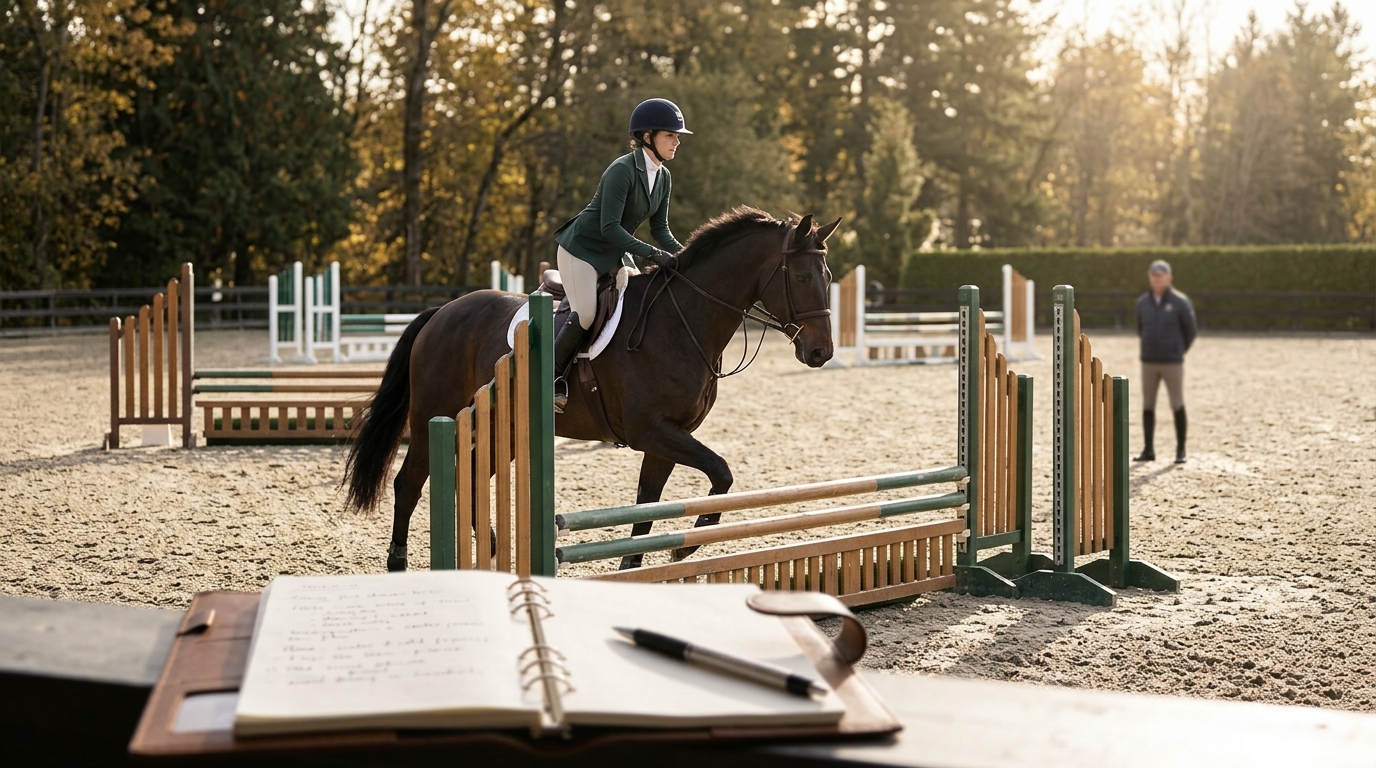
Show jumping is a precision sport that rewards rhythm, balance, and the partnership between horse and rider. Whether you are schooling your first cross-rails or preparing for grand prix courses, effective training techniques make the difference between a clear round and a four-fault finish. This guide breaks down proven methods used by top coaches across North America, from flatwork foundations and gymnastic grids to course simulation and mental preparation. Read on to discover how structured training can sharpen your skills, strengthen your horse, and bring consistency to every round you ride.
Why Flatwork Is the Foundation of Every Jump
Flatwork is the systematic practice of transitions, bending, and stride adjustability on the flat, without fences. It is the single most important building block for any jumping horse. As Canadian Show Jumping Team veteran Jay Duke puts it, flatwork is key to perfecting a strong and stable position.
A horse that can lengthen and shorten its stride smoothly on the flat will meet distances more reliably when fences are introduced. Practice collecting and extending the canter on a 20-metre circle before adding poles. This develops the elastic, adjustable pace that modern courses demand.
Weight Distribution and Balance
A horse naturally carries roughly 60 percent of its weight on its front feet. Through correct flatwork, trainers work to shift more weight onto the hindquarters, a function of balance, strength, and progressive training, as noted in Horse Sport's discussion with Olympian Ian Millar.
Gymnastic Grids: Building Strength and Technique
A gymnastic grid is a series of poles and jumps set at measured distances that the horse navigates in sequence. Grids teach rhythm, straightness, self-carriage, and patience without the complexity of turns.
One effective layout is the 3-1-4 stride gymnastic, which uses a cavaletti, oxer, vertical, and second cavaletti set at 41, 23, and 51 feet respectively. This exercise teaches the horse to regulate stride length and develop power through repeated stretch-shortening cycles.
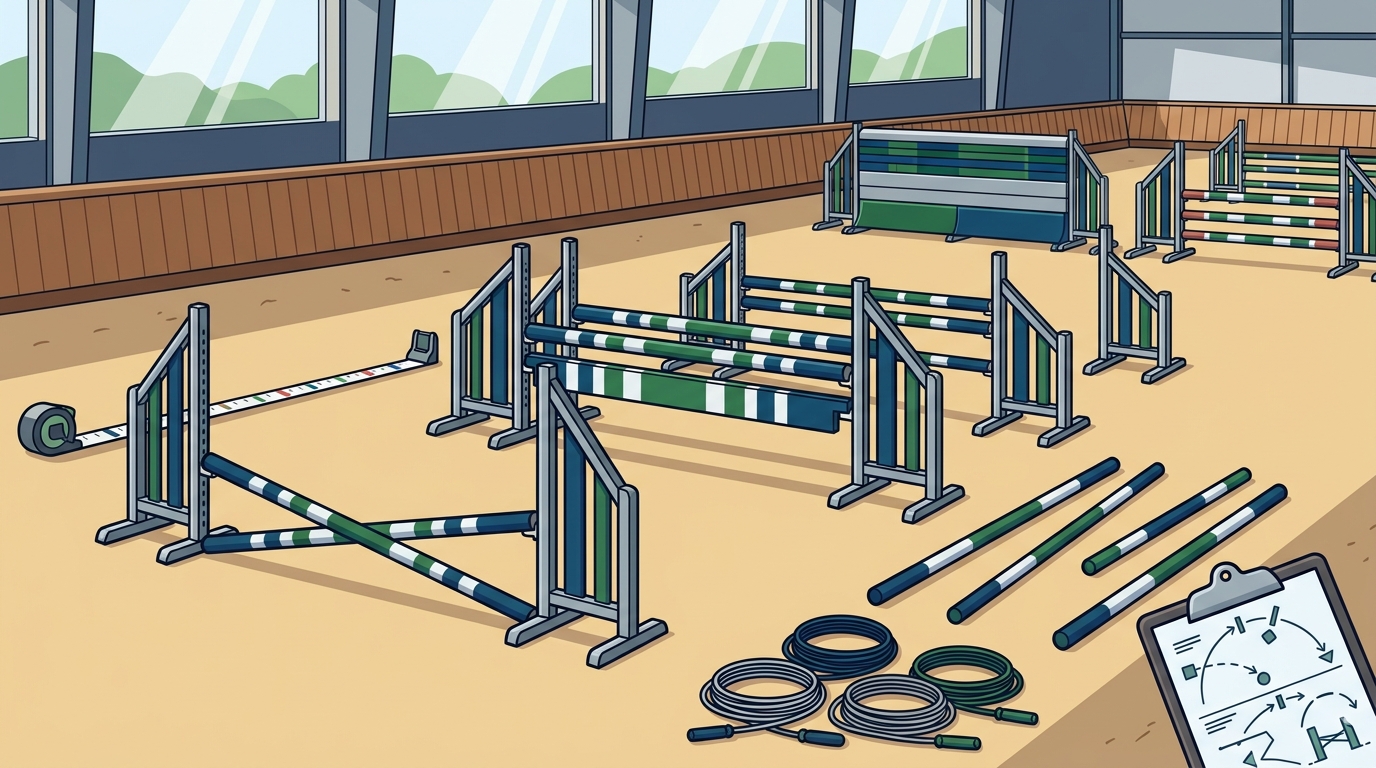
Grid Distance Reference Table
| Element | Distance (Indoor) | Strides | Purpose |
|---|---|---|---|
| Bounce (cross-rails) | 9-12 ft | 0 | Quick footwork, hind-end engagement |
| One-stride combination | 22-24 ft | 1 | Body control, patience |
| Three-stride line | 41-45 ft | 3 | Rhythm, adjustability |
| Four-stride line | 51-55 ft | 4 | Lengthening, impulsion |
| Bending line (5 strides) | 66 ft | 5 | Steering, track awareness |
Distances are based on a standard 12-foot stride and should be adjusted for individual horses and arena size. The FEI recommends Y-shaped and rectangle grid layouts for riders working in smaller arenas.
Rider Body Control and Position
Body control is the rider's ability to maintain a stable, balanced position from approach through landing without interfering with the horse's movement. Jay Duke's coaching philosophy centres on the idea that "good position creates good jumps."
His three body-control exercises progress from flatwork to gymnastics to full course work, each stage testing a specific element of the rider's checklist:
- Consistent weight on the ball of the foot across the stirrup bar
- A straight line from heel to hip to shoulder in three-point position
- A centered seat that is neither ahead of nor behind the motion
Duke advises making course work at home more difficult than competition conditions so that nothing in the show ring feels unfamiliar.
Mastering Rhythm and Distances
Canter rhythm is the consistent tempo and stride length maintained between fences. Reliable take-off distances come from keeping an even canter rhythm and accurate tracking, as outlined in Horse Sport's five important jumping skills exercise.
The Oval Pattern Exercise
Set two jumps on opposite long sides of the arena and canter an oval, jumping each fence in rhythm. This simple drill builds fitness (riders should aim for two continuous minutes, the approximate length of a competition round), sharpens the eye for distances, and reinforces balance on both leads.
Finding the Distance
If you struggle with the right "spot," the issue is more likely your canter rhythm than your eye. Anne Gage recommends picking up the canter on a 20-metre circle, riding in half seat, and focusing on a consistent ba-da-dump rhythm before adding ground poles. Think of ground poles as three-inch jumps to build partnership and confidence without stressing joints.
Course Simulation at Home
After isolating skills through flatwork, grids, and single-fence exercises, putting it all together in a simulated course is essential. The goal is to establish flow around a pattern that mirrors real show-course elements.
Holly Grayton, head trainer at Grayton Farms in Calgary, AB, designs courses that include outside lines, diagonal jumps, and bending-line options to practise smooth steering and opening-rein technique. Tall X-rails help direct the horse to the centre of each fence without heavy riding aids.
Four Trainers, Four Approaches
Horse Sport's "One Exercise, Four Trainers" feature illustrates how four different professionals set the same three jumps at varying distances to address lengthening, shortening, bending-line accuracy, and topline stretch. This variety keeps training fresh and ensures horses develop well-rounded skills.
Conditioning and Recovery Planning
Long, Slow Distance (LSD) training is a conditioning method involving extended walk and trot sessions that build the aerobic base needed for sustained jumping efforts. According to equine nutrition researchers at Mad Barn, LSD work strengthens bones, tendons, and ligaments while preparing the body for the physical demands of jumping.
Dr. Tim Worden, a sport performance consultant featured by Horse Sport, emphasises that every training session should relate back to the hoof-surface interaction. Horses that can place their hooves to generate high vertical impulse will jump higher and more efficiently.
Recovery Best Practices
- Allow 10 to 15 minutes of walking for warm-up and cool-down
- Space jump schooling days with flatwork-only sessions
- Use cold therapy or poultices after intense jumping efforts
- Monitor stride consistency as an indicator of muscular fatigue
Key Takeaways
- Flatwork is the non-negotiable foundation; stride adjustability on the flat translates directly to better distances over fences.
- Gymnastic grids build strength, technique, and confidence without the complexity of full courses.
- Rider position and body control are as trainable as the horse's jumping form.
- Consistent canter rhythm is the primary predictor of reliable take-off distances.
- Course simulation at home should be harder than competition to eliminate surprises in the ring.
- Conditioning through LSD work protects long-term soundness and supports repeated jumping efforts.
- Season-end reflection, including coach feedback and video review, fuels off-season improvement.
Frequently Asked Questions
What is the best exercise to improve show jumping technique?
Gymnastic grids are widely considered the most effective single exercise category. They develop the horse's strength, rhythm, and balance while letting riders refine timing and position without worrying about complex turns.
How often should I jump my horse each week?
Most professional trainers recommend two to three jumping sessions per week, interspersed with flatwork and conditioning days. Repeated jumping without adequate recovery places significant strain on the musculoskeletal system.
How do I find the right distance to a jump?
Focus on maintaining a consistent canter rhythm rather than searching for the "perfect spot." Practise lengthening and shortening strides on the flat, then introduce ground poles to develop feel before progressing to fences.
Why is flatwork important for show jumpers?
Flatwork develops the balance, suppleness, and responsiveness that horses need to navigate technical courses. It shifts weight from the forehand to the hindquarters, enabling more powerful and adjustable jumping.
What distances should I use for gymnastic grids?
Standard distances are based on a 12-foot stride. Bounces are set at 9 to 12 feet, one-stride combinations at 22 to 24 feet, and related lines increase in 10-to-12-foot increments per stride. Always adjust for your horse's individual stride length.
How can I improve my position over fences?
Work on body-control exercises that progress from flatwork to gymnastics to full courses. Focus on keeping a straight heel-hip-shoulder line in three-point position and maintaining consistent weight distribution across the stirrup bar.
When should I start jumping a young horse?
A horse must be mentally and physically mature before introducing jumping. It should be working off its hindquarters and able to collect and lengthen its stride in all three gaits. Start with ground poles and low cross-rails, and allow up to a year for the horse to learn correct jumping form.
How do I stop my horse from rushing fences?
Rushing often signals anxiety, not enthusiasm. Use transitions within the gait, circles before fences, and placing poles to encourage a steady approach. A qualified coach can help identify whether the root cause is pain, imbalance, or a training gap.
Start Building Better Rounds Today
Great show jumping is built in daily training, not just in the competition ring. Pick one technique from this guide, whether it is a gymnastic grid, a rhythm exercise, or a flatwork drill, and incorporate it into your next session. For more expert jumping lessons, training tips, and competition coverage, explore the Jumping Lessons series on Horse Sport and take the next step toward consistently clear rounds.