
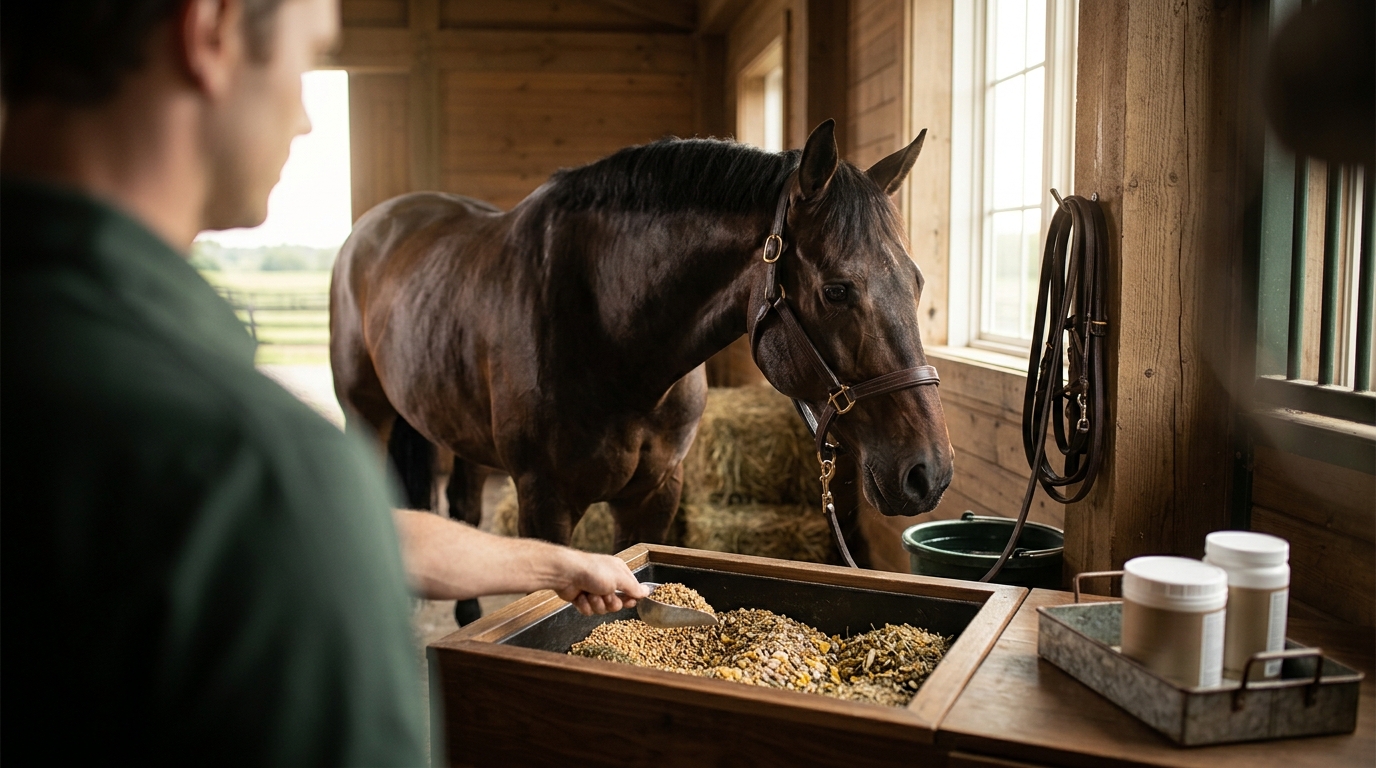
Feeding a high-performance horse is far more complex than filling a hay net and scooping grain. Whether your horse competes in show jumping, eventing, dressage, or endurance, its nutritional program directly influences stamina, muscle recovery, and long-term soundness. The NRC's Nutrient Requirements of Horses (2007) remains the gold-standard reference, classifying exercising horses into four workload categories with corresponding energy targets. In this guide, we break down every key nutrient, common mistakes, and practical strategies so you can fuel your equine athlete for peak results.
Understanding Energy Demands by Workload
Digestible energy (DE) is the single most important dietary component for any performance horse. Energy deficits represent the most significant detriment to performance, leading to weight loss and early fatigue. The NRC (2007) splits exercise into four tiers, each requiring a percentage increase in DE above maintenance.
| Workload | Hours/Week | Primary Gaits | DE Increase Over Maintenance |
|---|---|---|---|
| Light | 1-3 | Walk, trot | ~20% |
| Moderate | 3-5 | Trot, some canter/jumping | ~40% |
| Heavy | 4-5 | Trot, canter, gallop, jumping | ~60% |
| Very Heavy | 6-12 (or 1 hr high-speed) | Gallop, racing, upper-level eventing | ~90% |
A 500 kg horse at maintenance needs roughly 16.7 Mcal DE per day. A horse in heavy work may need upward of 26 Mcal. Body condition scoring on the Henneke 1-9 scale is the best way to monitor whether energy intake is on track; aim for a score of 5 to 6 for most sport horses.
Forage: The Foundation of Every Feed Program
Forage is the long stems and leaves of plants, most often offered as pasture, hay, or haylage. It should make up at least 1.5% of your horse's body weight daily. For a 500 kg horse, that means a minimum of 7.5 kg of hay per day.
Why Hay Analysis Matters
The calorie content of hay varies enormously. DE values can range from 1.5 Mcal/kg to 2.6 Mcal/kg depending on species, maturity, and harvest conditions. Without a forage analysis, it is impossible to accurately build a feed program. Testing each new batch lets you make informed decisions rather than guessing.
Grass vs. Legume Hay
Legume hay (such as alfalfa) tends to be more nutrient-dense, offering higher protein, calcium, and slightly higher energy than grass hay. However, 100% legume hay is too nutrient-dense for most classes of horses. A mixed hay with roughly 25% legume content often strikes the right balance for athletes that need a protein and calcium boost.
Fats vs. Carbohydrates: Choosing the Right Fuel
Carbohydrates are the primary energy source in the equine diet, but fats deliver roughly twice the calories per gram compared to starches. Adding vegetable oil or stabilized rice bran allows you to increase caloric density without dramatically increasing meal size or risking digestive upset from excess starch.
Research from as early as 1975 (Slade et al.) showed horses fed a 12% fat diet performed better over 67 km rides, with higher blood glucose at the finish. More recent 2024 studies highlight omega-3 fatty acid supplementation from camelina and flaxseed oil for improved coat quality and anti-inflammatory benefits. Plant-based oils like flaxseed also provide an optimal omega-3:6 ratio that supports immune function in competition horses.
Protein and Amino Acids for Muscle Maintenance
Protein is a chain of amino acids essential for building and repairing muscle tissue. While performance horses do need slightly more protein than idle horses, the percentage in the diet typically does not need to exceed 8-12%. Because the horse eats more total feed to meet energy needs, absolute protein intake rises naturally.
Lysine is the first limiting amino acid in equine diets. Soybean meal and alfalfa are excellent sources of both lysine and calcium. Overfeeding protein, however, can increase ammonia in the blood and contribute to dehydration through greater urinary water losses. Work with a qualified equine nutritionist to balance amino acid profiles without excess.
Electrolytes and Hydration Under Stress
Electrolytes are minerals that carry an electric charge when dissolved in water, playing critical roles in muscle contraction, nerve signaling, and fluid balance. A horse exercising intensely in hot weather can produce up to 15 litres of sweat per hour, losing significant sodium, chloride, and potassium.
Sodium is one of the most commonly deficient nutrients in equine diets. Even a non-working 500 kg horse should receive two tablespoons of loose salt daily. For horses in heavy competition, a performance electrolyte product mixed in water after exercise is strongly recommended. A simple homemade option combines equal parts table salt (NaCl) and lite salt (KCl) with a teaspoon of sugar to aid sodium absorption.
Supplements: What Works and What Doesn't
The equine supplement industry sees horse owners spending upward of $100 per month, yet many products lack scientific proof of efficacy. A supplement is any product added to the base diet of forage and concentrates to fill a specific nutritional gap.
Evidence-Based Choices
Vitamin E is the most commonly supplemented antioxidant for exercised horses, as working horses have lower vitamin E status. Biotin, at 20-40 mg per day, is the only nutrient scientifically proven to improve hoof wall integrity. Omega-3 fatty acids from fish oil or flaxseed can modulate inflammatory responses. Before stacking multiple equine supplements, research their safety on databases like PubMed to avoid toxicity from overlapping vitamin and mineral mixes.
When Supplements Are Unnecessary
If your horse receives a commercially formulated feed at the recommended rate along with quality hay and salt, its vitamin and mineral needs are likely already met. The most common cause of nutritional toxicity occurs when owners layer a commercial feed, a vitamin-mineral mix, and additional specialized supplements.
Common Feeding Mistakes to Avoid
Even experienced horsemen can fall into nutritional traps. A 2025 article by equine nutritionist Madeline Boast, MSc, on Horse Sport outlines four common feeding mistakes that compromise health and performance.
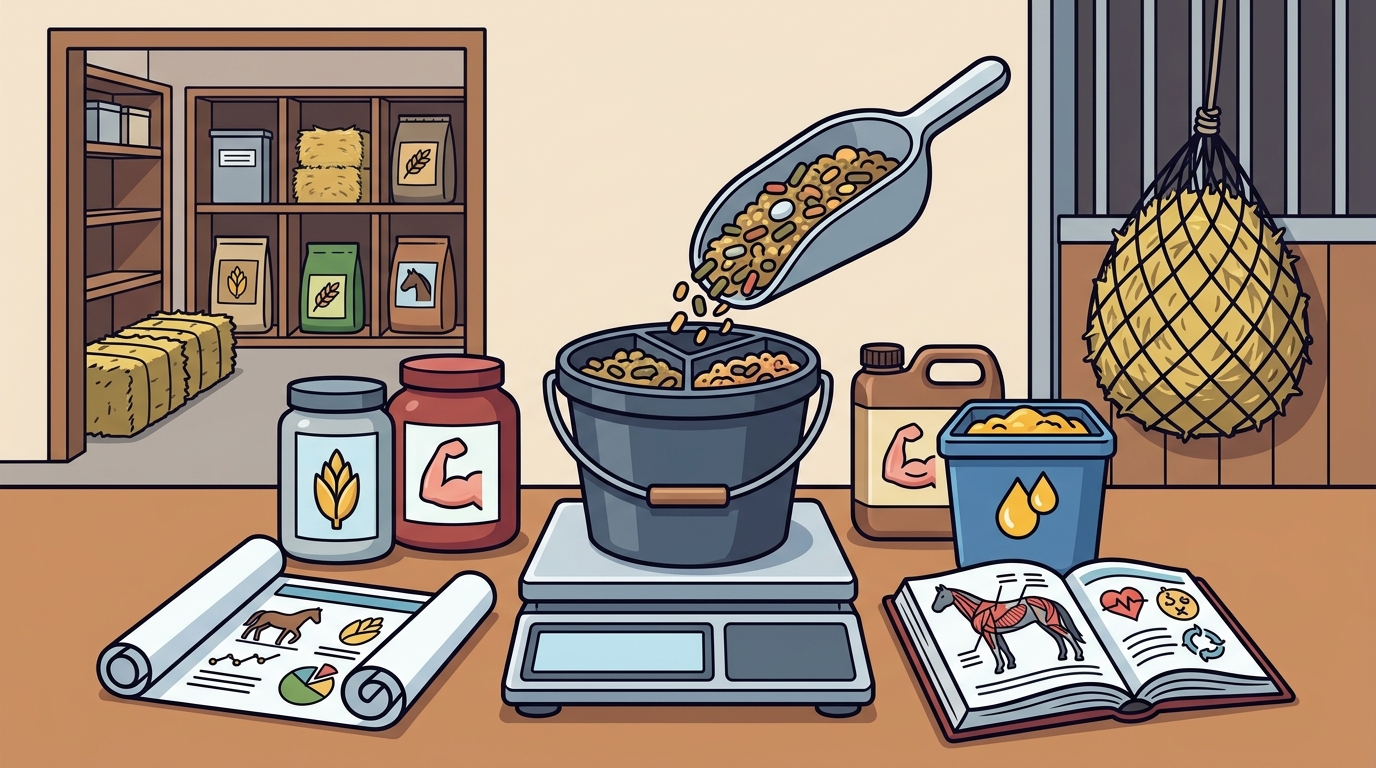
- Not weighing feed: Scoops vary. Use a kitchen scale to verify you are meeting the manufacturer's recommended feeding rate.
- Skipping hay analysis: Hay from the same supplier differs batch to batch. Test it.
- Ignoring sodium: Salt licks rarely supply enough. Add loose salt to every meal.
- Changing feed abruptly: The hindgut microbiome needs 10-14 days to adjust. Transition all feeds, including hay, gradually.
Key Takeaways
- Energy (calories) is the most critical nutrient for performance horses; monitor body condition score regularly.
- Forage should constitute at least 1.5% of body weight daily, and every new batch of hay should be tested.
- Fats provide twice the energy per gram as carbohydrates and help spare glycogen for anaerobic bursts.
- Protein needs rise only modestly with exercise; focus on amino acid quality (lysine) rather than crude protein percentage.
- Electrolyte replacement is essential whenever a horse sweats; do not rely on salt blocks alone.
- Layer supplements cautiously: more is not better, and overlapping products risk toxicity.
- Work with a credentialed equine nutritionist to tailor the diet to your horse's individual workload and health status.
Frequently Asked Questions
How many calories does a performance horse need per day?
A 500 kg horse at maintenance requires roughly 16.7 Mcal of digestible energy daily. Heavy work can push that requirement to 26 Mcal or more, depending on intensity and duration.
What is the best forage for a sport horse?
A mixed hay containing mostly grass with about 25% legume (alfalfa) often provides an ideal balance of energy, protein, and calcium. Always confirm nutrient content with a hay analysis.
Should I add oil to my horse's feed?
Yes, vegetable oil or stabilized rice bran is an excellent way to increase caloric density without excess starch. Introduce fats slowly over two to three weeks to allow digestive adaptation.
How much salt does a competition horse need?
At minimum, a 500 kg horse needs two tablespoons of loose salt daily. Horses in intense work may require additional electrolyte supplementation providing 30-40 g of sodium per day.
Are joint supplements effective for sport horses?
Evidence for oral joint supplements in horses is mixed. Consult your veterinarian and nutritionist before investing, and prioritize a balanced base diet first.
What role does vitamin E play in performance?
Vitamin E is a key antioxidant that, alongside selenium, protects muscle cells from oxidative damage produced during exercise. Exercised horses have lower vitamin E status, so supplementation is commonly recommended.
How do I know if my horse's diet is balanced?
The best approach is to get a hay analysis, weigh all feeds, and have a credentialed equine nutritionist evaluate the total ration against your horse's specific requirements.
Can overfeeding protein harm a performance horse?
Excess protein generates ammonia, increases urinary water loss, and may raise body heat during exercise, all of which can impair performance and hydration.
Get Your Horse's Diet Right
Your horse's next personal best could start in the feed room. Explore more expert nutrition articles in the Horse Sport nutrition archive and consult a qualified equine nutritionist to build a program tailored to your athlete's workload, body condition, and competitive goals.