
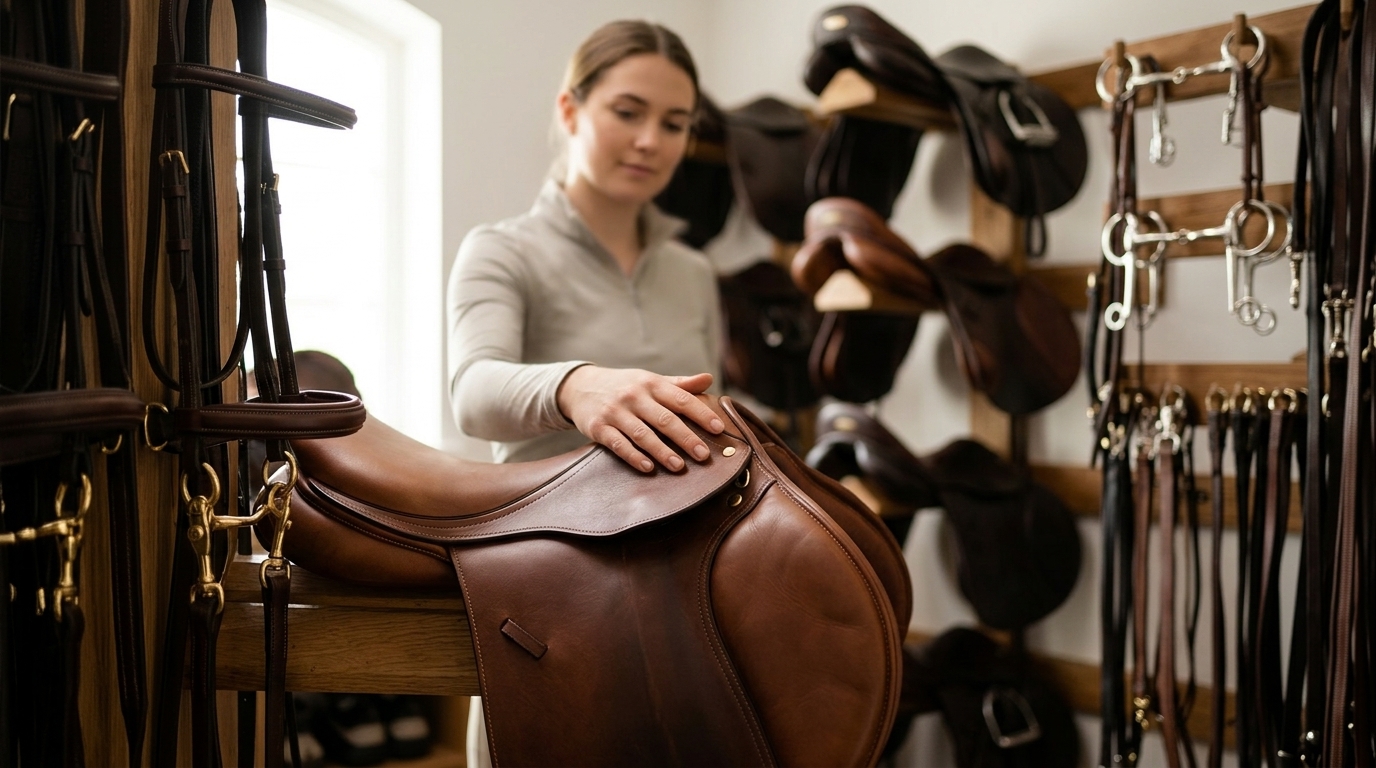
Shopping for horse tack can feel overwhelming. Hundreds of brands promise premium materials and expert craftsmanship, yet the quality gap between products is enormous. Poorly made tack is not just a waste of money; it can compromise your horse's comfort and your safety in the saddle. Whether you are comparing saddles, bridles, halters, or bits, knowing exactly what to look for separates a smart investment from a costly mistake. In this guide, we walk you through the key criteria every rider should use when evaluating tack brands, so you can shop with confidence and keep your horse performing at its best.
What Is Horse Tack and Why Quality Matters
Horse tack is the collection of equipment used to ride, handle, and train horses, primarily constructed from leather and metal. It includes saddles, bridles, bits, girths, halters, reins, and harnesses. Every piece plays a direct role in communication between horse and rider, which is why material quality and construction are non-negotiable.
Poorly made tack can cause pressure sores, restrict movement, and even lead to dangerous equipment failures mid-ride. Investing in quality gear protects both your horse's welfare and your personal safety. For an in-depth look at common equipment issues, explore the Tack & Equipment section on Horse Sport.
Assess the Leather Quality First
Leather grade is the single biggest indicator of tack quality. Full-grain leather is leather that retains the complete outer surface of the hide, preserving its natural strength and grain pattern. It is the gold standard for equestrian equipment because it resists wear, moulds to your horse's body over time, and develops a beautiful patina.
The Touch and Smell Test
Quality leather should feel supple, not stiff or overly soft. Stiff leather that cracks when bent is poorly tanned and potentially dangerous. Conversely, leather that feels excessively oily may have been over-conditioned to disguise inferior hides. Give it a sniff: genuine quality leather has a warm, natural aroma, while cheap leather often carries a chemical or ammonia-like odour that signals rushed tanning.
Watch for Dark Dyes and Glazes
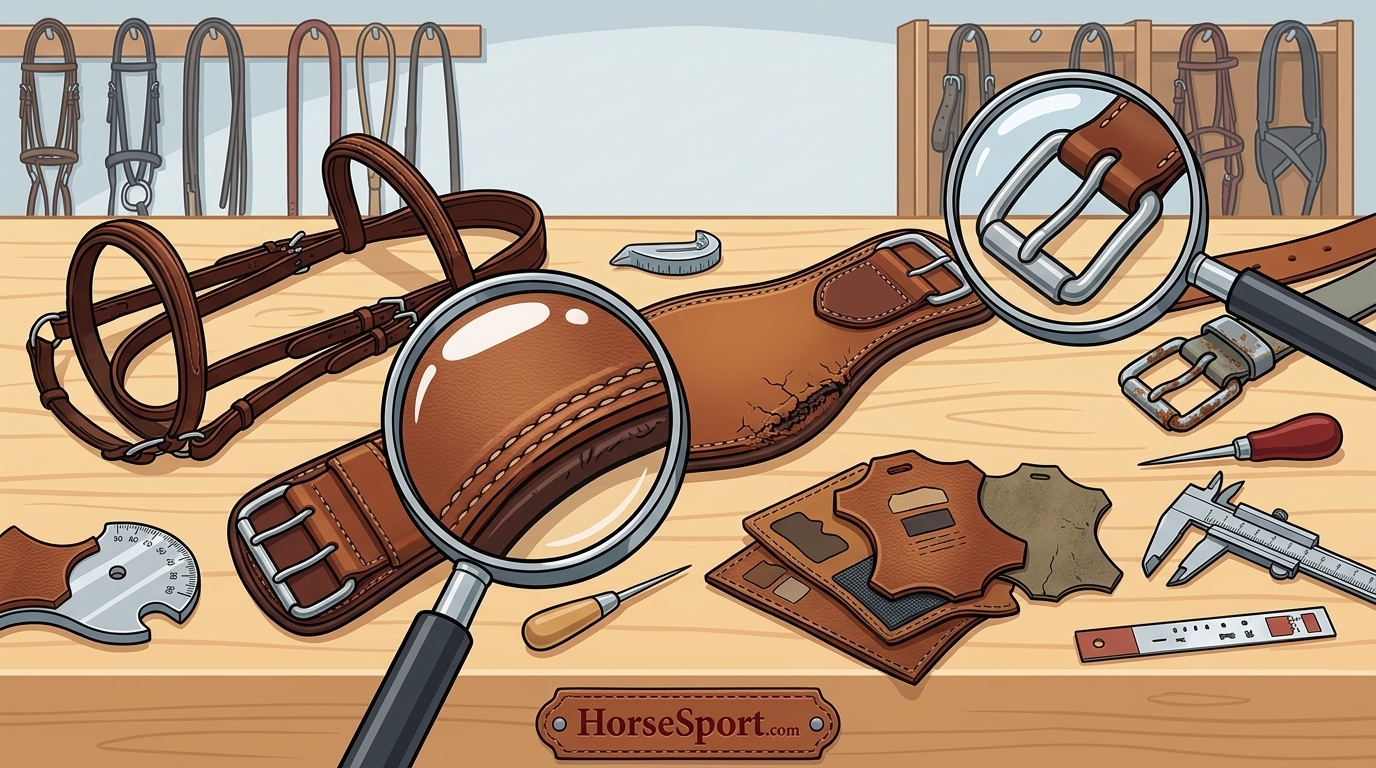
Dark colour dyes can mask poorly matched or lower-grade leathers. Glazes coat the surface to make cheap leather look attractive on the shelf, but they prevent conditioners from penetrating and will rub off over time, leaving a mottled appearance. Always inspect tack under good lighting before you buy.
Inspect Stitching and Construction
Stitching quality is a direct reflection of workmanship. Fine, even stitching with all ends neatly finished and tucked in is a hallmark of quality tack. Look for fewer than 12 stitches per inch, which indicates precision and durability. Loose threads, uneven spacing, or exposed ends suggest corners were cut during manufacturing.
Symmetry and Edge Finishing
Examine the overall construction. Edges should be straight, bevelled, or burnished rather than rough-cut. The piece should be symmetrical. Asymmetry in a new product signals poor quality control. Reinforced stress points near buckles, rings, and attachment areas are essential for longevity and safety.
Evaluate Hardware and Fittings
Hardware is the unsung hero of durable tack. Buckles, snaps, rings, and D-rings should be made from stainless steel or solid brass. Stainless steel hardware is hardware manufactured from a corrosion-resistant steel alloy that will not rust, pit, or weaken under exposure to sweat and the elements. Nickel-plated hardware looks similar but can flake and corrode over time.
Test buckle tongues for spring and grip. Rounded edges on steel tongue buckles prevent them from cutting into the leather. Poorly cast or stamped hardware with rough edges is a red flag, regardless of how nice the leather may look.
Consider Fit and Horse Comfort
Even the finest materials are worthless if the tack does not fit your horse correctly. A poorly fitted saddle can cause behaviour problems and long-term back damage. Research from the University of Bristol found that 91% of owners surveyed reported regular behaviour issues under saddle, many linked to equipment fit.
Saddle Fit Essentials
The saddle must clear the withers, distribute panel pressure evenly, and sit within the horse's saddle support area. Reputable brands offer adjustable tree widths, quality flocking, and billets that hang perpendicular to the ground. Learn more about what to look for in the top 9 saddle fitting problems guide on Horse Sport.
Bridle and Bit Fit
Bridle pressure studies have shown that poorly fitted nosebands and bits contribute to head shaking, anxiety, and even stress fractures in teeth. A quality brand will offer multiple sizing options and anatomically shaped components. For guidance on selecting the right bit, see how to correctly fit a bit for any discipline.
Research Brand Reputation and Heritage
A brand's track record matters. Established manufacturers with decades of history, such as those featured on the Horse Sport equipment pages, tend to maintain stricter quality control. Look for brands that employ certified saddlers or craftspeople, offer meaningful warranties, and publish transparent sourcing information.
Read independent reviews, ask your trainer or coach, and inspect tack in person at trade shows or local tack shops whenever possible. Community feedback from fellow equestrians is often the most honest quality indicator you will find.
Quick-Reference Quality Comparison Table
| Quality Indicator | High-Quality Tack | Low-Quality Tack |
|---|---|---|
| Leather Type | Full-grain or top-grain leather | Bonded, split, or heavily glazed leather |
| Stitching | Even, tight, fewer than 12 per inch, tucked ends | Uneven, loose threads, exposed knots |
| Hardware | Stainless steel or solid brass, smooth edges | Nickel-plated, rough casting, lightweight |
| Smell | Warm, natural leather scent | Chemical or ammonia-like odour |
| Flexibility | Supple yet firm; bends without cracking | Stiff, cracks when bent, or overly oily |
| Warranty | Multi-year craftsmanship guarantee | No warranty or limited return window |
Key Takeaways
- Always choose full-grain leather over bonded or heavily dyed alternatives for lasting durability.
- Check stitching for evenness, tight spacing, and neatly tucked ends as a direct measure of workmanship.
- Insist on stainless steel or solid brass hardware to avoid corrosion and premature failure.
- Use the smell test: quality leather smells warm and natural, not chemical.
- Prioritize proper fit; even premium tack can harm your horse if it does not suit their conformation.
- Research brand heritage, warranty policies, and independent rider reviews before purchasing.
- Inspect tack in person whenever possible and bend, flex, and examine it under good lighting.
Frequently Asked Questions
What is the difference between full-grain and top-grain leather in horse tack?
Full-grain leather retains the entire outer surface of the hide, making it the strongest and most durable option. Top-grain leather has the very outer layer lightly sanded for a more uniform look, sacrificing a small amount of strength but still offering good quality.
How can I tell if tack leather has been poorly tanned?
Look for a chemical or ammonia-like smell, excessive stiffness, or cracking when the leather is bent. These signs indicate the leather was tanned too quickly and inexpensively, which shortens its usable lifespan.
Why does stitching quality matter so much in horse tack?
Stitching holds tack together under significant stress. Fraying or disintegrating stitching can cause leather components to separate mid-ride, creating a serious safety hazard for horse and rider.
What type of hardware should I look for on quality tack?
Stainless steel and solid brass are the best choices. They resist rust and corrosion, maintain their shape under stress, and do not flake or pit like nickel-plated alternatives.
How often should I have my saddle fit checked?
Most professionals recommend having your saddle fit assessed at least once a year. Your horse's musculature changes with age, fitness, and season, so regular checks help prevent discomfort and performance issues.
Is expensive tack always better quality?
Not necessarily. Price reflects materials, craftsmanship, and brand reputation, but some mid-range brands offer excellent quality. Use the evaluation criteria in this guide rather than relying on price alone.
Can synthetic tack be high quality?
Yes. Modern synthetic materials can be durable, lightweight, and easy to care for. However, they lack the breathability, natural flex, and longevity of well-maintained full-grain leather.
Where can I find trusted expert advice on equestrian equipment?
Publications with decades of industry authority, such as Horse Sport's tack coverage, along with certified saddle fitters and experienced coaches, are reliable sources of unbiased guidance.
Your Next Step
Ready to put these evaluation skills into practice? Browse the latest expert equipment reviews and saddle-fitting advice on Horse Sport's Tack & Equipment page and make your next tack purchase with complete confidence.