
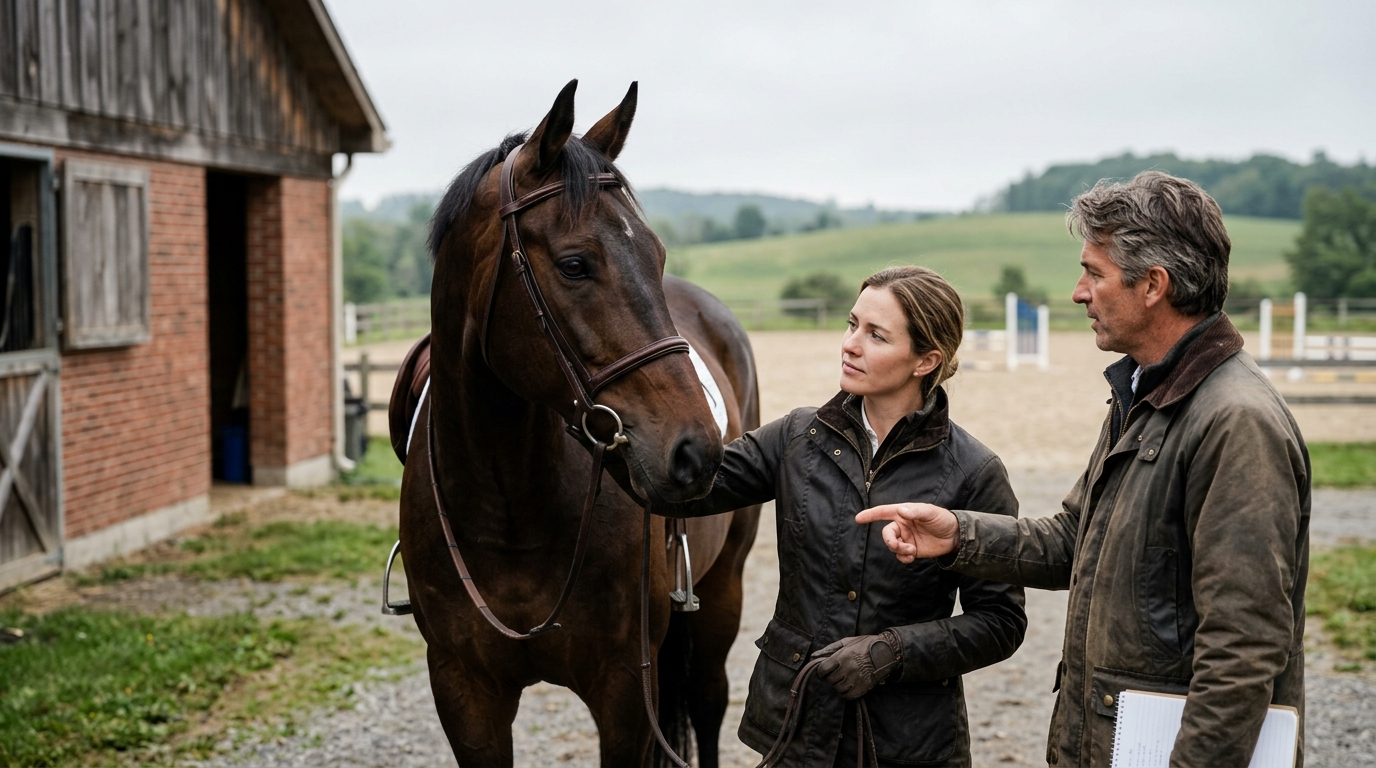
Buying a horse is one of the most exciting decisions an equestrian can make, but it is also one of the most consequential. Whether you are a first-time buyer or a seasoned competitor looking for your next partner, the process demands honest self-assessment, careful research, and professional guidance. From breed selection and temperament evaluation to veterinary exams and budgeting, the variables are many. This guide walks you through the key factors that will help you find the right horse, avoid costly mistakes, and set both you and your new partner up for long-term success.
Define Your Riding Goals and Experience Level
Before you browse a single listing, be honest about what you want and what you can handle. A pre-purchase self-assessment is the foundation every buyer needs. As multi-discipline coach Lindsay Grice has noted, buying the wrong horse is like fitting a square peg into a round hole.
Match the Horse to the Rider
If you are a novice rider, your best bet is a mature horse with solid training, a kind nature, and good brakes. The old saying holds true: a green horse and a green rider make a poor combination. For child riders, look for a horse that is suitable immediately rather than one the child will "grow into" later.
Discipline Matters
Not every breed or individual is suited for every activity. A heavy Warmblood may excel in dressage but would be a poor barrel-racing prospect. Conversely, an off-the-track Thoroughbred could be ideal for eventing but too hot for quiet trail rides. The Rutgers Equine Science Center recommends aligning breed characteristics with your future riding goals before you start shopping.
Breed Selection and Conformation
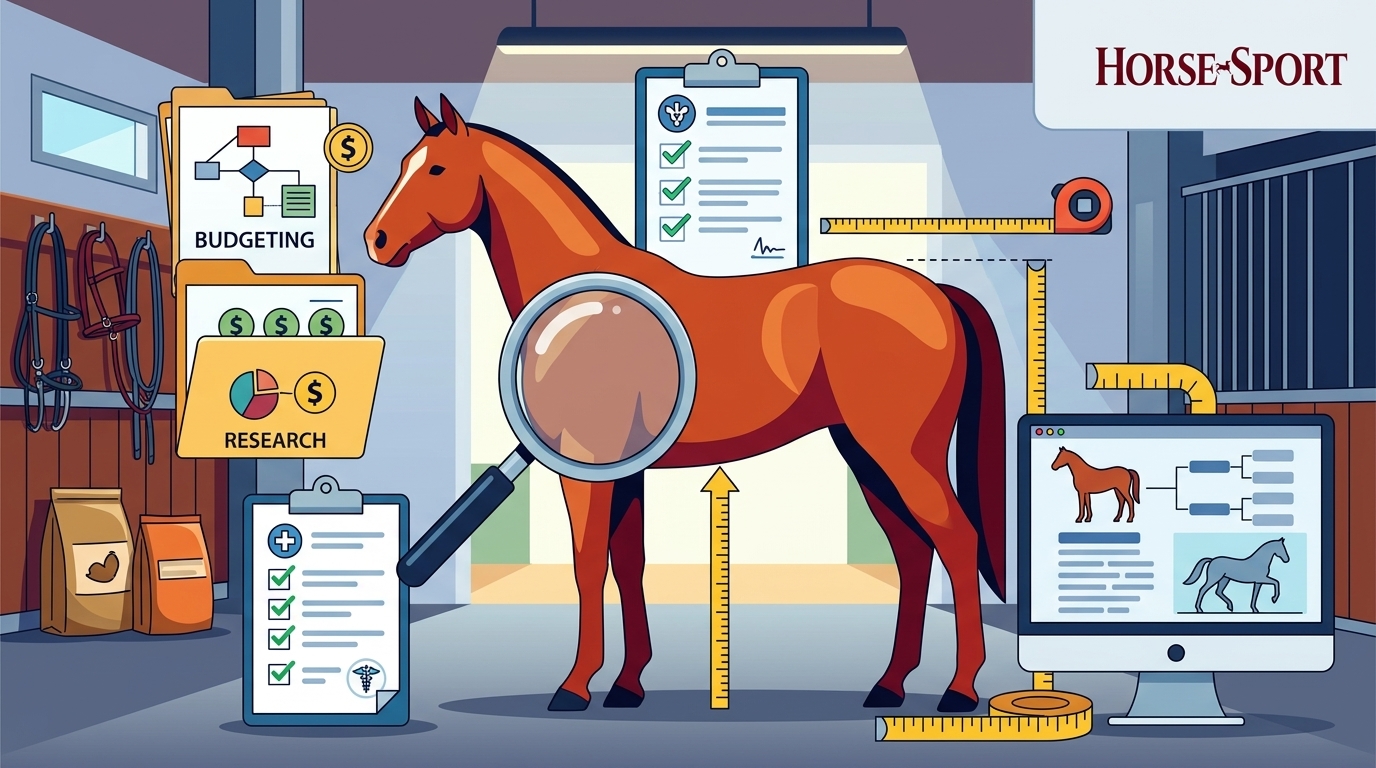
Conformation is the physical inherited structure of a horse. While excellent conformation does not guarantee excellence in performance, poor conformation invariably contributes to structural weakness, unsoundness, or impaired performance. Understanding basic conformation helps you evaluate prospects objectively rather than emotionally.
Horse Sport's guide to hunter and jumper conformation notes that once a horse is in training, you should evaluate the individual rather than relying solely on papers or bloodlines. For event prospects, a mix of Thoroughbred blood for stamina and sport-horse breeding for power is often recommended, as discussed in our assessment of the young event prospect.
| Discipline | Well-Suited Breeds | Key Traits to Look For |
|---|---|---|
| Dressage | Warmblood, Hanoverian, Lusitano | Uphill build, elastic gaits, trainability |
| Show Jumping | Warmblood, Thoroughbred, Holsteiner | Scope, careful technique, athleticism |
| Eventing | Thoroughbred cross, Irish Sport Horse | Stamina, boldness, versatility |
| Western/Trail | Quarter Horse, Appaloosa, Paint | Calm temperament, surefootedness |
| Pleasure Riding | Any breed | Gentle disposition, smooth gaits |
Evaluating Temperament and Behaviour
Temperament is the horse's natural disposition toward people, other horses, and its environment. A horse with a good temperament makes for a safer and more enjoyable partnership, regardless of discipline. Spend time observing the horse in the barn, during grooming, and under saddle before making any commitment.
Ask the seller about vices or bad habits such as cribbing, weaving, or bucking. Also evaluate whether the horse gets along in a herd setting if group turnout is part of your plan. Gender plays a role too: geldings are generally more stable day to day, while mares can have personality quirks tied to their estrous cycle. Unless you plan to breed, avoid stallions.
The Pre-Purchase Veterinary Exam
A pre-purchase examination (PPE) is a veterinary assessment designed to detect physical defects and evaluate a horse's suitability for its intended use. According to the American Association of Equine Practitioners (AAEP), the exam should be tailored to the buyer's goals and the horse's intended discipline.
What a Basic PPE Includes
A standard exam covers the horse's medical history, vital signs at rest and after exercise, and evaluation of the respiratory system, digestive system, eyes, mouth, legs, back, joints, and hooves. Additional diagnostics such as radiographs, ultrasound, or bloodwork may be warranted for higher-value sport horses.
Choose an Independent Vet
Always use a veterinarian who is independent of the seller. As equine lawyer Catherine Willson explains in her overview of legal considerations when buying a horse, using the seller's vet can lead to conflicts of interest. Make sure to communicate the purpose for which you are buying the horse, as this may dictate the tests required.
Typical Cost
According to AAEP fee survey data, a comprehensive pre-purchase exam with a written report averages roughly $250 to $400, with costs increasing if X-rays or advanced imaging are added.
Budgeting Beyond the Purchase Price
The initial purchase price is often the least expensive part of owning a horse. Ongoing costs include board, feed, farrier visits every six to eight weeks, veterinary care, dental exams, vaccinations, deworming, insurance, tack, and training fees. If you plan to compete, factor in entry fees, hauling, and travel expenses as well.
For those exploring long-term financial planning, our article on planning ahead for your horse's future covers boarding costs, veterinary care, and even estate planning for equine owners.
| Expense Category | Low Estimate | High Estimate |
|---|---|---|
| Board (full care) | $3,600 | $18,000+ |
| Farrier (6-8 week cycle) | $600 | $2,400 |
| Veterinary (routine) | $500 | $2,000 |
| Feed & Supplements | $1,200 | $4,000 |
| Insurance | $500 | $3,000 |
| Tack & Equipment | $300 | $2,000 |
Using an Agent and Trial Periods
An agent is someone employed by a buyer or seller to negotiate a horse deal on their behalf. Many buyers rely on a trusted trainer or instructor to help locate, evaluate, and negotiate the purchase of a horse. As Catherine Willson explains in Horse Sport's guide to using an agent, it is critical to understand whose interests the agent represents and to have a clear written agreement in place.
Trial periods, whether two weeks or a full lease-to-buy arrangement, can help confirm that the horse fits your needs. However, both parties should write up a detailed contract addressing liability, insurance, and who covers veterinary costs during the trial.
Key Takeaways
- Honestly assess your riding level and goals before you start shopping; matching rider experience to horse training is the single most important factor.
- Choose a breed and conformation type suited to your discipline for long-term soundness and performance.
- Evaluate temperament carefully by observing the horse in multiple settings and asking the seller about vices.
- Always commission an independent pre-purchase veterinary exam tailored to your intended use.
- Budget for ongoing costs (board, farrier, vet, feed) which typically exceed the purchase price within the first year.
- Use a qualified agent or trainer for guidance and ensure any agency relationship is clearly defined in writing.
- Consider a trial period with a proper contract and insurance to confirm compatibility before finalizing the sale.
Frequently Asked Questions
What is the most important factor when buying a horse?
Matching the horse's training level and temperament to your own riding ability is the most critical factor. A green horse paired with a green rider creates safety risks and frustration for both.
How much does a pre-purchase exam cost?
A basic pre-purchase exam typically costs $250 to $400. Adding X-rays, ultrasound, or bloodwork can increase the total to $1,000 or more, depending on the veterinarian and region.
Should I buy a mare, gelding, or stallion?
For most recreational and competitive riders, geldings offer the most consistent day-to-day behaviour. Mares can be excellent partners but may exhibit temperament changes during their estrous cycle. Stallions are generally only appropriate for experienced handlers and breeding programs.
Does breed matter if I just want a trail horse?
If you are more interested in pleasure riding than competing, temperament matters more than breed. However, breeds like the Quarter Horse, Appaloosa, and Canadian are popular trail choices because of their calm, easygoing natures.
What conformation faults should I watch for?
Look for balanced proportions, straight limbs, and correct hoof angles. Common red flags include being post-legged, sickle-hocked, or cow-hocked, all of which increase stress on joints and ligaments and may lead to long-term soundness problems.
Is it worth hiring a trainer or agent to help me buy?
Yes. An experienced professional can evaluate horses objectively, identify issues you might miss, and negotiate on your behalf. Just make sure you have a written agreement that clarifies the scope of authority and whose interests the agent represents.
Should I get a trial period before buying?
A trial can be very valuable, especially for first-time buyers. However, both buyer and seller should sign a contract that covers liability, insurance, and veterinary expenses during the trial period.
What ongoing costs should I plan for after purchase?
Budget for boarding, farrier services, routine veterinary care, feed and supplements, dental exams, vaccinations, deworming, insurance, and tack. Many owners spend $7,000 to $15,000 or more per year on these essentials.
Start Your Search Today
Ready to find your next equine partner? Explore more expert buying advice in our horse shopping tips article, then browse the latest equestrian news and expert insights at HorseSport.com, Canada's equestrian authority for over 50 years.