
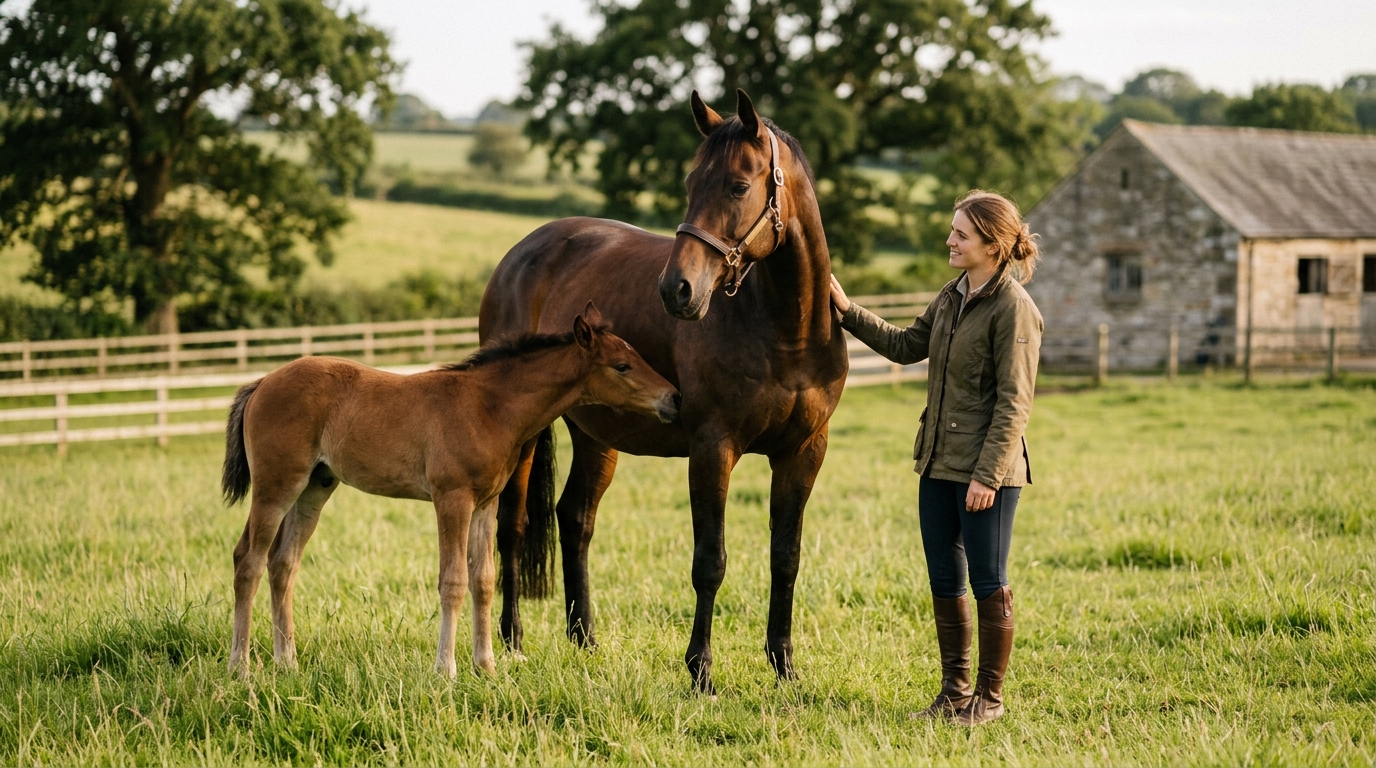
Whether you are planning your first foal crop or developing a young prospect under saddle, success in breeding and training horses depends on science-backed decisions, patient execution, and attention to the individual animal. This ultimate guide walks you through proven best practices—from selecting breeding pairs and managing mare fertility all the way to groundwork foundations and progressive ridden training.
Key Takeaways
- Breeding success starts months before conception with health evaluations, nutrition management, and light programs.
- Stallion and mare selection should weigh conformation, temperament, bloodline, and genetic testing equally.
- Young horse training begins at foal age with gentle handling and should not include formal ridden work before age three.
- Progressive groundwork and short, varied sessions protect musculoskeletal development and build mental confidence.
- Professional veterinary and training support is essential at every stage.
Part 1 — Horse Breeding Best Practices
1. Choose the Right Breeding Age
Timing is foundational. Mares reach sexual maturity between 18 months and two years, but experienced breeders typically wait until the mare is three to four years old to ensure full physical maturity for carrying a healthy foal. A mare's prime reproductive window runs from roughly four to 15 years of age, with fertility declining notably after 15 and dropping sharply after 20. Stallions can produce sperm as early as 12 to 14 months but usually reach full reproductive capacity around three years of age. Waiting ensures stronger fertility and better overall reproductive performance.
2. Evaluate Conformation, Temperament, and Bloodlines
Before any breeding takes place, scrutinise both prospective parents. Begin with a thorough examination of the bloodlines of both the mare and the stallion; a well-thought-out pairing can enhance desirable traits and minimise potential genetic issues. Conformation should complement rather than duplicate weaknesses—look for solid feet proportionate to the body, straight thick cannon bones, and good overall structure. Disposition matters as well: the mare significantly influences a foal's temperament because she raises the baby, but pairing a quiet mare with a hot-blooded stallion can still produce a hot-blooded foal. Spend time with the stallion to evaluate his temperament firsthand.
3. Optimise Mare Body Condition and Health
A mare's body condition directly affects her breeding ability. Broodmares need a body condition score (BCS) of at least 5 on the standard 1-to-9 scale. Mares that are too fat often experience more foaling problems than those kept in optimum trim. Well before breeding season, veterinarians should investigate chronic conditions such as equine metabolic syndrome (EMS) and pituitary pars intermedia dysfunction (PPID), both of which can interfere with normal ovarian activity and may require months of dietary and medical management. Chronic pain and lameness can also negatively affect fertility.
4. Use Artificial Lighting to Advance the Breeding Season
Horses are seasonal long-day breeders, so most open or foaling mares will not ovulate until mid-spring without artificial lighting. Providing 16 hours of light per day can trigger cycling within 45 to 50 days of starting a light programme. A common schedule is to run stall lights from 6 a.m. to 10 p.m. This strategy allows mares to be ready to cycle by late January, just before a February breeding start date. Even mares housed outdoors can benefit—setting up lights around pen areas has been shown to stimulate cycling at the same rate as stalled mares.
5. Select the Appropriate Breeding Method
Modern equine reproduction offers several pathways:
- Pasture breeding — The stallion runs with mares and mates naturally. It is cost-effective for small herds but makes tracking breeding dates difficult and increases injury risk.
- Hand breeding — The mare is restrained and the stallion is brought under handler supervision, allowing greater safety, accurate date recording, and reduced disease transmission.
- Artificial insemination (AI) — Using fresh, cooled, or frozen semen, AI opens access to elite bloodlines across regions or even countries and supports conservation of rare breeds.
- Embryo transfer and ICSI — Advanced assisted reproductive technologies accelerate genetic progress but carry higher costs and rely heavily on technology and expertise.
The method selected should align with the mare's reproductive health and the stallion's location, along with the breeder's budget and goals.
6. Monitor Pregnancy and Prepare for Foaling
After breeding, veterinary ultrasounds can confirm pregnancy as early as 14 days. Schedule regular check-ups throughout gestation to monitor fetal development and catch issues early. Provide the pregnant mare with regular moderate exercise to promote good circulation and maintain muscle tone. As the due date approaches, prepare a foaling kit with clean towels, iodine for navel disinfection, and a flashlight for nighttime monitoring.
Part 2 — Horse Training Best Practices
7. Start Handling Early — But Keep It Age-Appropriate
Training begins long before a horse is ridden for the first time; in fact, it starts at foal age. Early handling — sometimes called imprint training — introduces foals within days of birth to human touch, voice, and everyday stimuli such as motor vehicles, clippers, and bathing. Physiological studies have shown that horses receiving appropriate exercise in the first three years of life are better adapted and commonly sounder during their riding careers compared to horses that were not exercised until their third or fourth year. Importantly, early exercise should be shorter, slower, and free of concussive skeletal forces. Ten-minute sessions walking across ground poles, short brisk walks up the driveway, and gentle leading exercises are ideal for one- to three-year-olds.
8. Prioritise Groundwork Before Riding
Ground work is one of the most important foundations in young horse training. Before introducing the saddle and bridle, teach the horse relaxation patterns on the ground so it can manage tension without defaulting to fight-or-flight instincts. Teach the horse to yield from pressure, move its hindquarters and shoulders independently, and respond to basic voice commands. This groundwork creates a mental framework the horse can rely on once the rider is introduced.
9. Begin Ridden Work at the Right Time
Most professionals agree that first mounting should occur no earlier than age three, with some slower-maturing breeds like the Lipizzan not ridden until four. Rushing the process can lead to the horse not understanding what is expected, causing problems such as bolting, spooking, or developing anxiety around people. Allow the horse's vertebrae, especially at the base of the neck, to grow and form without being compromised by a forced frame. Let the young horse find its own neutral balance during initial ridden sessions.
10. Ride Forward and Introduce Bending Gradually
Once under saddle, the initial phase of training is about riding forward, teaching the horse about the aids, and building confidence. An eggbutt snaffle is often recommended for young horses because its fixed rings provide lateral stabilisation and a secure feeling in the mouth. After establishing reliable forward movement, begin incorporating bending lines—large circles and shallow serpentines—to develop suppleness and improve connection. If a horse struggles with contact by going above or behind the bit, it is almost always because the horse is not forward or supple enough.
11. Keep Sessions Short and Varied
Young horses benefit from brief, varied training sessions rather than prolonged drills. A young horse's regime should not simply be an abbreviated version of what older horses are doing; it requires creative, age-appropriate challenges. Alternating between arena work, trail walks with a calm companion horse, pole exercises, and liberty play keeps the horse mentally engaged and physically developing without overloading any single system.
12. Seek Professional Support
Starting a young horse under saddle is a job for a professional or a highly experienced rider. Even seasoned trainers acknowledge that each horse is different and that remaining open to changes in demeanour is critical. Building relationships with veterinarians, other breeders, and equestrian professionals provides valuable insights and resources throughout both the breeding and training journeys.
Bringing It All Together: From Foal to Performance Horse
The best breeders and trainers share a common philosophy: invest in the long game. Equine breeding success reflects long-term management rather than last-minute intervention. Similarly, training a young horse through the levels is a multi-year commitment that rewards patience, consistency, and a willingness to adapt. After each breeding cycle, analyse outcomes—track performance metrics of offspring and assess which breeding combinations yield the best results. Be ready to adapt practices and incorporate the latest research and technologies.
Frequently Asked Questions
What is the ideal age to breed a mare for the first time?
Most experts recommend breeding mares after the age of three, once they have reached full physical maturity. Their prime reproductive years extend from roughly age four to 15, with fertility declining afterward.
Which breeding method is best for a small-scale breeder?
Pasture breeding is the most cost-effective option for small herds, but hand breeding or AI with cooled semen offers greater safety, disease control, and record-keeping accuracy. The best choice depends on your facilities, budget, and how much genetic control you require.
When should you start training a young horse?
Gentle handling and socialisation should begin in the first days and weeks of life. Formal groundwork can be introduced to yearlings, but ridden training should not start before age three—some breeds benefit from waiting until four.
How long should training sessions be for a young horse?
Keep sessions short—around 10 to 20 minutes for horses under three years old, and gradually extend to 30 minutes as the horse matures under saddle. Vary the activities to maintain engagement and protect developing joints.
Is artificial insemination better than natural breeding?
AI offers significant advantages including access to elite bloodlines worldwide, reduced disease transmission, and more precise timing. However, it carries higher costs and requires veterinary expertise. Natural breeding remains effective for many programmes, especially at smaller scale.