
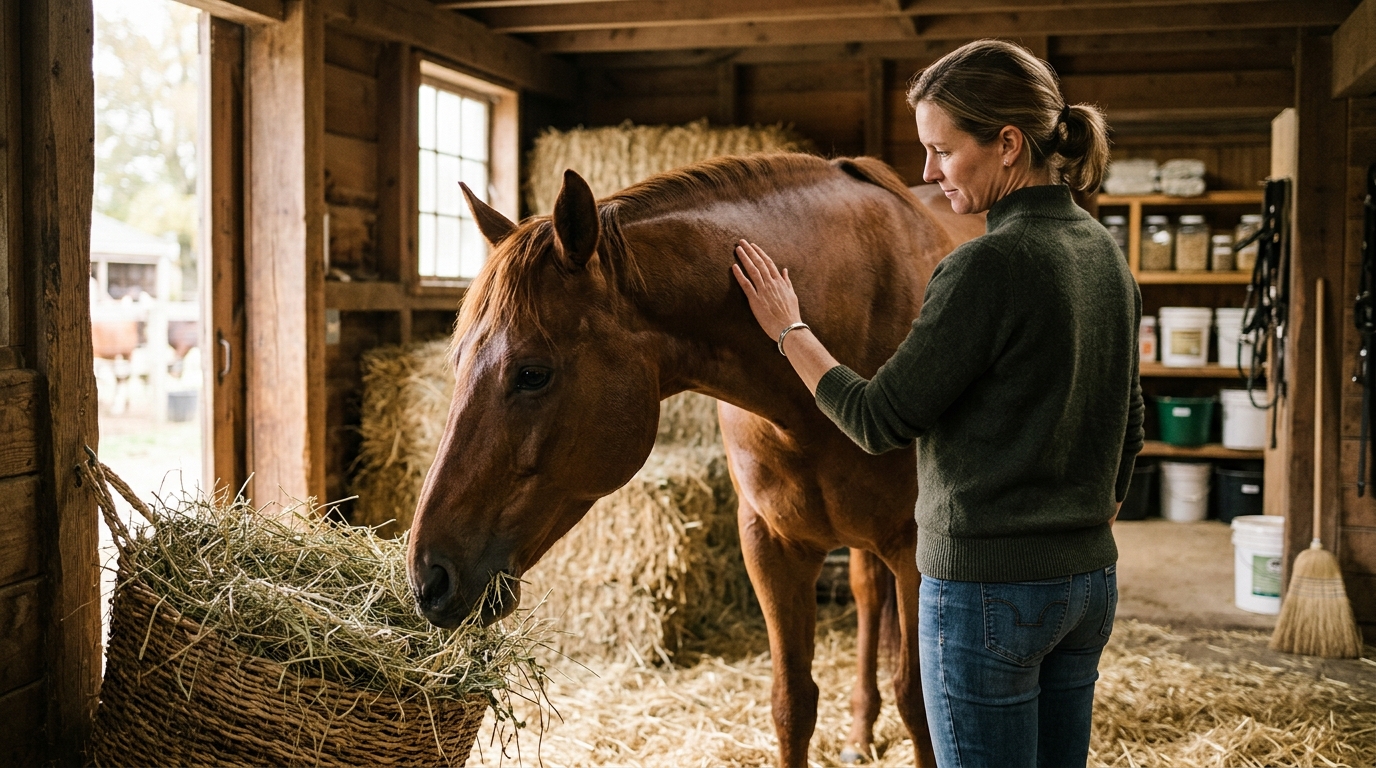
Whether you own a weekend trail horse or a competitive eventer, the single most impactful thing you can do for your horse's long-term health is get its diet right. Poor nutrition doesn't always show up as dramatic weight loss — it can appear as dull coats, crumbling hooves, behavioural issues under saddle, and recurring digestive upsets. This guide walks you through a structured, evidence-based approach to upgrading your horse's feeding programme from the ground up.
Step 1: Start With Forage — Always
Every equine nutrition plan begins and ends with forage. Horses evolved to graze continuously, and their digestive systems are built around that reality. A forage-first approach isn't just tradition — it's physiology.
- Quantity target: Feed 1.5–2% of your horse's body weight per day in long-stem forage such as hay or pasture. For a 1,000-pound horse, that translates to roughly 15–20 pounds of forage daily.
- Why it matters: Forage keeps the hindgut functioning properly and supports natural behaviour. Horses fed high-fibre diets show fewer unwanted behaviours in the stable and under saddle compared to those fed low-fibre diets.
- Avoid prolonged fasting: Horses should ideally have constant access to forage. If that isn't possible, they shouldn't go without forage for longer than 4–6 hours, because the stomach continuously secretes acid even when empty, increasing ulcer risk.
Any additional nutritional requirements should first be met through increased amounts of good-quality forage before concentrated feeds are added to the diet.
Step 2: Test Your Hay
One of the most underused tools in equine nutrition is a simple hay analysis. The nutritional content of hay varies significantly between grass species, cutting times, and growing regions. A laboratory forage test reveals energy density, crude protein, sugar and starch (NSC) levels, and mineral content.
A forage analysis enables you to balance your horse's diet according to its precise nutritional needs rather than guessing. This is especially important because almost all forages will be deficient in a variety of minerals, and this varies by geographical location. For instance, soils in parts of Ontario, Canada are generally deficient in selenium, meaning horses grazing there need targeted supplementation.
How to Get Hay Tested
- Collect core samples from multiple bales using a hay probe.
- Send the combined sample to an agricultural lab (most university extension services offer this).
- Review results for digestible energy, crude protein, NSC, and key minerals like calcium, phosphorus, zinc, copper, and selenium.
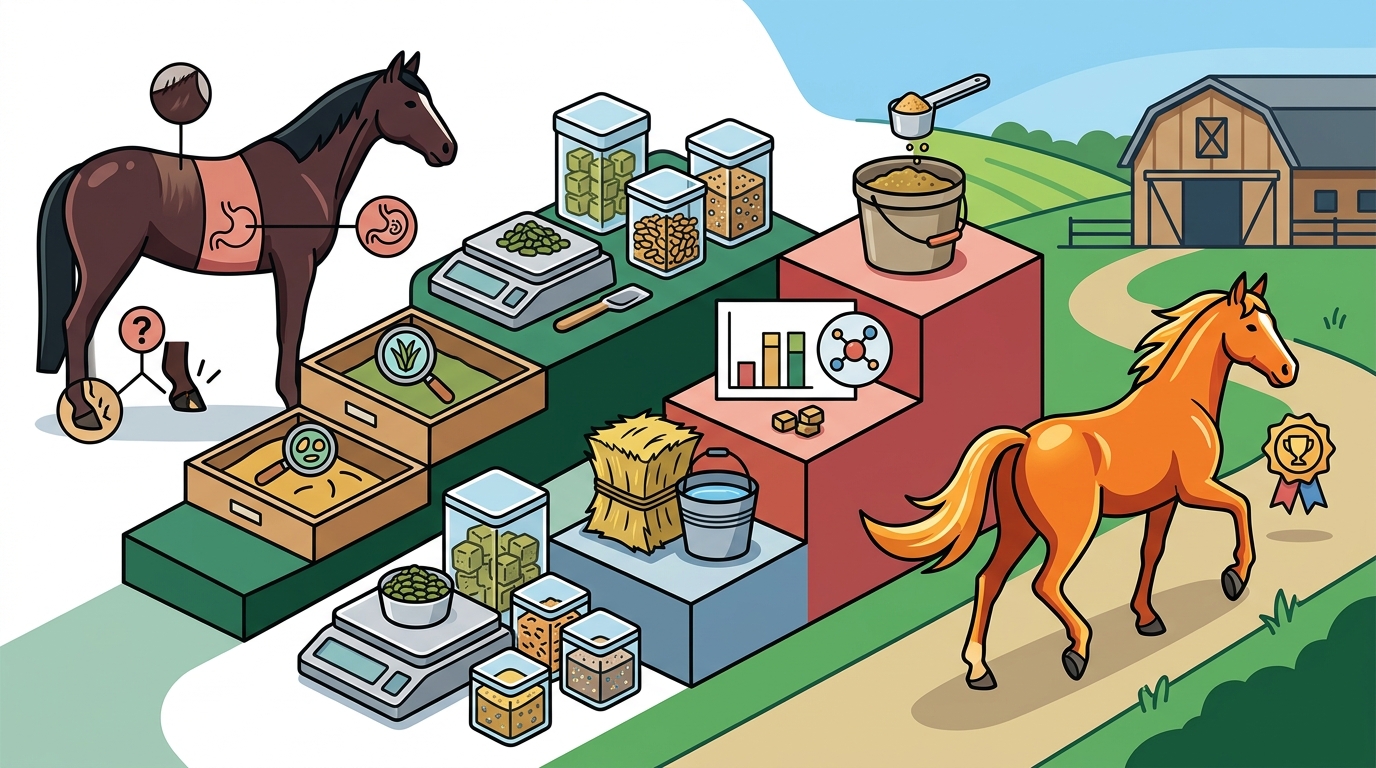
Step 3: Fill Nutritional Gaps With a Ration Balancer
Once you know what your forage provides, the next step is filling the gaps — not with a scoop of sweet feed, but with a product designed for exactly this purpose.
Ration balancers are low-calorie options for delivering protein, vitamins, and minerals to horses that do not need extra calories. They are designed to be fed in small quantities — typically 1–2 pounds per day — to fill the nutritional gaps in the hay or pasture. Balancer pellets pack a punch, with protein content between 25% and 35%, as well as concentrated minerals and vitamins.
There are two broad categories to know about:
- Ration balancer feeds: These supply crude protein alongside vitamins and minerals and are typically fed at 1–2 kg per day for an average-sized horse.
- Ration balancer supplements: These are concentrated vitamin-and-mineral-only products with a much lower feeding rate — usually 100–200 g per day.
If your hay provides adequate crude protein, you can opt for a concentrated vitamin-and-mineral balancer. However, if your hay is low in protein, a product that includes crude protein is more appropriate.
Common Mistake to Avoid
Many well-intentioned horse owners buy a performance feed designed to be fed in larger quantities and then feed it to their easy keeper at a reduced rate. This practice can lead to vitamin and mineral deficiencies because the product is being fed below the recommended amount.
Step 4: Understand When Concentrates Are Necessary
Not every horse needs grain or commercial concentrate feed. Horses in light work can often meet their digestible energy needs from grass hay or mixed hay alone without needing legume forage or additional calories from grains or fats.
However, performance horses have higher energy and protein requirements than horses at maintenance. Formulating diets for horses in work should take into account their level of activity and performance goals, as well as the increased risk of certain health conditions that accompany intense exercise. Fat is dense in calories and provides a good source of energy, particularly for horses that need extra fuel without the blood-sugar spikes associated with high-starch feeds.
When to Add Concentrates
| Workload | Primary Energy Source | Concentrate Needed? |
|---|---|---|
| Maintenance / companion | Hay or pasture | Rarely — ration balancer only |
| Light work (hacking 2–3×/week) | Good-quality hay | Usually not, unless hard keeper |
| Moderate work (regular schooling, low-level competition) | Hay + possible low-NSC feed | Possibly, based on body condition |
| Hard work (eventing, racing, endurance) | Hay + performance feed or added fat | Yes — calorie demands exceed forage capacity |
Step 5: Monitor Body Condition Regularly
You can't manage what you don't measure. Maintaining a healthy weight in horses is not a one-size-fits-all process. The Body Condition Score (BCS) system is the most reliable method used globally, assessing fat coverage at key areas — ribs, withers, neck, shoulder, back, and tailhead — on a scale of 1 (emaciated) to 9 (obese).
Aim for a BCS of 5 — moderate condition where ribs can be felt but not seen. Weigh your horse monthly using a weigh tape or weigh bridge. By monitoring your horse's weight and fat score condition, you can adjust either their diet or exercise plan to maintain balance.
Seasonal Adjustments
Dietary plans should be adapted seasonally and based on whether the horse is in light work, moderate training, or not working at all. Spring pasture can be surprisingly calorie-dense and high in sugar, while winter hay may provide less energy, requiring supplementation or increased volume.
Step 6: Prioritise Water and Electrolytes
Hydration is easily overlooked but absolutely critical. Horses must always have free access to fresh, clean water. Horses that refuse to drink are at risk of poor performance, poor organ function, and colic.
Horses also need a daily supply of sodium chloride (salt) for electrolyte balance and hydration. Provide 1–2 ounces of plain loose salt daily, or offer a free-choice salt block. During heavy exercise, travel, or hot weather, consider adding a commercial electrolyte supplement to replace losses from sweat.
Step 7: Transition Feed Changes Slowly
Horses have a delicate digestive system that can be easily disrupted by sudden dietary changes, leading to colic and other gastrointestinal problems. Because of their anatomy, horses cannot vomit, so once food is swallowed it must pass entirely through the tract. Sudden changes can cause a painful buildup of gas that could quickly turn into the dangerous condition of colic.
Any time you make a change to your horse's diet, do so slowly over a 7–10 day period. This gives the gut microbiome time to adapt. Consider adding probiotics and prebiotics during periods of dietary changes, seasonal transitions, or travel-related stress.
Step 8: Address Special Dietary Needs
Certain horses require more targeted nutritional strategies:
- Metabolic horses (EMS / Cushing's): A metabolic horse often requires limited sugar and starch in their feed — known as low-NSC feed. When choosing a concentrate, aim for an NSC content no higher than 10–12%. Soaking hay for 15–30 minutes can reduce nonstructural carbohydrates to reach the 12% dietary guideline.
- Seniors: Aging horses may have decreased digestive efficiency and dental issues. Complete or senior feeds are designed to be fed in large amounts to provide a total ration when horses can no longer obtain nutrition through forage alone.
- Horses with respiratory issues: Horses with equine asthma syndrome should be fed as dust-free a feed as possible. Adding water or oil to grains decreases dust, and hay should be thoroughly soaked.
- Ulcer-prone horses: Alfalfa hay, with its high calcium and protein concentration, acts as a buffering antacid and has a protective effect on the stomach lining. Small hay meals fed frequently, or access to pasture, also decrease gastric ulceration risk.
Step 9: Consider Omega-3 Fatty Acids
Most domestic horse diets are deficient in omega-3 fatty acids, especially when pasture access is limited. Omega-3s aid in hoof and coat condition, joint health, and can improve insulin sensitivity. Sources include:
- Flaxseed (ground or oil)
- Chia seeds
- Fish-oil-based equine supplements (providing DHA)
For exercising horses that need extra calories, a fat supplement rich in omega-3 DHA can support respiratory and joint health while also providing calorie-dense energy without starch.
Step 10: Work With Professionals
If your horse is gaining or losing weight with no obvious cause, seek advice from your vet. An equine nutritionist can help develop a nutritional plan specific to your horse, taking into account discipline, breed, age, training schedule, frequency of travel, and health history.
A professional can interpret your hay analysis, recommend the right balancer or supplement, and spot deficiencies you might miss — like vitamin E depletion in hay-only diets or regional mineral shortfalls.
Key Takeaways
- Forage should make up the foundation of every horse's diet — at least 1.5–2% of body weight daily.
- Test your hay to identify nutritional gaps rather than guessing.
- Use a ration balancer instead of under-feeding a performance feed to your easy keeper.
- Monitor body condition score monthly and adjust feed seasonally.
- Ensure constant access to clean water and provide daily salt.
- Transition all diet changes gradually over 7–10 days to protect gut health.
- Address metabolic, senior, or respiratory conditions with targeted feeding strategies.
- Work with a veterinarian and equine nutritionist for personalised guidance.
Frequently Asked Questions
How much hay should I feed my horse per day?
A general guideline is 1.5–2% of your horse's body weight in long-stem forage daily. For an average 1,000-pound horse, that amounts to 15–20 pounds of hay. The exact amount depends on the horse's workload, body condition, and whether it has pasture access.
Does my horse need grain?
Many horses, especially easy keepers and those in light work, do not need grain at all. Good quality hay provides ample nutrients to meet the needs of most horses. If additional calories or protein are required, a ration balancer or low-NSC performance feed is often a better choice than a traditional sweet feed.
What is a ration balancer and when should I use one?
A ration balancer is a concentrated source of protein, vitamins, and minerals designed to be fed in small quantities — typically 1–2 pounds per day. It fills nutritional gaps in a forage-based diet without adding significant calories, making it ideal for easy keepers or horses that maintain weight on hay alone.
How do I know if my horse is at a healthy weight?
Use the Body Condition Score (BCS) system, which evaluates fat deposits at six key areas of the body on a 1–9 scale. A score of 5 is ideal for most horses. Regular weigh-tape measurements alongside BCS checks give a more complete picture than visual assessment alone.
How quickly can I change my horse's feed?
Diet changes should always be made gradually over a 7–10 day period. Sudden changes in diet and large grain meals are common risk factors for gastrointestinal troubles in horses. Slowly increase the proportion of the new feed while decreasing the old one each day.
Should I soak my horse's hay?
Soaking hay can benefit horses with certain health issues by reducing water-soluble carbohydrates, potassium, and dust. This is particularly useful for horses with laminitis, metabolic syndrome, or respiratory conditions. Soaking for 15–30 minutes is generally sufficient; avoid soaking beyond 60 minutes due to excessive dry-matter loss.